
NVIDIA ACE Brings PUBG Ally AI Teammates To Duo Mode In Two Week Beta
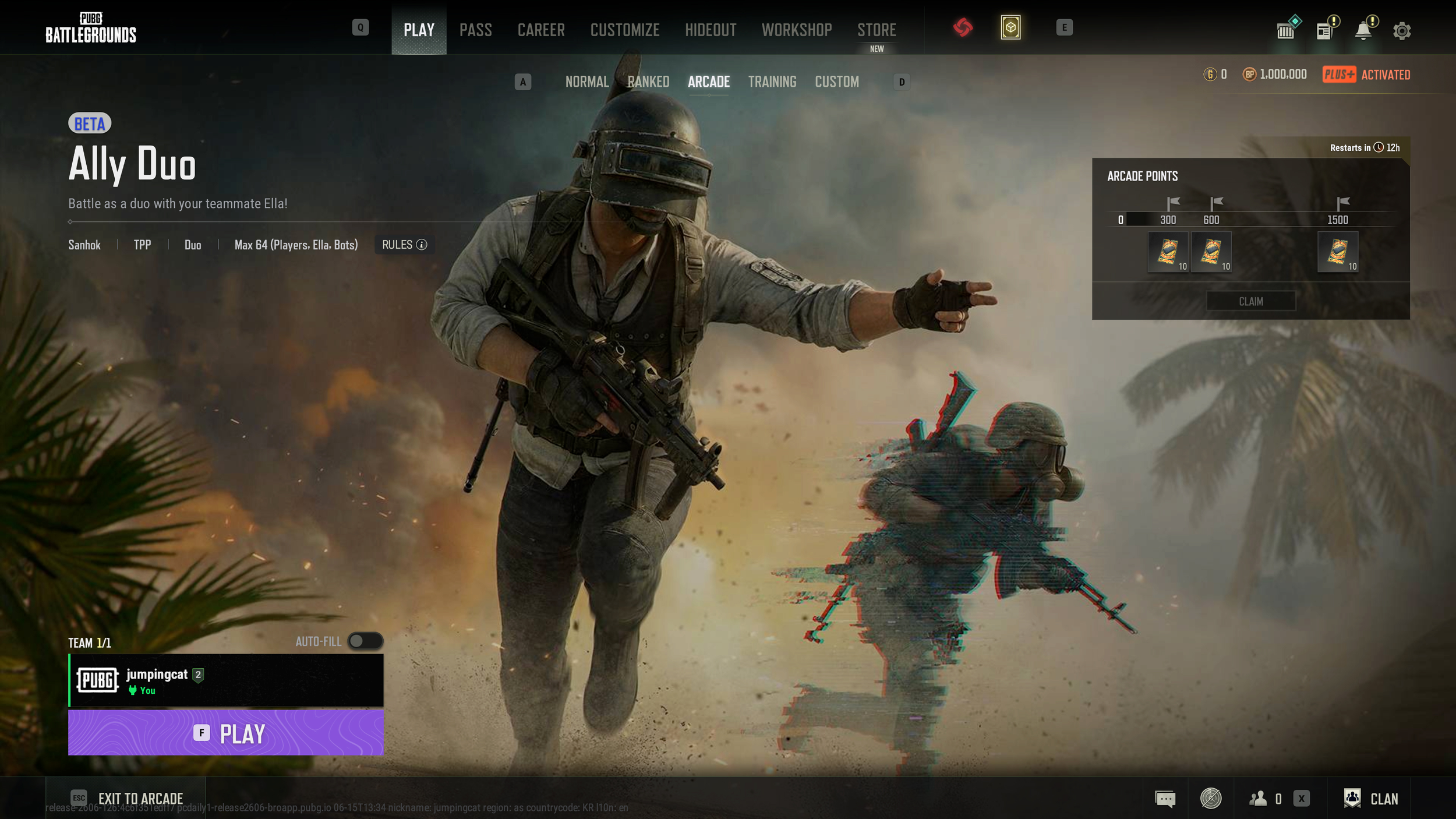
NVIDIA ACE is moving from showcase promise to playable test with PUBG Ally, a new AI teammate now available in PUBG: BATTLEGROUNDS through a limited two week beta. According to the official NVIDIA GeForce announcement, players can team up with PUBG Ally in Ally Duo Mode through PUBG Arcade on Steam until June 30, 2026, giving the community its first real chance to judge whether generative AI companions can meaningfully support a live competitive shooter.
PUBG Ally is described as a highly adaptive and context aware AI teammate that can adjust its playstyle based on player commands and real battlefield conditions. Unlike a traditional bot that follows fixed behavior patterns, PUBG Ally can loot, fight, navigate, communicate, and make independent decisions without constant prompting. It can understand voice and text input, including casual comments, tactical instructions, PUBG specific terminology, player slang, map locations, and item attributes. The result is meant to feel closer to a squadmate that listens and reacts rather than an NPC following a limited script.
The technology behind the system is just as important as the gameplay pitch. NVIDIA says PUBG Ally separates immediate combat behavior from higher level reasoning. Fast reactions such as movement, aiming, and combat response are handled through a traditional behavior tree, while NVIDIA ACE powers the cognitive layer that interprets player intent and generates more flexible decisions. On supported RTX systems, the stack uses local AI models, including NVIDIA Parakeet for English speech recognition, NVIDIA Mistral Nemo Minitron as a 2 billion parameter small language model, and a custom KRAFTON text to speech model for real time voice response.
That local execution detail matters because latency is one of the biggest challenges for AI companions inside competitive games. A teammate that takes too long to process instructions would immediately feel useless in PUBG, where positioning, looting, enemy callouts, and combat decisions can change in seconds. NVIDIA’s newer ACE Game Agent SDK and Unreal Engine 5 tools are designed around this exact problem, giving developers a framework for AI characters that can perceive, reason, act, and talk inside real time game environments.
KRAFTON and NVIDIA are using this beta to collect player feedback and understand how AI agents should behave in multiplayer games. That is a smart move because PUBG Ally sits in a sensitive design space. In a single player RPG or simulation game, an AI companion can increase immersion and reduce repetition. In a competitive battle royale, the value proposition is more complicated. Players usually come to PUBG for human tension, unpredictable squads, real callouts, and the satisfaction of beating other players. If an AI teammate feels too weak, it becomes a liability. If it feels too strong, it could damage competitive trust.
This is why PUBG Ally may be most useful for solo players, newcomers, casual Duo sessions, or players who want to practice communication and tactical flow without depending on random teammates. It could also make the game more approachable for players who avoid team based modes because they do not want voice chat pressure or unreliable partners. For that audience, an AI teammate that can loot, revive, follow instructions, and explain the situation could be a meaningful onboarding tool.
At the same time, PUBG Ally raises a larger question for the industry. AI teammates may help fill empty squad slots, teach new players, and create more accessible match experiences, but competitive multiplayer is built on human presence. The danger is that too much AI support can make online games feel less social and less authentic. Bots have always been controversial in multiplayer titles because they can make victories feel less earned once players realize they were not fighting or cooperating with a real person.
For NVIDIA, this beta is part of a much broader strategy expanding its AI PC strategy with RTX developer tools, DLSS 4.5 upgrades, and faster Unreal Engine AI deployment, and PUBG Ally is one of the clearest gaming examples of that direction. NVIDIA does not only want RTX GPUs to render games faster. It wants RTX systems to run local AI characters, speech models, reasoning agents, creator tools, and future gameplay systems directly on the player’s machine.
The business angle also fits NVIDIA’s wider shift of NVIDIA moved Gaming under Edge Computing. PUBG Ally shows why that change makes sense. Gaming is no longer being treated only as a graphics market. It is becoming part of a larger local AI and edge computing ecosystem where GPUs power rendering, inference, voice, agents, and intelligent game systems together.
PUBG Ally is one of the most important AI gaming tests of 2026 because it puts the concept directly in front of players instead of keeping it inside controlled tech demos. The result may not be perfect, and competitive players will likely debate whether AI teammates belong in a battle royale at all. Still, the experiment is valuable. If players respond well, AI squadmates could become a new accessibility and onboarding tool for multiplayer games. If players reject it, developers will learn that competitive spaces need tighter boundaries around AI participation.
The next 2 weeks will be important for KRAFTON and NVIDIA. PUBG Ally needs to prove that it can communicate naturally, react quickly, support the player without becoming annoying, and stay balanced enough to avoid damaging the core competitive fantasy. If it succeeds, this beta could become one of the first real signs that AI companions are ready to move beyond scripted NPC behavior and into live online game systems.
Would you use PUBG Ally as your Duo teammate, or do AI companions go against what makes competitive multiplayer exciting?
