
NVIDIA Expands Its AI PC Strategy With RTX Developer Tools, DLSS 4.5 Upgrades, and Faster Unreal Engine AI Deployment
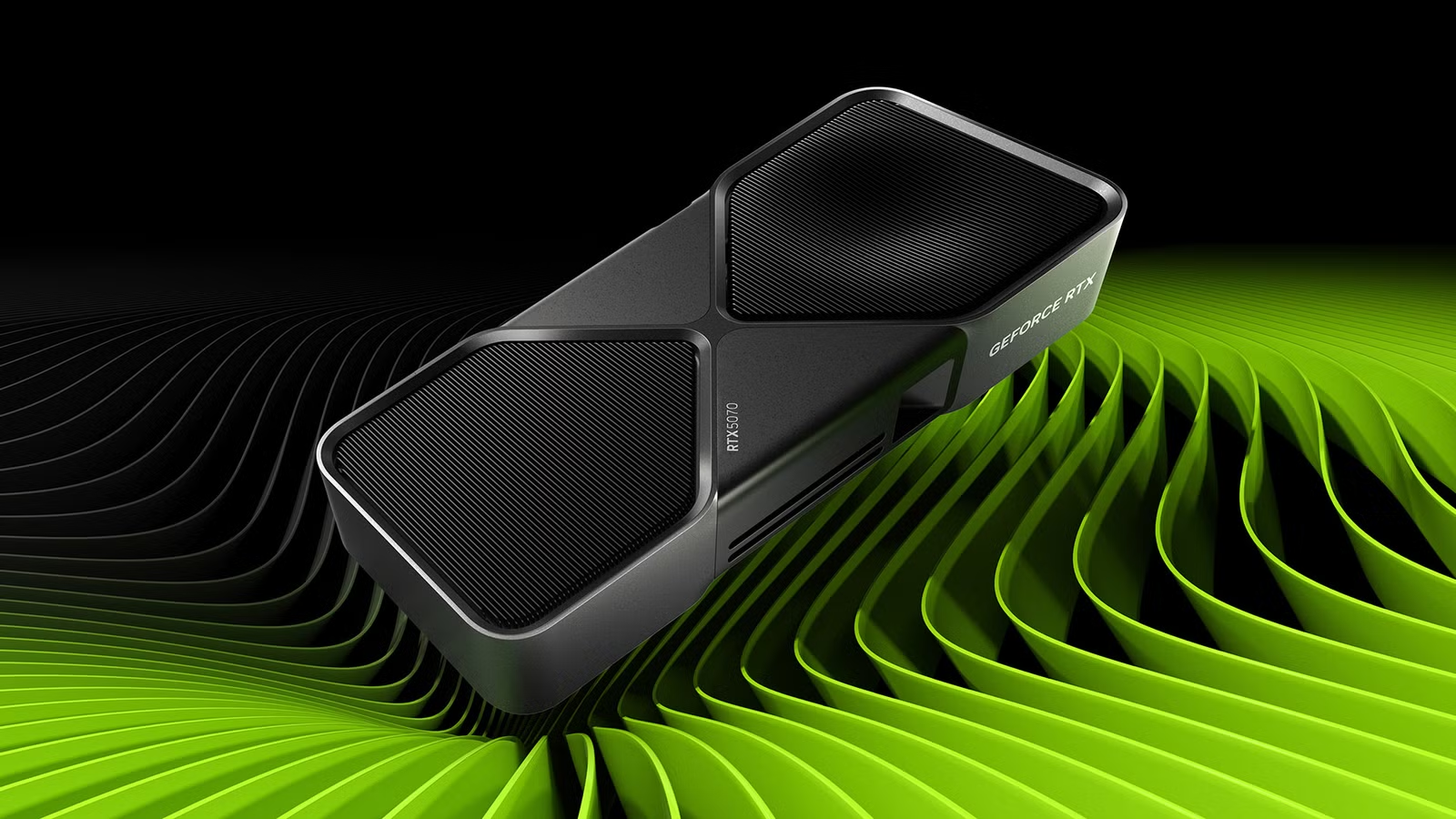
NVIDIA is continuing to scale its AI PC ecosystem in a way that goes far beyond consumer graphics marketing. The company is positioning GeForce RTX as a full development platform for games, creation pipelines, and local AI workloads, with new software rollouts that make advanced AI features easier to integrate across real time applications. The latest push centers on broader developer access to DLSS 4.5, Unreal Engine AI acceleration through TensorRT for RTX, and workflow support for creators using ComfyUI on RTX hardware.
A major part of that strategy is DLSS 4.5. NVIDIA has confirmed that developers can now begin integrating DLSS 4.5 features including Dynamic Multi Frame Generation, Multi Frame Generation 6X, and the 2nd generation transformer model for Super Resolution. According to NVIDIA, these updates are designed to push higher frame rates while preserving responsiveness and image quality, especially on GeForce RTX 50 Series hardware where the new 6X mode can generate up to 5 additional frames per rendered frame. NVIDIA also states that the shift from 4X to 6X Multi Frame Generation can raise 4K frame rates in path traced games by up to 35% in supported scenarios.
For developers working in Unreal Engine, NVIDIA has introduced a TensorRT for RTX runtime plugin for the Neural Network Engine, also known as NNE. This matters because it lowers the barrier to deploying AI models directly inside real time applications, which is increasingly relevant for animation systems, inference driven gameplay features, speech, rendering, and other on device AI use cases. NVIDIA’s official developer documentation says the plugin supports RTX GPUs from Turing through Blackwell and can deliver roughly 1.5x better performance than DirectML based approaches in supported workloads. That makes it one of the more practical announcements in this update because it translates directly into deployable efficiency rather than future roadmap language.
NVIDIA is also giving more visibility to Kimodo, one of its research efforts focused on controllable motion generation. The project is built around generating high quality 3D human and robot motion with text prompts and constraint based controls, and NVIDIA says it is intended to help reduce iteration time while expanding the movement range creators can achieve inside existing animation pipelines. On the research side, Kimodo is described as being trained on a large optical motion capture dataset and designed to integrate with broader NVIDIA work around humanoid motion and physical AI. For game development and digital character production, that makes it a notable signal of where NVIDIA wants AI assisted animation tooling to go next.
On the content creation side, NVIDIA is also highlighting production ready ComfyUI workflows for RTX users. Through its updated guidance and creator toolkit materials, the company is showing how local generative AI pipelines can be used for pre production asset work on systems equipped with NVIDIA RTX GPUs carrying 16 GB or more of VRAM. NVIDIA’s developer blog says these workflows run locally on both Windows and Linux and are adapted from its GTC 2026 Deep Learning Institute course focused on design and visualization in ComfyUI. For creators and studios trying to keep more AI experimentation on local hardware, that is a meaningful part of the broader AI PC message.
What stands out most is that NVIDIA is no longer framing RTX only as a gaming GPU stack. It is increasingly presenting RTX as the foundation for local AI development, real time inference, neural rendering, and creator tooling on the PC. NVIDIA’s recent GDC and GTC updates also show that the company is continuing to invest in next generation graphics and rendering technologies tied to future games, including new path tracing focused advancements such as RTX Mega Geometry, which NVIDIA says will help enable more detailed and efficient rendering in titles such as The Witcher 4.
From a market perspective, this is a smart and aggressive move. AI PCs still need compelling reasons for both developers and enthusiasts to care, and NVIDIA is trying to solve that by making the ecosystem tangible. Better deployment tools, faster inference inside engines, local creator workflows, and upgraded DLSS integration are all practical incentives. For gamers, this could eventually translate into richer visual fidelity, faster performance, smarter animation systems, and more advanced AI assisted experiences. For developers, it strengthens the case for building directly around RTX features instead of treating them as optional extras.
The bigger question now is execution. NVIDIA has the tool chain, the hardware reach, and the developer momentum, but the long term success of the AI PC narrative will depend on how many studios and software teams actually ship features that players and creators can feel immediately. Right now, the company is clearly laying the groundwork for that future, and with DLSS 4.5, TensorRT for RTX, Kimodo, and ComfyUI support all moving forward together, RTX is becoming as much a development ecosystem as it is a graphics brand.
What do you think about NVIDIA’s AI PC direction? Do these tools feel like real progress for gaming and creation, or is the industry still waiting for the killer app that proves the AI PC idea?
