
Modder Gets NVIDIA DLSS 5 Neural Rendering Running on AMD Radeon RX 9070 XT
NVIDIA DLSS 5 Neural Rendering has now been made to run on an AMD Radeon GPU, with developer Daniel Blanco releasing an experimental implementation that executes NVIDIA's new neural rendering model on the Radeon RX 9070 XT.
The project, called DLSS NR on AMD, currently targets Radeon RX 9000 Series and RX 7000 Series graphics cards in DirectX 12 games that already support AMD FSR. The RX 9070 XT remains the primary tested GPU, with Cyberpunk 2077 and GTA V Enhanced currently listed among the confirmed games.
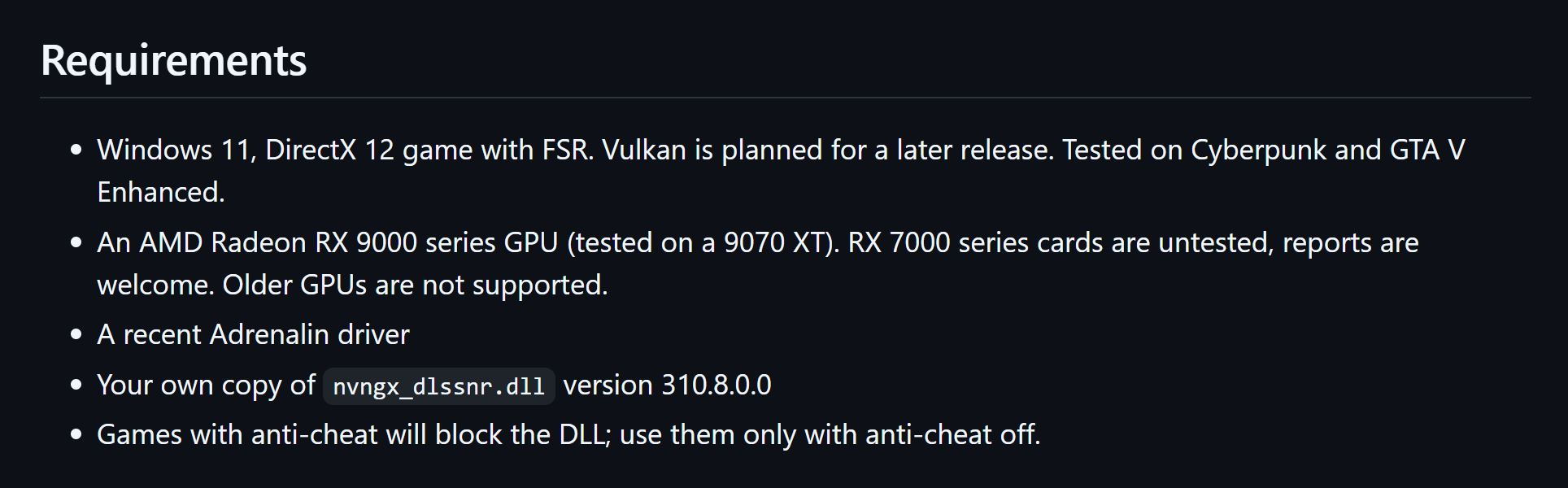
This does not mean the RX 9070 XT has suddenly gained the complete NVIDIA DLSS feature stack. The project specifically runs the DLSS 5 Neural Rendering component, while the game continues using FSR as its existing reconstruction path. NVIDIA Super Resolution, Frame Generation, and other GeForce specific DLSS technologies are not being converted into native Radeon features.
That distinction is particularly important with DLSS 5. NVIDIA's new 3D Guided Neural Rendering technology is primarily designed to modify the final visual presentation using neural processing informed by the underlying 3D scene. It can enhance lighting, materials, skin, hair, shadows, and other visual properties rather than simply reconstructing a lower resolution image. NVIDIA officially launched the technology with NBA 2K27 on September 3 for GeForce RTX 50 Series GPUs.
Blanco says the AMD implementation is a ground up recreation of the neural network runtime rather than a conventional compatibility layer. It uses AMD oriented HIP kernels, memory layouts, and game integration while requiring users to provide their own legitimate copy of NVIDIA's nvngx_dlssnr.dll. No NVIDIA code is included directly in the project.
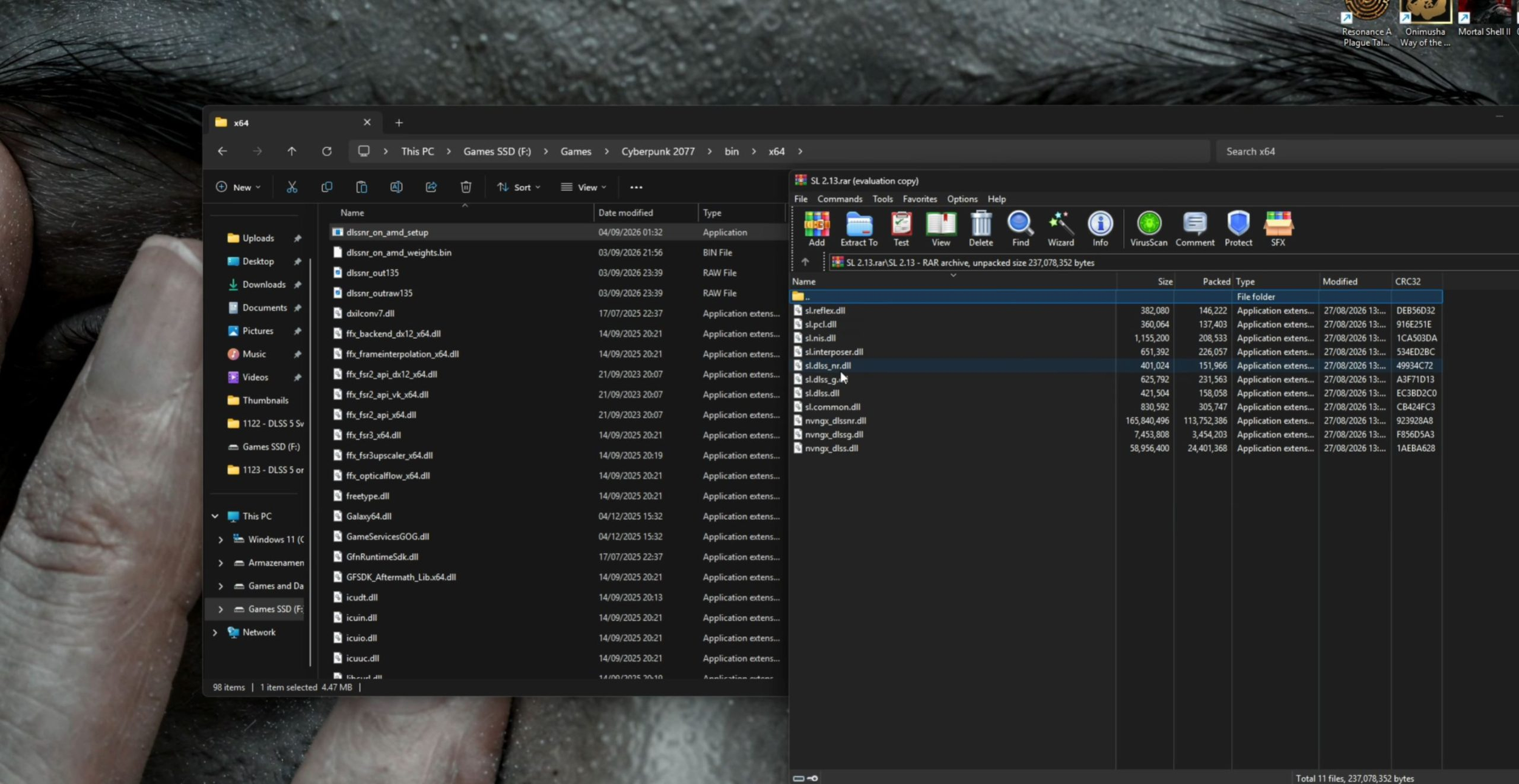
The fact that the neural model can execute on Radeon hardware is technically significant, but performance remains the largest limitation. Early RX 9070 XT testing in Cyberpunk 2077 showed frame rates falling from more than 80 FPS without Neural Rendering to approximately 11 to 12 FPS after it was enabled. Subsequent versions improved performance substantially, and the current project page now reports roughly 33 FPS at 1080p on the RX 9070 XT.
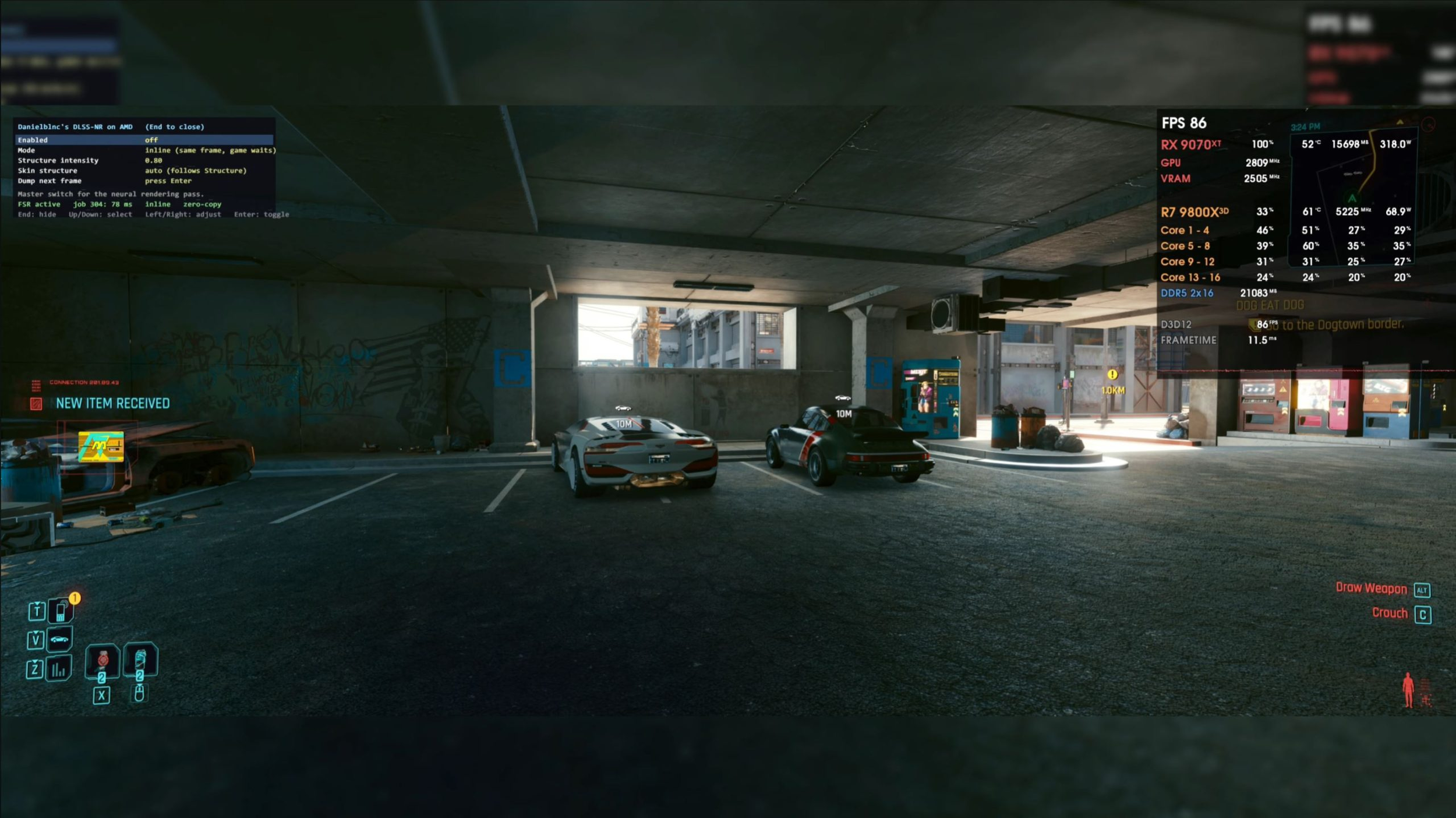
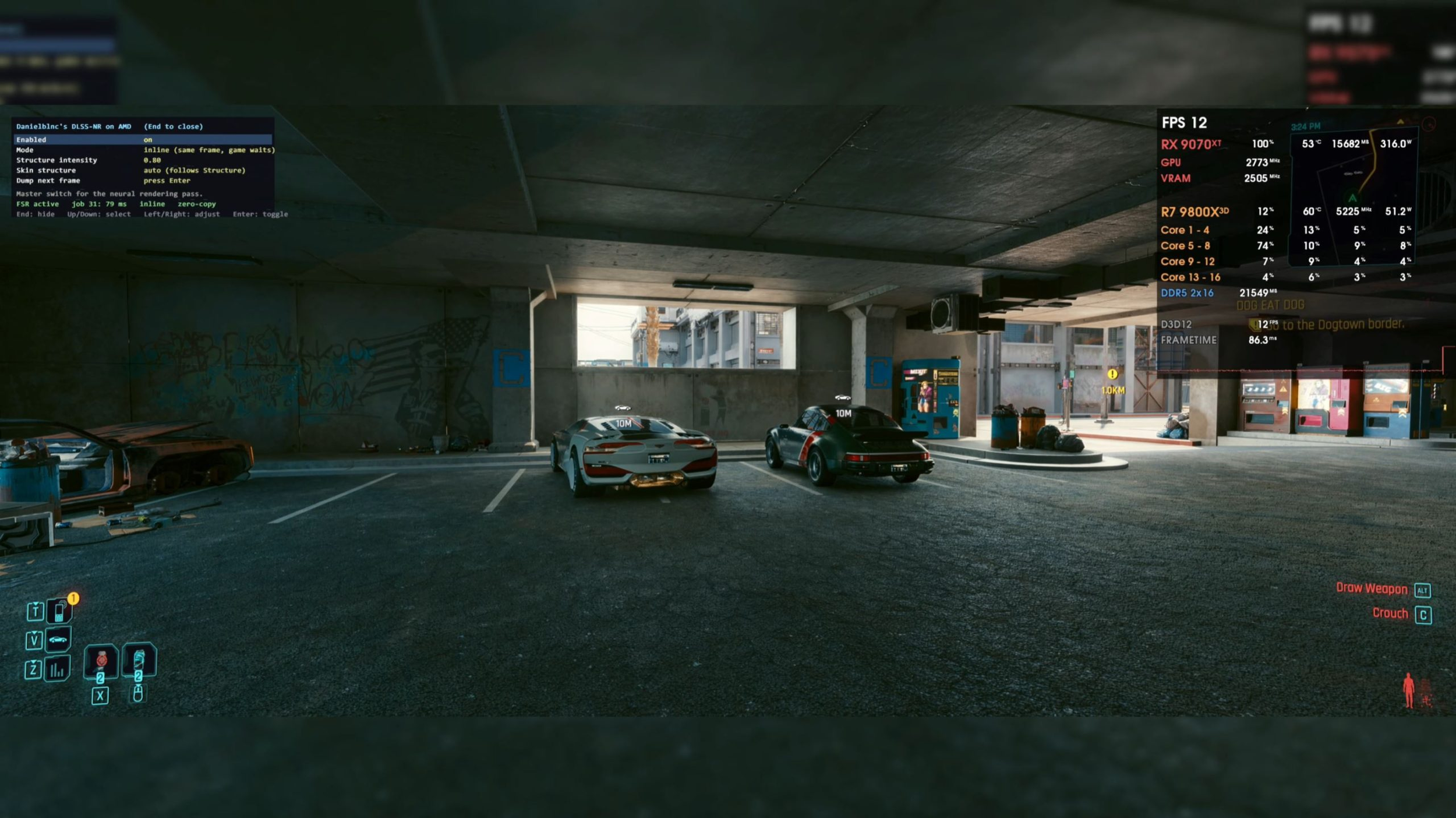
That is still far from practical for most players, particularly considering the performance level normally expected from an RX 9070 XT. Blanco describes optimization as an ongoing effort and ultimately wants performance closer to what an RTX 5070 Ti can deliver with the same workload. Image quality is already described as similar to DLSS 5 running on its intended hardware, although some effects may still be incomplete.
The project currently requires Windows 11, a DirectX 12 game with FSR, AMD Adrenalin 26.1.1 or newer, and the required NVIDIA Neural Rendering library. Games protected by anti cheat systems are also unsuitable because those systems can block the injected library. Vulkan support is planned for a future release.
The Radeon experiment follows a rapid series of community breakthroughs surrounding DLSS 5. Modders previously forced the technology onto RTX 40, RTX 30, and even RTX 20 Series GPUs, demonstrating that the model could technically execute well beyond NVIDIA's original RTX 50 Series launch target. An RTX 3080 experiment, for example, managed to run Neural Rendering but collapsed from approximately 138 FPS to only 4 FPS.
NVIDIA has since confirmed that official DLSS 5 support will eventually expand to GeForce RTX 40 Series GPUs after further optimization work is completed on Blackwell. There is currently no official NVIDIA support planned for Radeon hardware, making the AMD implementation entirely community driven.
Getting DLSS 5 Neural Rendering to execute on an RX 9070 XT is more interesting as a software engineering achievement than as a practical gaming feature right now. At roughly 33 FPS at 1080p, the performance cost remains far too high to compete with a properly optimized implementation.
What makes the project important is what it demonstrates about modern neural graphics workloads. DLSS 5 may be developed and optimized around NVIDIA hardware, but at least part of its neural rendering workload is not fundamentally impossible to execute elsewhere when developers rebuild the surrounding runtime for another architecture.
That does not make DLSS hardware agnostic, nor does it erase the optimization advantages NVIDIA gains from designing its software and GPUs together. It does show how quickly the PC modding community is beginning to experiment across boundaries that GPU vendors traditionally keep separated.
Would you try DLSS 5 Neural Rendering on a Radeon GPU if community optimization eventually reduced the performance penalty?
