
NVIDIA DLSS 5 Runs on RTX 3080 but Deep Rock Galactic Collapses From 138 FPS to 4 FPS
NVIDIA DLSS 5 Neural Rendering has now been forced onto an even older generation of GeForce hardware, with modders successfully enabling the experimental technology on a GeForce RTX 3080 in Deep Rock Galactic. The result proves that Ampere can technically execute the leaked Neural Rendering model, but the initial performance is brutal, with the game falling from approximately 138 FPS to just 4 FPS after the feature is activated.
The demonstration was shared by community developer Flourek, who used the unofficial DLSS 5 implementation that has rapidly spread throughout the PC modding scene since NVIDIA's Neural Rendering runtime was discovered inside an early build of NBA 2K27. Deep Rock Galactic was running at approximately 138 FPS before Neural Rendering was enabled. Activating the feature reduced performance to approximately 4 FPS, representing a loss of around 97%. Frame times simultaneously increased from roughly 7 to 8 ms to approximately 260 ms.
That result makes the implementation effectively unplayable on the RTX 3080 in its original form, but the experiment remains technically significant. NVIDIA has positioned DLSS 5 as a real time Neural Rendering technology that processes existing game data to enhance lighting, materials, skin, hair and other visual characteristics through an AI model. Unlike conventional DLSS Super Resolution, DLSS 5 can substantially alter the final appearance of rendered materials while remaining connected to the underlying game scene. NVIDIA officially plans to introduce the technology this fall.
I GOT DLSS 5 RUNNING ON MY RTX 3080!! pic.twitter.com/fiSnGKtwPW
— Flourek (@flovreq) August 29, 2026
The extreme performance loss on Ampere is largely connected to how the leaked runtime was originally compiled. The experimental implementation relies heavily on FP8 processing designed around newer GPU architectures. GeForce RTX 30 Series GPUs use Ampere Tensor Cores that were built primarily around formats including FP16, BF16 and TensorFloat 32 rather than the FP8 acceleration available on newer architectures. Running the model through this unsuitable execution path creates an enormous computational penalty.
This makes the RTX 3080 result very different from the earlier experiments on GeForce RTX 40 and RTX 50 Series hardware. Community testing on newer GPUs has generally shown Neural Rendering reducing performance by around 40% to more than 50% depending on the title, settings and hardware. Those penalties remain substantial, but the approximately 97% loss recorded on the RTX 3080 demonstrates how poorly the original leaked model maps onto Ampere.
The situation is already evolving. Community developers have subsequently produced experimental FP16 implementations intended specifically to make Neural Rendering more appropriate for GeForce RTX 20 and RTX 30 Series Tensor Cores. Early reports indicate that this execution path should perform considerably better than forcing the FP8 version onto Ampere, although there are not yet enough controlled benchmarks to determine how much performance can realistically be recovered. Recent tests across older GPUs continue to show enormous variation, with some titles dropping into single digit frame rates even on relatively powerful RTX 30 Series cards.
Modding tools are also making experimentation increasingly accessible. The open source DLSS5 Feeder project can generate the DLSS calls required by Neural Rendering even in games that do not normally include DLSS. It combines game frames, depth information and estimated motion vectors through ReShade before passing them through NVIDIA's DLSS runtime and the experimental Neural Rendering add on. This has expanded community testing beyond games with native DLSS integrations and demonstrates how quickly modders are reverse engineering the requirements surrounding the technology.
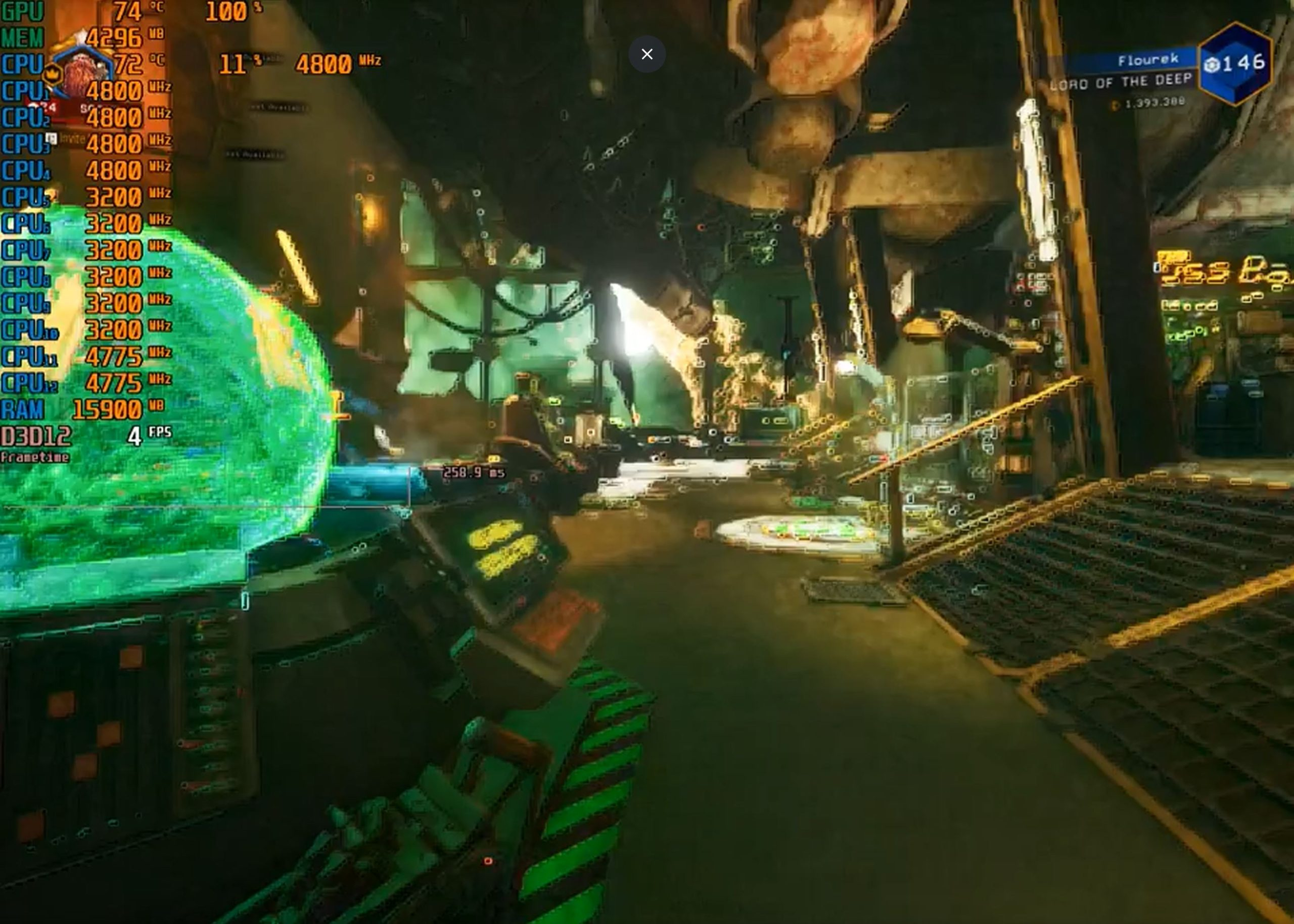
However, none of these experiments confirm official DLSS 5 support for the RTX 3080 or any other GeForce RTX 30 Series GPU. NVIDIA's current DLSS compatibility information lists features including Super Resolution and Ray Reconstruction across older RTX generations, while NVIDIA's DLSS 5 announcement has so far centered its Neural Rendering demonstrations around the GeForce RTX 50 Series. NVIDIA has not announced final RTX 20, RTX 30 or RTX 40 Series compatibility for DLSS 5.
The RTX 3080 experiment follows the rapid expansion of the leaked technology across newer GPUs. As previously covered, DLSS 5 Neural Rendering has already been forced into numerous modern PC games and enabled experimentally on RTX 40 Series hardware after modders replaced incompatible CUDA components. That development already showed that the leaked runtime was less strictly tied to Blackwell than initially expected. Getting it to execute on Ampere pushes that compatibility experiment another generation backward.
The distinction between technical compatibility and practical usability is therefore critical. An RTX 3080 displaying DLSS 5 output proves that the underlying workload can be made to execute, but 4 FPS does not make the feature functionally supported. The more interesting question now is whether FP16 optimization and continued community development can reduce the performance penalty enough to make Neural Rendering viable on older Tensor Core architectures.
Running DLSS 5 on an RTX 3080 is impressive for entirely different reasons than running it on an RTX 5090. Nobody should look at 4 FPS and conclude that Ampere has suddenly gained a usable next generation graphics feature. What the experiment proves is that the hardware barrier may be more flexible than the original implementation suggested.
The newer FP16 work is where this becomes genuinely interesting. If modders can restructure the workload around numerical formats that Ampere Tensor Cores handle efficiently, the gap could shrink considerably. That still does not guarantee acceptable performance, especially because DLSS 5 appears computationally demanding even on newer GPUs.
It also raises a familiar question surrounding NVIDIA's feature segmentation. Technical execution does not automatically mean that older hardware can deliver the experience NVIDIA considers acceptable. The RTX 3080 experiment demonstrates compatibility. Whether it can ever demonstrate practicality is the part worth watching.
If modders eventually make DLSS 5 Neural Rendering perform reasonably well on RTX 30 Series GPUs, should NVIDIA officially support Ampere, or would the hardware limitations make that unrealistic?
