
Intel’s Premium Xeon Strategy Pays Off as Server CPU Prices Rise 48% in Q2
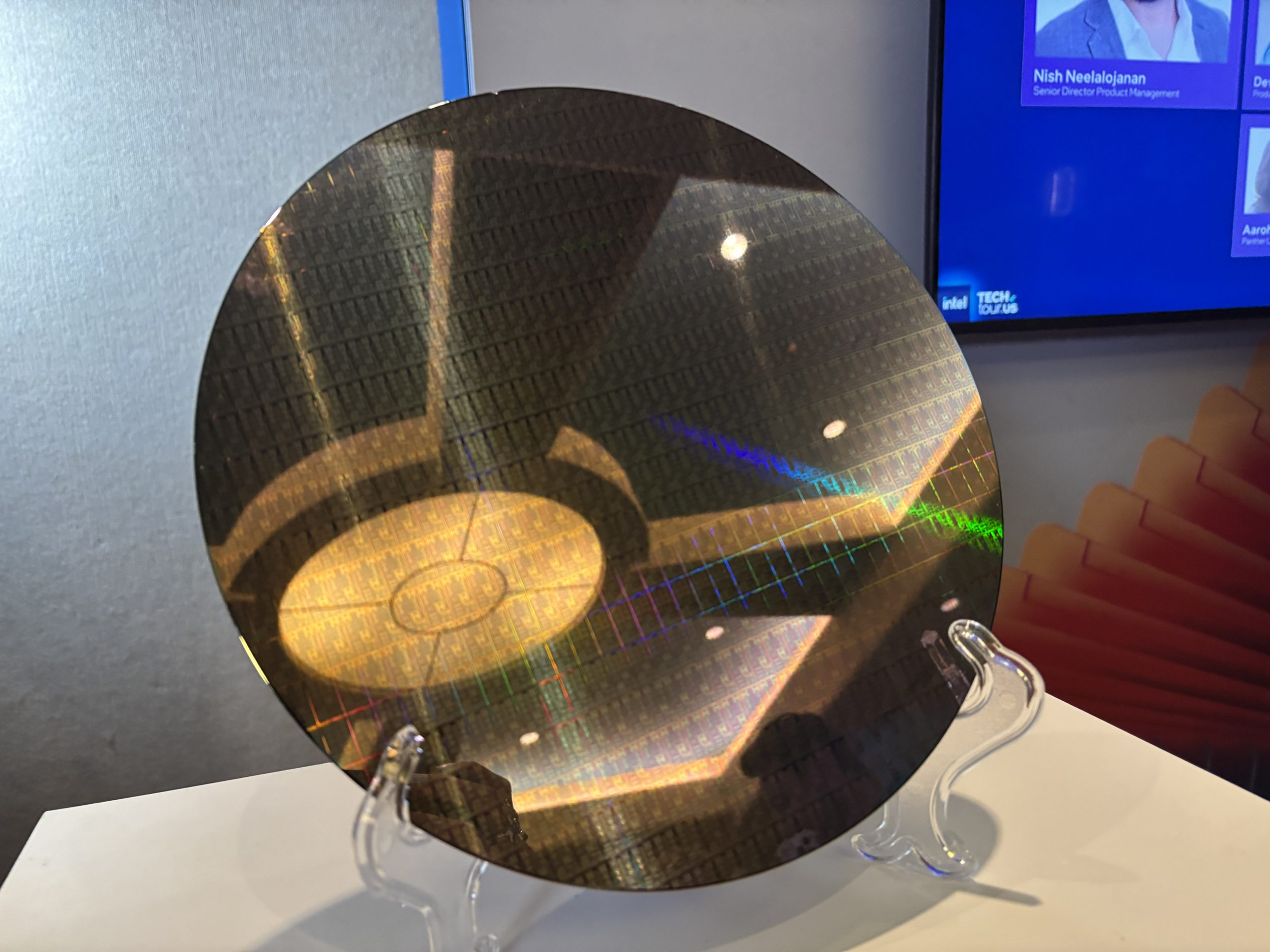
Intel’s decision to prioritize premium server processors delivered a major financial payoff during the second quarter of 2026, with average selling prices for its server products increasing 48% compared with the same period last year.
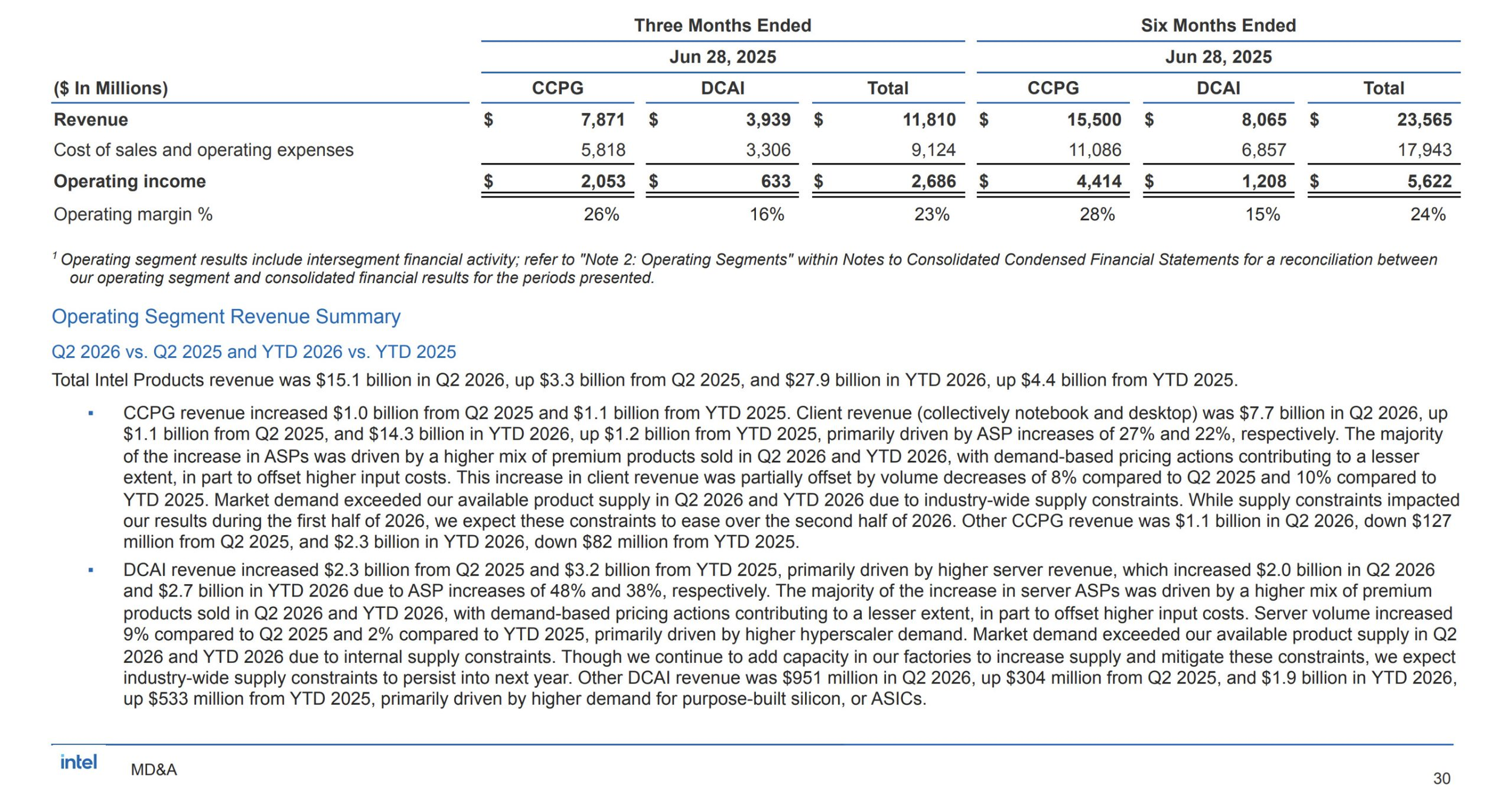
According to Intel’s Q2 2026 filing, the majority of the increase came from a stronger mix of premium server products. Demand based pricing actions also contributed, but Intel said their impact was smaller and partly intended to offset higher production and component costs. Server average selling prices increased 38% across the first 6 months of 2026.
The pricing increase did not come at the expense of shipments. Intel reported that server volume grew 9% during Q2 and 2% during the first half of 2026, primarily because of stronger demand from hyperscale customers. Higher prices and greater volume helped server revenue increase by approximately $2 billion during the quarter.
Intel’s Data Center and AI business generated $6.3 billion in Q2 revenue, representing a 59% increase compared with the previous year. Total company revenue reached $16.1 billion, up 25%, marking Intel’s strongest annual revenue growth in more than 15 years.
The results reinforce how artificial intelligence infrastructure is increasing demand for general purpose processors alongside GPUs and specialized accelerators. CPUs remain essential for workload orchestration, storage, networking, memory management, virtualization, inference, and the growing number of agentic AI services operating across modern data centers.
"As AI expands from training to inference and increasingly to agentic and multi agent systems, general purpose server CPU density continues to increase."
— Quote by: Lip Bu Tan
Intel CEO Lip Bu Tan said the company’s core server CPU business is growing faster than ever as AI systems require more supporting compute. This demand is particularly strong for Xeon 6 processors based on Granite Rapids, which are manufactured using the Intel 3 process.
"Granite Rapids is extremely tight, because the reception there has been fantastic."
— Quote by: Lip Bu Tan
Intel confirmed that customer demand exceeded its available server supply during Q2 because of internal production constraints. The company is adding factory capacity to increase output, but expects wider shortages affecting substrates, memory, and other critical components to continue into 2027.
Granite Rapids appears to be one of the largest beneficiaries of this environment. Its premium configurations offer high core counts, large memory capacity, greater bandwidth, and integrated acceleration for enterprise, cloud, database, and artificial intelligence workloads. Customers purchasing these higher value processors are raising Intel’s average selling prices while helping the company improve profitability across its Data Center and AI division.
The results also support Intel’s wider strategy of prioritizing Xeon production while processor availability remains constrained. Strong server demand has already encouraged Intel to allocate more production toward higher margin data center products, potentially placing additional pressure on availability across lower priority segments. Intel has also benefited from improved manufacturing yields and its ability to convert partially functional server silicon into lower tier Xeon products. Intel selling salvaged Xeon chips show how tight market conditions can improve wafer economics by allowing more usable dies to reach customers.
The 48% increase does not mean Intel simply raised the price of every server CPU by nearly half. The larger factor was product mix, with customers buying more premium Xeon configurations designed for demanding hyperscale and artificial intelligence infrastructure.
That distinction is important. Intel is generating more revenue from each server processor because customers increasingly need higher core counts, greater memory bandwidth, and larger platform configurations. At the same time, limited supply gives Intel additional pricing power and allows the company to prioritize its most profitable products.
The opportunity is substantial, but Intel must expand production quickly. If Granite Rapids remains difficult to obtain, hyperscale customers may increase purchases from AMD or accelerate the development of custom processors. Intel’s premium strategy is working, but maintaining that momentum will depend on turning strong demand into dependable supply.
Can Intel convert the current Granite Rapids shortage into lasting Xeon growth, or will limited supply create a larger opportunity for AMD EPYC?
