
Intel Xeon 6 Gains 8000 MT/s RDIMM Support as Gen 2 MRDIMM Arrives in 2027
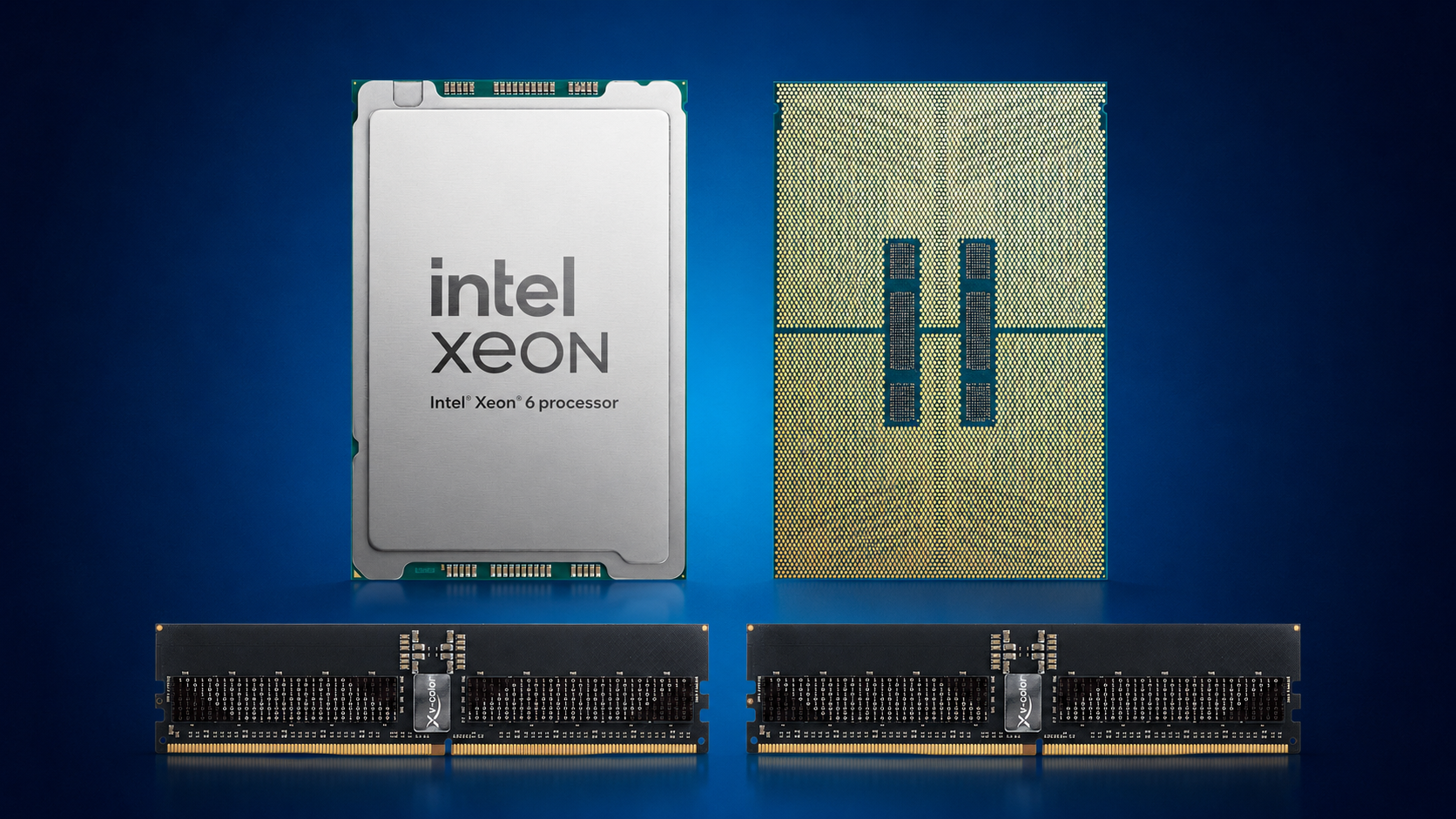
Intel is expanding the memory capabilities of its Xeon 6 server platform with support for DDR5 RDIMM operating at 8000 MT/s, giving data center customers additional bandwidth without requiring the more specialized MRDIMM format. Production availability is targeted for August to September 2026 across select Xeon 6700P and Xeon 6+ configurations.
According to the Intel Newsroom, select Xeon 6700P processors will support 8000 MT/s RDIMM at 1 DIMM per channel. Existing Xeon 6 platforms will receive the functionality through an Intel platform update and compatible BIOS release, while Xeon 6+ systems will also support the faster modules.
Moving from 6400 MT/s to 8000 MT/s represents a 25% increase in the raw memory transfer rate. Intel reports that the updated configuration can deliver 6% lower memory latency and up to 20% more total memory bandwidth, although the final performance improvement will depend on the processor, workload, software, memory capacity, and server configuration.
Intel tested the new memory configuration using a dual socket system containing 2 Xeon 6787P processors and 16 modules with 64 GB of capacity each. The company says performance improvements appeared across several workloads, with the largest benefits expected in applications that frequently move large quantities of data between processors and system memory.
Modern AI servers increasingly depend on host processors to manage larger models, feed multiple accelerators, process growing data pipelines, and coordinate storage and networking resources. Faster GPUs and additional CPU cores cannot deliver their full performance when the memory subsystem cannot provide data quickly enough.
"My view is that memory speed is becoming a competitive advantage."
— Srini Krishna
The next stage of Intel’s roadmap will introduce support for second generation MRDIMM modules operating at up to 8800 MT/s on Xeon 6900P processors during Q1 2027. Intel is targeting systems containing between 72 and 128 processor cores, with intended workloads including artificial intelligence, analytics, scientific computing, and other applications that depend heavily on memory bandwidth.
However, the 2027 announcement should not be interpreted as the first arrival of 8800 MT/s memory on Xeon 6. Current Xeon 6900P processors, including the 72 core Xeon 6960P and 128 core Xeon 6980P, already list support for first generation MRDIMM at 8800 MT/s. The future update is specifically connected to second generation MRDIMM compatibility rather than a completely new transfer speed.
MRDIMM improves memory bandwidth by allowing 2 ranks to operate together through additional onboard logic. Intel states that current MRDIMM configurations can provide more than 37% greater memory bandwidth than conventional RDIMM, making the format particularly useful for high core count processors that can quickly become limited by memory throughput.
The wider industry roadmap is already extending beyond 8800 MT/s, JEDEC is preparing second generation DDR5 MRDIMM designs targeting up to 12800 MT/s, representing a substantial increase over current server memory speeds. This suggests that Intel’s 8800 MT/s Gen 2 implementation will serve as an early compatibility stage rather than the final performance ceiling for the technology.
The continued development of RDIMM and MRDIMM could extend the commercial relevance of DDR5 inside data centers even as the industry begins preparing for DDR6. Server operators can gain additional bandwidth while retaining established processor platforms, memory controllers, module designs, and validation processes.
The move to 8000 MT/s RDIMM may be more important for mainstream server deployments than the headline 8800 MT/s MRDIMM roadmap. Standard RDIMM is widely supported, easier to source, and generally less expensive than MRDIMM, making the bandwidth increase accessible to a broader range of data center customers.
The 2027 MRDIMM announcement still matters, but not because 8800 MT/s is a completely new speed for Xeon. Its value will come from second generation module support, improved qualification, wider supplier availability, larger capacities, and a clearer path toward 12800 MT/s.
Memory bandwidth is becoming a critical infrastructure decision as processors and accelerators continue adding more compute resources. Without corresponding improvements in memory performance, additional CPU cores and AI accelerators risk spending more time waiting for data rather than processing it.
Will 8000 MT/s RDIMM provide enough bandwidth for future AI servers, or will MRDIMM become essential for high core count platforms?
