
Jensen Huang Wins Over Japan With Local Charm and a 27,500 GPU AI Deal
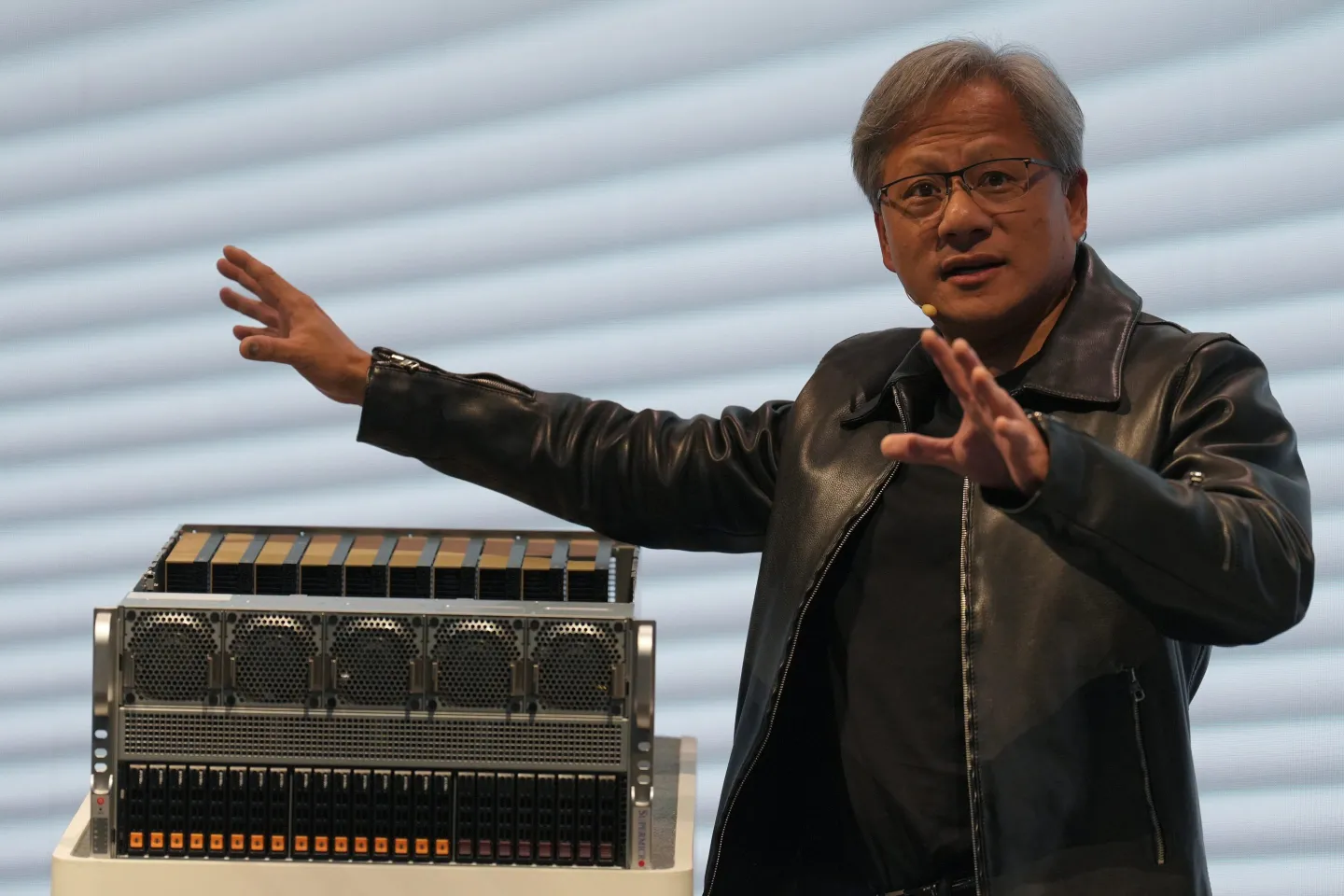
NVIDIA CEO Jensen Huang combined major artificial intelligence announcements with an unusually personal approach during his mid July visit to Japan, meeting government officials, developers, industrial leaders, and critical members of the semiconductor supply chain. While the visit produced one of NVIDIA’s largest national infrastructure agreements, Huang’s enthusiasm for local food and direct engagement with Japanese executives became an equally prominent part of the trip.
Huang made a surprise appearance at NVIDIA’s Build a Claw event in Tokyo, where developers were creating robotic systems using open models and the company’s physical AI platform. He spoke directly with participants, examined their projects, and gave away 2 signed DGX Spark systems. NVIDIA said the event demonstrated how individual developers could create personal AI agents and robotic applications using locally accessible hardware and software.
The larger business announcement involved a partnership between NVIDIA and Noetra to construct what the companies describe as the world’s first national infrastructure dedicated to physical AI. The planned AI factory will contain 13,750 Vera CPUs and 27,500 Rubin GPUs, providing 140 MW of data center capacity through Vera Rubin NVL72 systems, the NVIDIA DSX platform, Spectrum X networking, and BlueField data processing units.
Supported by Japan’s Ministry of Economy, Trade, and Industry, the infrastructure will provide the computing foundation for the FRONTia Project. The initiative will develop multimodal foundation models intended for robotics, intelligent manufacturing, logistics, healthcare, telecommunications, digital twins, and autonomous AI agents. Noetra plans to make pretrained model weights available to Japanese developers and businesses alongside NVIDIA technologies including Nemotron, Cosmos, Isaac GR00T, and NeMo.
Huang also gathered more than 30 senior executives from 16 Japanese semiconductor, materials, memory, equipment, and electronics companies at an izakaya in Tokyo’s Kanda district. Participating companies included Kioxia, Tokyo Electron, Advantest, Renesas Electronics, Sumitomo Electric, TDK, Murata Manufacturing, Shin Etsu Chemical, Panasonic, Mitsubishi Electric, and several other important members of the technology supply chain.
According to a report covering the gathering, Sumitomo Electric Chairman and CEO Masayoshi Matsumoto was particularly impressed by Huang’s approach. Matsumoto reportedly observed that the NVIDIA executive ate almost every dish, repeatedly described the food as delicious, and personally served food to other people at the table. Sumitomo Electric officially identifies Matsumoto as its current Chairman and CEO.
"He has the spirit of a Japanese business leader from the postwar era."
— Masayoshi Matsumoto
Jensen’s doing exactly what he did with memory a year ago in Korea once again with Japan
— Nick Dorsey (@Midnight_Captl) July 19, 2026
Chairman of Sumitomo Electric commenting on NVIDIA’s visit to Japan
Sumitomo is the world’s leading manufacturer of Indium Phosphide (InP)- the foundational material used in high spec…
Huang reportedly ate yakiton, offal hotpot, and an exceptionally large serving of fries during the evening. After leaving the restaurant, he handed red bean buns to members of the public waiting outside. The dinner included senior representatives from companies that supply memory, semiconductor equipment, materials, optical components, and other technologies needed to manufacture NVIDIA’s increasingly complex AI systems.
The informal gathering therefore carried serious strategic importance. NVIDIA depends on a broad Japanese supply network extending beyond GPU manufacturing into memory, test equipment, substrates, optical communication, passive components, chemicals, and advanced materials. Building personal relationships with the leaders of those companies could become increasingly valuable as Vera Rubin and future platforms require greater production scale and tighter coordination across the entire infrastructure stack.
Huang also met executives from Fujitsu, Kawasaki Heavy Industries, FANUC, and Yaskawa to discuss physical AI and robotics. NVIDIA believes Japan can combine its established strengths in precision manufacturing, mechatronics, and industrial automation with AI to address labor shortages and develop a new generation of intelligent factories and autonomous machines.
The technical scale of Japan’s 27,500 GPU Vera Rubin AI factory, including its role in the FRONTia Project and NVIDIA’s wider physical AI strategy. The project illustrates how NVIDIA is expanding beyond accelerator sales by supplying complete national infrastructure covering processors, networking, software, foundation models, robotics tools, and development platforms.
Hensen Huang’s public personality has become a genuine business asset for NVIDIA. His willingness to meet developers, eat with supply chain executives, serve food, and engage with local culture creates a level of personal visibility rarely associated with the chief executive of a company operating at NVIDIA’s scale.
The charm offensive also supports a carefully structured industrial strategy. Japan possesses many of the equipment, materials, memory, robotics, and manufacturing companies NVIDIA needs to expand Vera Rubin and physical AI. Huang’s approach helps transform those supplier relationships into a broader ecosystem aligned around NVIDIA hardware and software.
The 27,500 GPU agreement remains the most commercially important result of the visit, but the personal connections may prove equally valuable as competition increases for advanced components and manufacturing capacity.
Does Jensen Huang’s personal approach strengthen NVIDIA’s business partnerships, or has his celebrity increasingly become a distraction from the company’s technology?
