
Intel Reportedly Adds Overtime Bonuses at Ohio One as EMIB T Nears 2027 Production
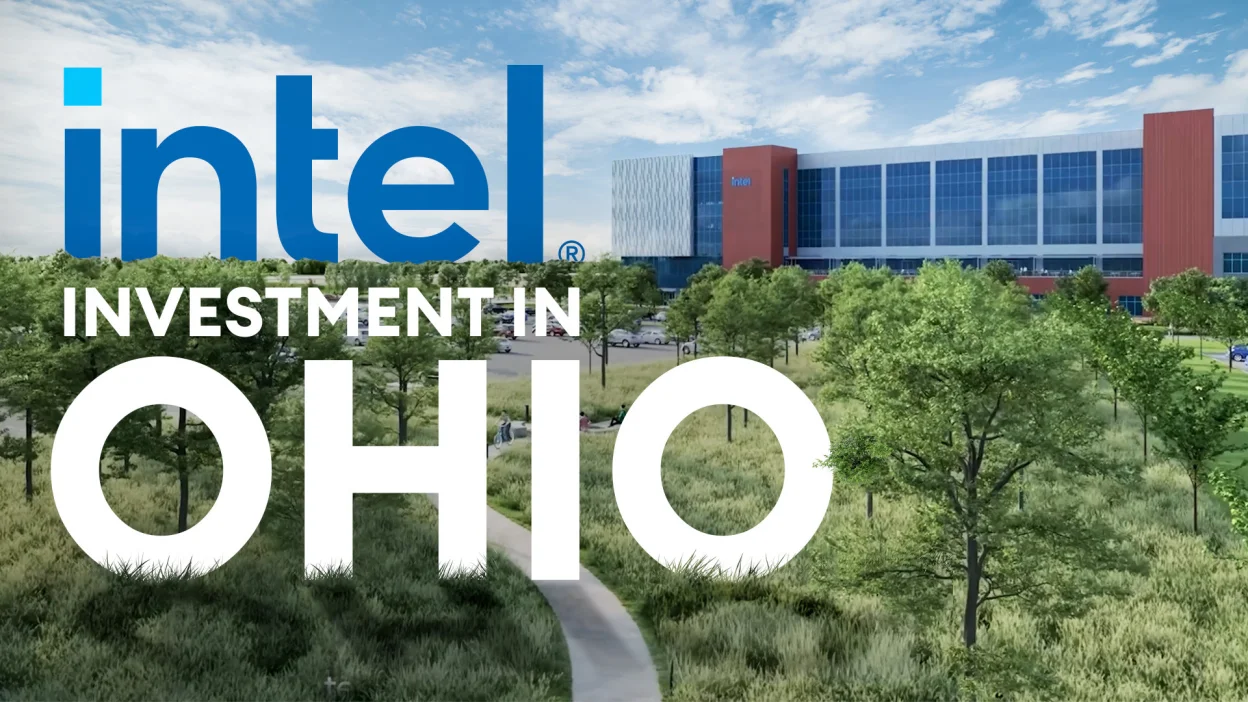
Construction workers at Intel’s Ohio One semiconductor campus are reportedly being offered additional bonuses for working extra hours as activity increases at the delayed manufacturing project. A notice shared online states that the incentives would begin immediately, although Intel and project contractor Bechtel have not publicly confirmed the program or clarified whether it changes the official construction schedule.
Starting ASAP, bonuses on extra hours$INTC pic.twitter.com/5kWAygdYxs
— An old old wooden ship (@Anoldoldwooden) July 31, 2026
Intel is investing more than 28 billion$ in the first 2 factories at the nearly 1,000 acre campus in New Albany, Ohio. The company officially plans to complete Module 1 in 2030 and begin operations between 2030 and 2031. Module 2 is scheduled for completion in 2031, followed by operations during 2032. Intel previously said it would maintain the ability to accelerate construction if customer demand justified additional capacity.
"We will continue construction at a slower pace, while maintaining the flexibility to accelerate work."
— Quote by: Naga Chandrasekaran.
| Intel Development | Current Status | Expected Timing |
|---|---|---|
| Ohio One Module 1 | Under construction | Completion in 2030, with operations expected between 2030 and 2031 |
| Ohio One Module 2 | Under construction | Completion in 2031, with operations expected in 2032 |
| Construction Bonuses | Reported through a notice shared online | Not officially confirmed |
| EMIB T Package Yield | Reportedly approaching 90% | Not officially confirmed |
| EMIB T Substrate Yield | Initial production yield reportedly near 50% | Expected to improve during the production ramp |
| EMIB T Mass Production | Supplier preparation underway | Expected during 2027 |
The reported construction incentives do not confirm that Intel has advanced Ohio One beyond its existing timetable. However, they suggest contractors may be increasing available labor hours as structural work continues. Intel says the project has already generated millions of construction hours and is expected to create 7,000 construction jobs before eventually supporting 3,000 permanent Intel positions.
Intel’s advanced packaging roadmap is progressing on a faster timeline. Taiwanese substrate manufacturer Unimicron says EMIB T is unlikely to reach full mass production before 2027, with early substrate yields reportedly targeting approximately 50%. Separate supply chain estimates place overall package yield near 90%, although Intel has not publicly confirmed either figure.
No expensive silicon interposer means there is a structural margin advantage that TSM cannot match without redesigning its entire stack.
— ImNotHarsh | 📈💸 (@imnotharsh) July 31, 2026
Cost-sensitive ASIC & CPU AI customers (not the absolute top-tier H100/H200 class) will seriously evaluate switching for 2-3 generations.… https://t.co/OpceB81W13
EMIB connects multiple logic dies and High Bandwidth Memory stacks through compact silicon bridges embedded inside the package substrate. EMIB T adds through silicon vias to those bridges, improving vertical power delivery and signal routing for large artificial intelligence and high performance computing packages. Intel says the technology can support systems larger than 8 times reticle size during 2026 and more than 12 times reticle size by 2028.
The reported yield figures should still be treated cautiously. Previous reporting on Intel Foundry customer activity cited a higher EMIB T yield estimate of 98%, suggesting that different reports may be measuring separate package designs, production stages, or manufacturing processes. Intel has not confirmed either percentage.
The Ohio project also remains strategically important despite its long schedule. Intel recently reiterated its commitment to the campus after SK hynix denied reports that it planned to acquire the facilities. Intel has not confirmed which process node will initially operate at Ohio One, meaning claims connecting the site directly to high volume Intel 14A production remain speculative.
The overtime incentives are a positive signal for construction activity, but they should not be interpreted as proof that Ohio One will open earlier than 2030. Intel needs to align an enormous manufacturing investment with real customer demand, particularly after years of foundry losses and repeated project delays.
EMIB T could become commercially important much sooner. Advanced packaging capacity is one of the largest constraints facing artificial intelligence hardware, and Intel does not need to manufacture every compute die to secure valuable business. It can package logic produced by external foundries, connect it with HBM, and provide customers with an alternative to capacity constrained competitors.
The decisive milestone will not be a single reported yield percentage. Intel must improve substrate output, maintain package quality, secure external customers, and deliver predictable production volumes during 2027.
Could EMIB T become Intel Foundry’s fastest route back into semiconductor leadership, or will its recovery still depend on Ohio One and future process nodes?
