
Intel Razor Lake AX Appears in HWiNFO as Future Halo Class SoC Takes Shape

Intel Razor Lake AX has surfaced in preliminary HWiNFO support, providing another tangible reference to the rumored premium SoC that could eventually become Intel's answer to AMD Ryzen AI Max and future Halo class processors. Intel has not officially announced Razor Lake AX, but early hardware monitoring support suggests software developers are already preparing to identify the platform well ahead of any potential commercial release.
The reference appeared among upcoming changes for HWiNFO, which routinely begins preparing hardware recognition well before new processors reach consumers. The listing only confirms preliminary Razor Lake AX recognition and does not disclose CPU cores, graphics configuration, memory capacity, power limits, or a launch date. Intel itself has not yet confirmed that Razor Lake AX will become a shipping product, meaning most of its technical specifications remain firmly within rumor territory.

Previous leaks describe Razor Lake AX as a significantly larger SoC than Intel's conventional mobile processors, potentially using a BGA4326 package measuring approximately 37.5 × 56.5 mm. Graphics configurations with either 16 or 32 Xe3 class cores have also been reported, which would place the highest configuration far beyond the integrated graphics scale found in Intel's current client processors. These specifications remain unconfirmed.
The graphics direction would represent a major expansion of the strategy Intel has already established with Panther Lake. Intel officially launched Core Ultra Series 3 with configurations reaching 12 Xe cores, while the company says its latest integrated Arc graphics can deliver substantially higher gaming performance than the previous generation. Razor Lake AX could take that concept further by combining a much larger graphics engine with the CPU and NPU resources required for premium gaming, creator, and local AI systems.
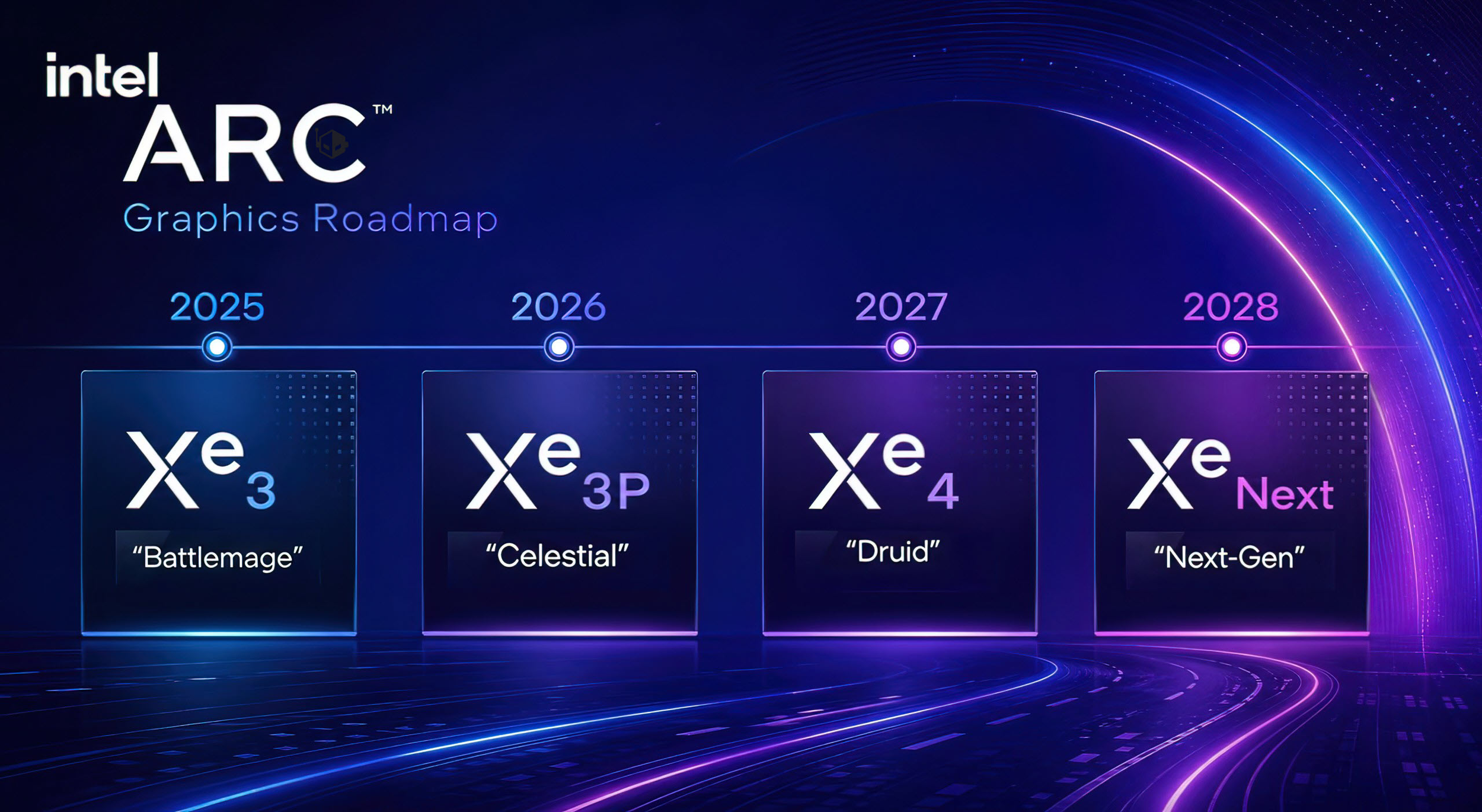
Intel also appears increasingly serious about larger integrated graphics outside traditional mobile platforms. Recent information surrounding Nova Lake points to configurations with 12 Xe3P graphics cores and a dedicated 40W graphics power allocation, suggesting integrated graphics will remain a major part of Intel's client roadmap before Razor Lake arrives.
Memory could become equally important. Earlier Razor Lake AX information indicated that Intel may return to on package memory after previously using the approach with Lunar Lake. Earlier report on Intel potentially bringing on package memory back with Razor Lake AX, LPDDR6 would be a logical candidate for a future design requiring substantially more bandwidth for integrated graphics and AI workloads, although neither the memory technology nor final capacity has been confirmed.
The competitive target is clear. AMD's current Ryzen AI Max Plus 395, formerly codenamed Strix Halo, combines 16 Zen 5 CPU cores with Radeon 8060S graphics featuring 40 RDNA 3.5 compute units. AMD also supports as much as 128 GB of unified LPDDR5X memory, allowing the processor to handle workloads that would traditionally require separate CPU and discrete GPU memory pools. AMD is already positioning the same architecture for local AI development through its Ryzen AI Halo platform.
Razor Lake AX is expected to arrive after Nova Lake, placing any launch several years away. Estimates currently point toward approximately 2028, although Intel has provided no official schedule. That distance is important because architecture, process technology, memory specifications, graphics configuration, and even the product itself could change substantially before launch. HWiNFO support therefore provides evidence that the platform name is entering software preparation, but it should not be interpreted as confirmation of the rumored specifications surrounding it.
Razor Lake AX is becoming considerably more interesting because the individual rumors are beginning to form a coherent strategy. Intel already has strong integrated graphics with Panther Lake, Nova Lake is reportedly expanding Xe3P much further, and Razor Lake AX could ultimately combine an even larger GPU with on package memory and a premium SoC design.
AMD demonstrated with Strix Halo that there is a real market for processors combining powerful CPU cores, large integrated graphics, and massive unified memory pools. If Intel genuinely intends to deploy as many as 32 Xe class graphics cores, Razor Lake AX would not be another conventional laptop processor. It could become a platform designed to replace discrete graphics in certain premium notebooks, compact workstations, gaming systems, and local AI machines.
The important distinction is that HWiNFO support confirms software preparation, not final specifications. The 32 core GPU configuration, LPDDR6 memory, package size, and 2028 timing remain reported roadmap information until Intel officially details the platform.
Could a Razor Lake AX processor with powerful integrated graphics and large on package memory convince you to choose an Intel powered gaming laptop without a discrete GPU?
