
Intel Plans to Produce EMIB Packaging in South Korea to Meet Surging AI Demand
As the global race for artificial intelligence accelerates, the demand for advanced semiconductor packaging technologies has reached unprecedented levels. NVIDIA’s strict co design rules have amplified the need for high density packaging platforms such as EMIB and CoWoS, placing enormous strain on a supply chain that is already unable to keep pace. While TSMC continues to dominate the segment with its CoWoS solutions, a new competitor is now positioned to expand the landscape. Intel Foundry is emerging with strong momentum through its EMIB and Foveros technologies, and new reports suggest its packaging footprint is set to grow significantly.
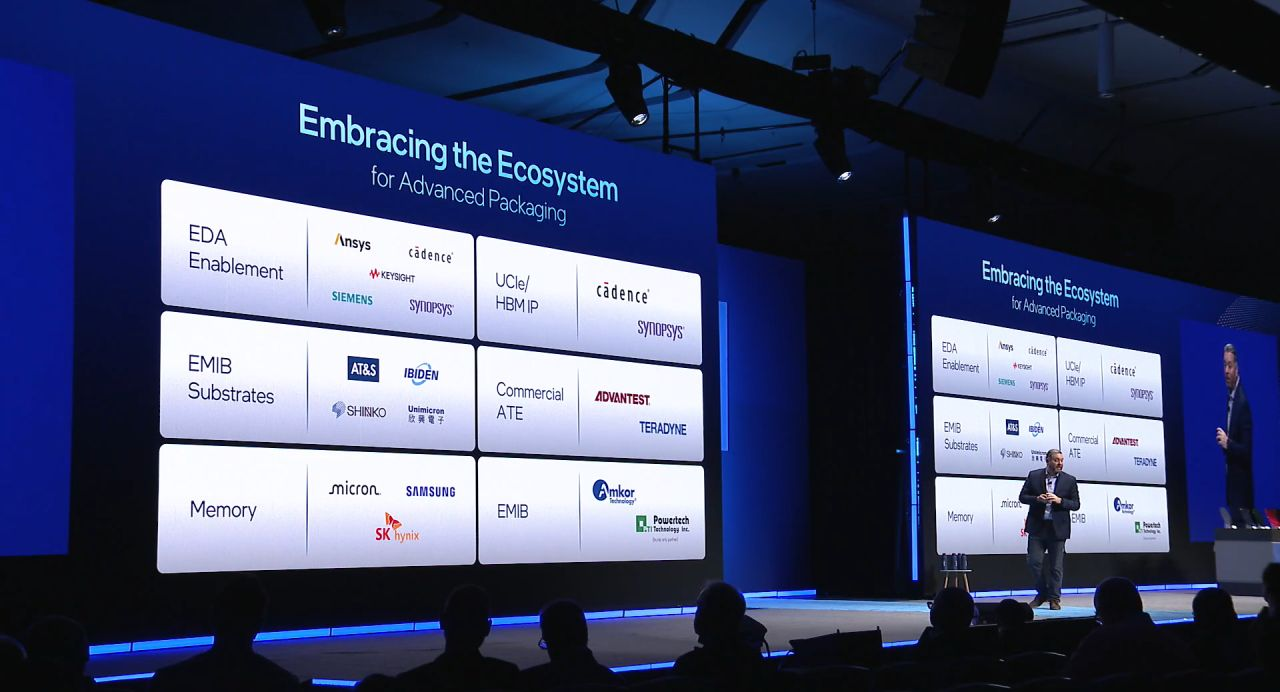
According to ETNews, Intel has outsourced part of its EMIB production to Amkor’s advanced packaging facilities in Incheon, South Korea. This move is seen as a clear indicator that demand for Intel’s packaging technologies has exceeded the capacity of its current United States based infrastructure, prompting the company to accelerate production through trusted partners.
Intel still maintains substantial packaging capability across its domestic facilities. However, meeting the explosive demand from AI customers would require rapid expansion that cannot be achieved solely through internal scaling. By partnering with Amkor, Intel avoids the time and expense associated with new facility construction while dramatically increasing throughput. EMIB is expected to play a significant role in driving Intel Foundry revenue in the years ahead, particularly before the introduction of the new fourteen angstrom process node.
Industry reports indicate that several major technology companies have already expressed strong interest in Intel’s packaging services. Among the most notable names are MediaTek, Google, Qualcomm, and Tesla. These companies see Intel as an increasingly valuable alternative as TSMC’s CoWoS capacity remains saturated by enormous orders from hyperscalers and AI chip vendors.
There are several compelling advantages for companies choosing Intel Foundry. One of the most important is geographic efficiency. For example, NVIDIA currently must ship wafers produced at its Arizona based fabrication partners to Taiwan for CoWoS packaging, adding cost, logistical overhead, and months of additional lead time. Intel offers an opportunity to manufacture wafers and complete advanced packaging within the United States, creating a more streamlined and cost effective workflow that aligns with the needs of AI customers seeking rapid deployment.
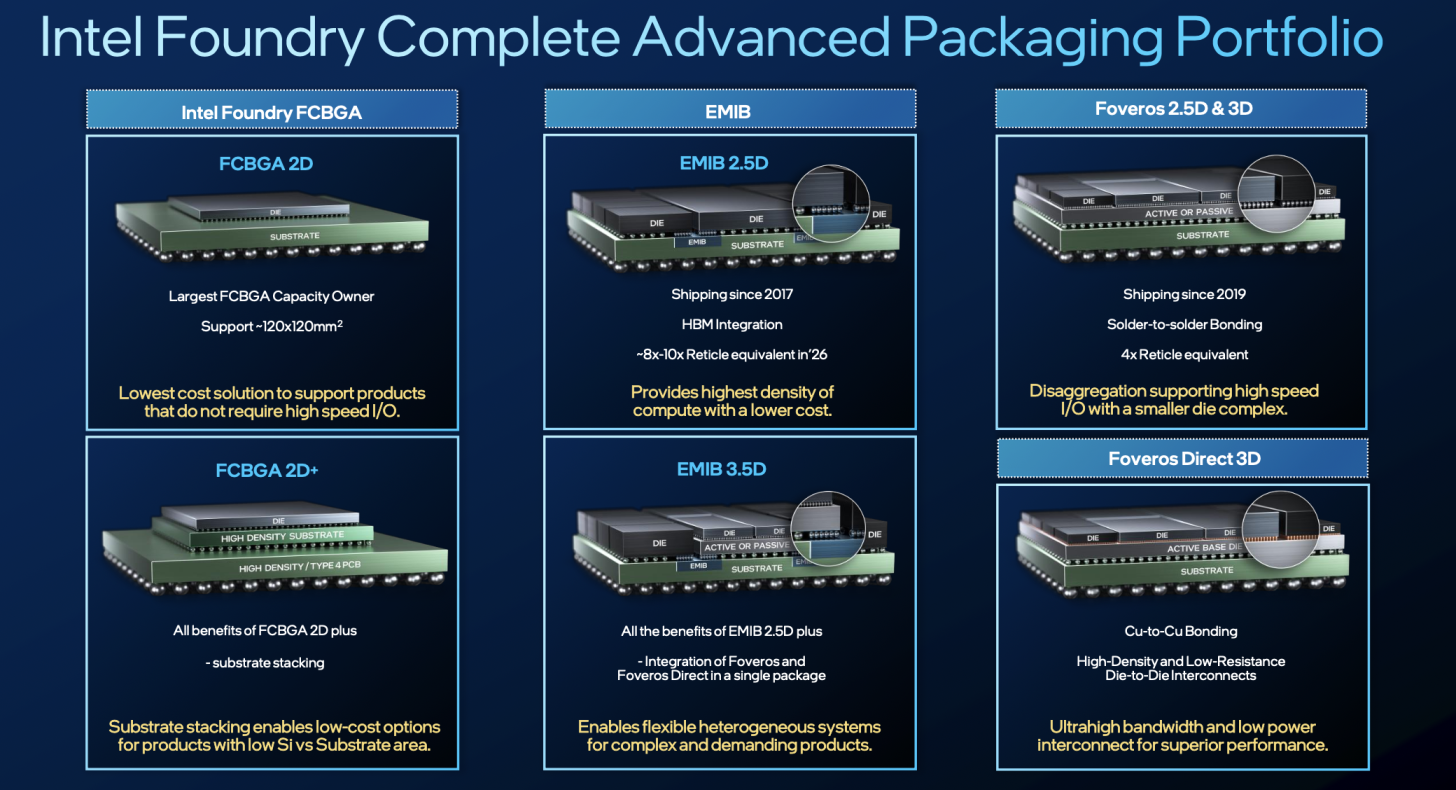
EMIB itself is a major differentiator. The technology enables high bandwidth interconnects between chiplets without the complexity of full silicon interposers, making it ideal for the chiplet based architectures increasingly common across AI and high performance compute workloads. Foveros further expands Intel’s capabilities with three dimensional stacking and advanced vertical interconnects.
With demand for AI compute skyrocketing and TSMC’s CoWoS capacity stretched to its limits, Intel Foundry is poised to play a far more influential role in the advanced packaging market. Industry analysts report growing optimism surrounding Intel’s packaging portfolio, and early customer traction indicates that the company’s strategy is resonating.
Intel’s ambitions in this space are clear. By expanding EMIB production into South Korea while strengthening its domestic footprint, Intel aims to position itself as a critical supplier for the next generation of AI and high performance systems. The coming years will reveal how effectively the company can scale its foundry operations to match the pace of the AI revolution.
Do you think Intel Foundry can successfully challenge TSMC in advanced packaging, or will CoWoS remain the dominant platform for AI compute
