
Intel Crescent Island Becomes GPU D270 With 1.3 PFLOPS FP8 and Up to 480 GB LPDDR5X
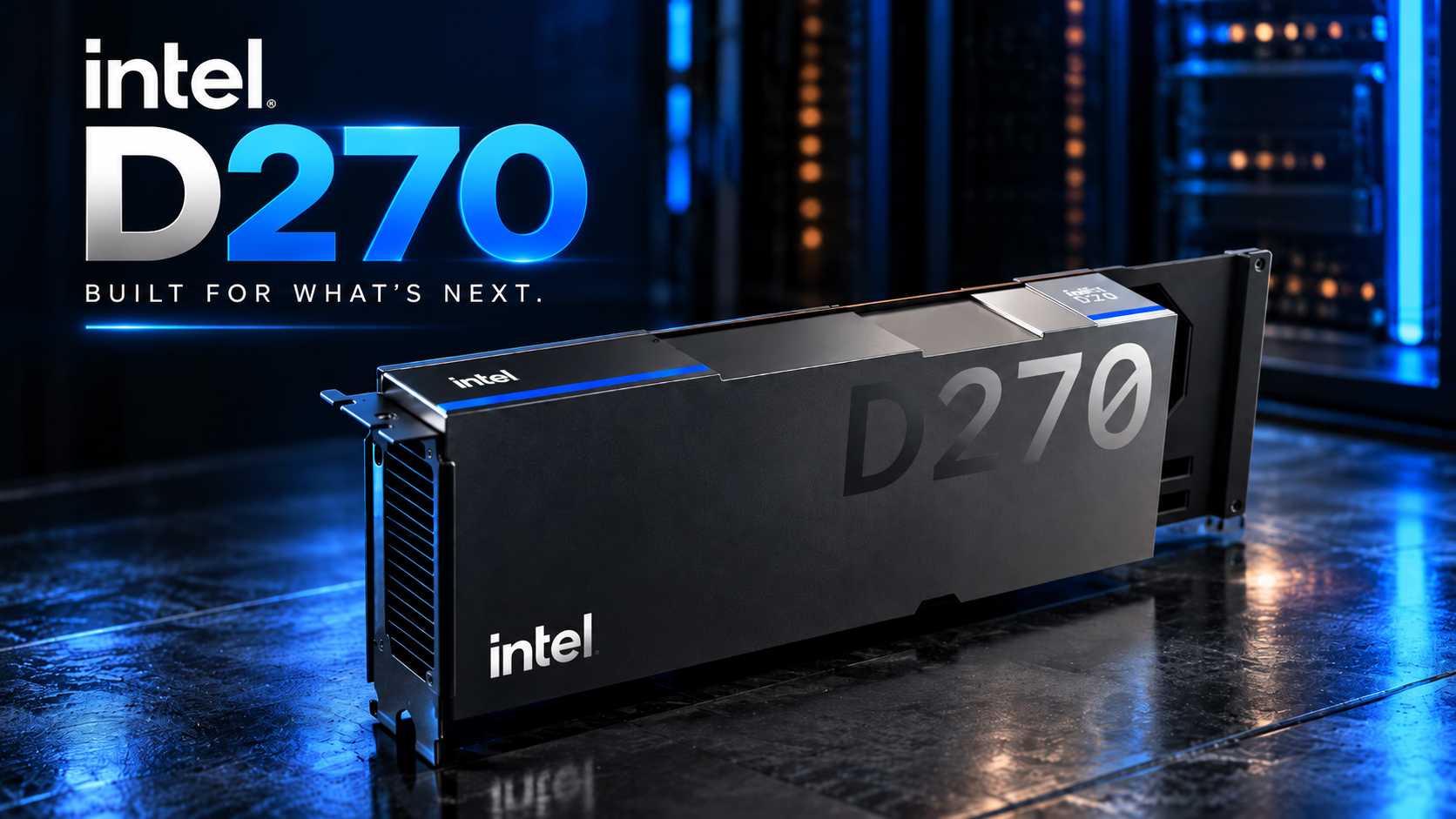
Intel has revealed new specifications for its Crescent Island data center GPU, now officially branded as the Intel GPU D270, targeting agentic AI inference with 1.3 PFLOPS of FP8 compute, up to 480 GB of LPDDR5X memory, and a 350 W air cooled PCIe design.
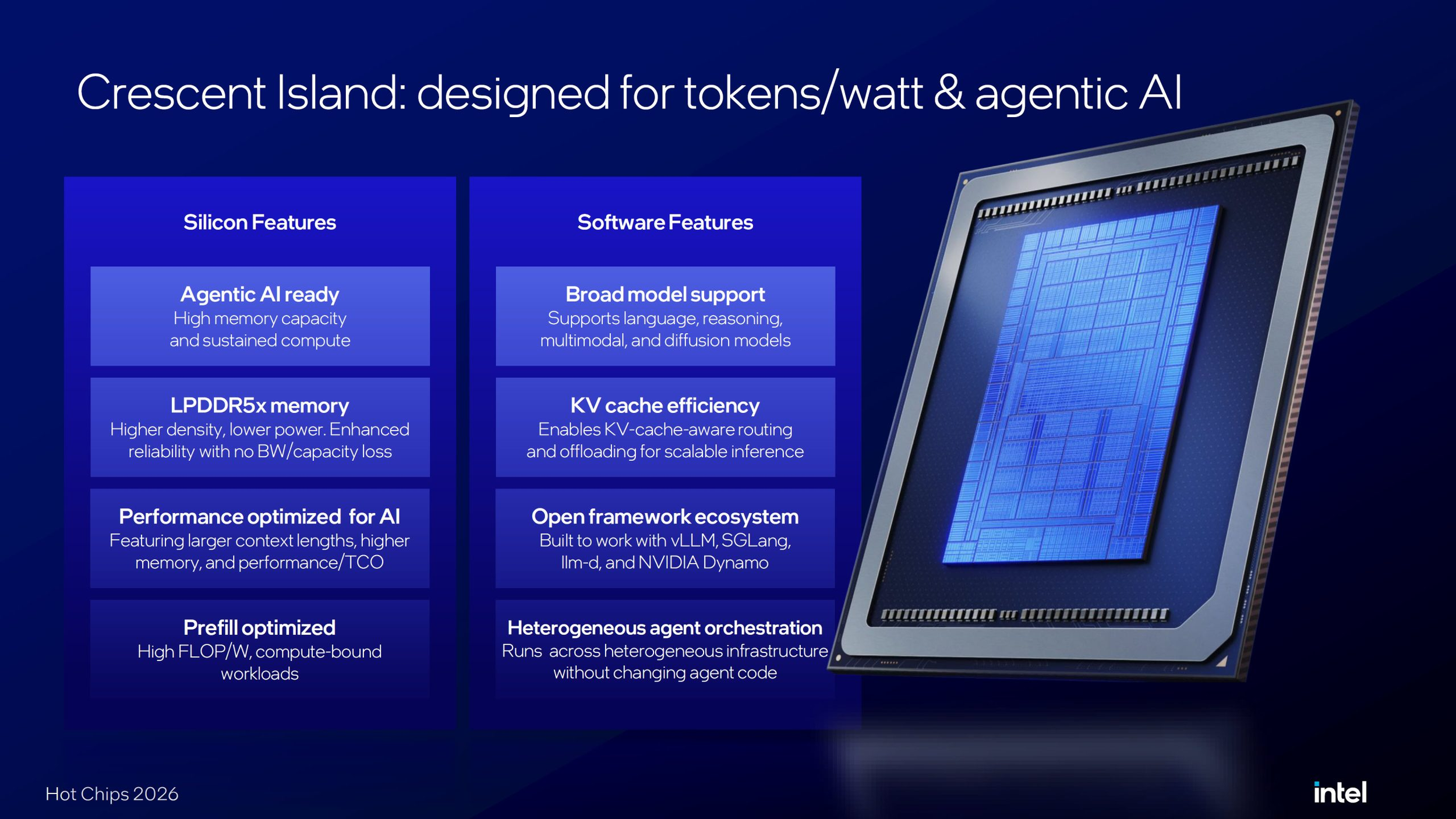
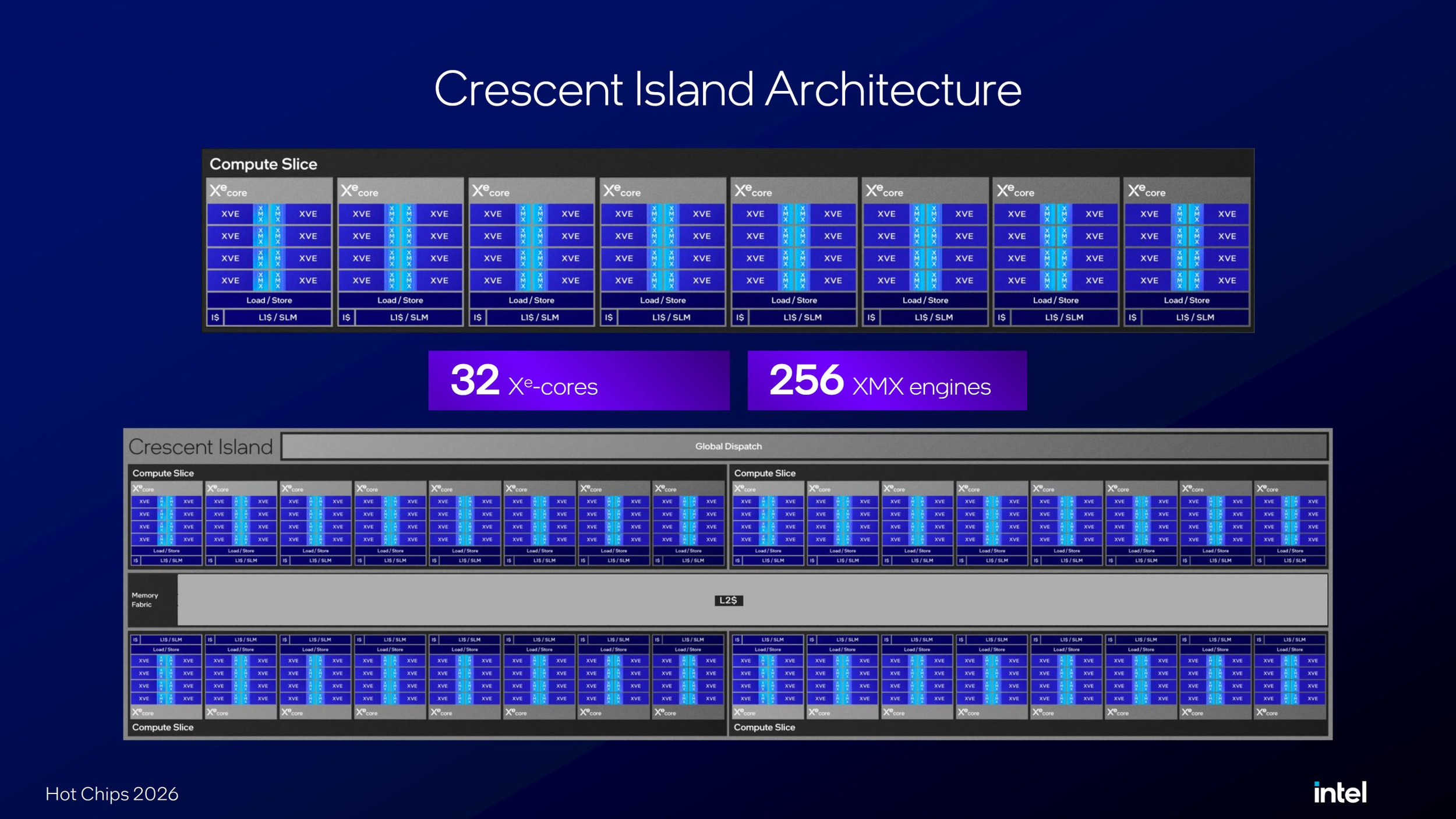
Unveiled in greater detail at the 2026 OCP Global Summit, the D270 is built around Intel's Xe3P architecture with 32 Xe cores and 256 XMX matrix engines. Intel positions the card around large language models, long context workloads, concurrent inference, and AI agents rather than graphics or gaming.
| Intel GPU D270 | Specification |
|---|---|
| Architecture | Xe3P |
| Xe Cores | 32 |
| XMX Matrix Engines | 256 |
| FP8 Compute | 1.3 PFLOPS |
| Memory Capacity | Up to 480 GB LPDDR5X |
| Memory Bandwidth | 1.5 TB/s |
| Intel Branded Card Memory | 160 GB LPDDR5X |
| Board Power | 350 W |
| Cooling | Passive air cooling |
| Interface | PCIe 5.0 |
| Target Workload | AI inference and agentic AI |
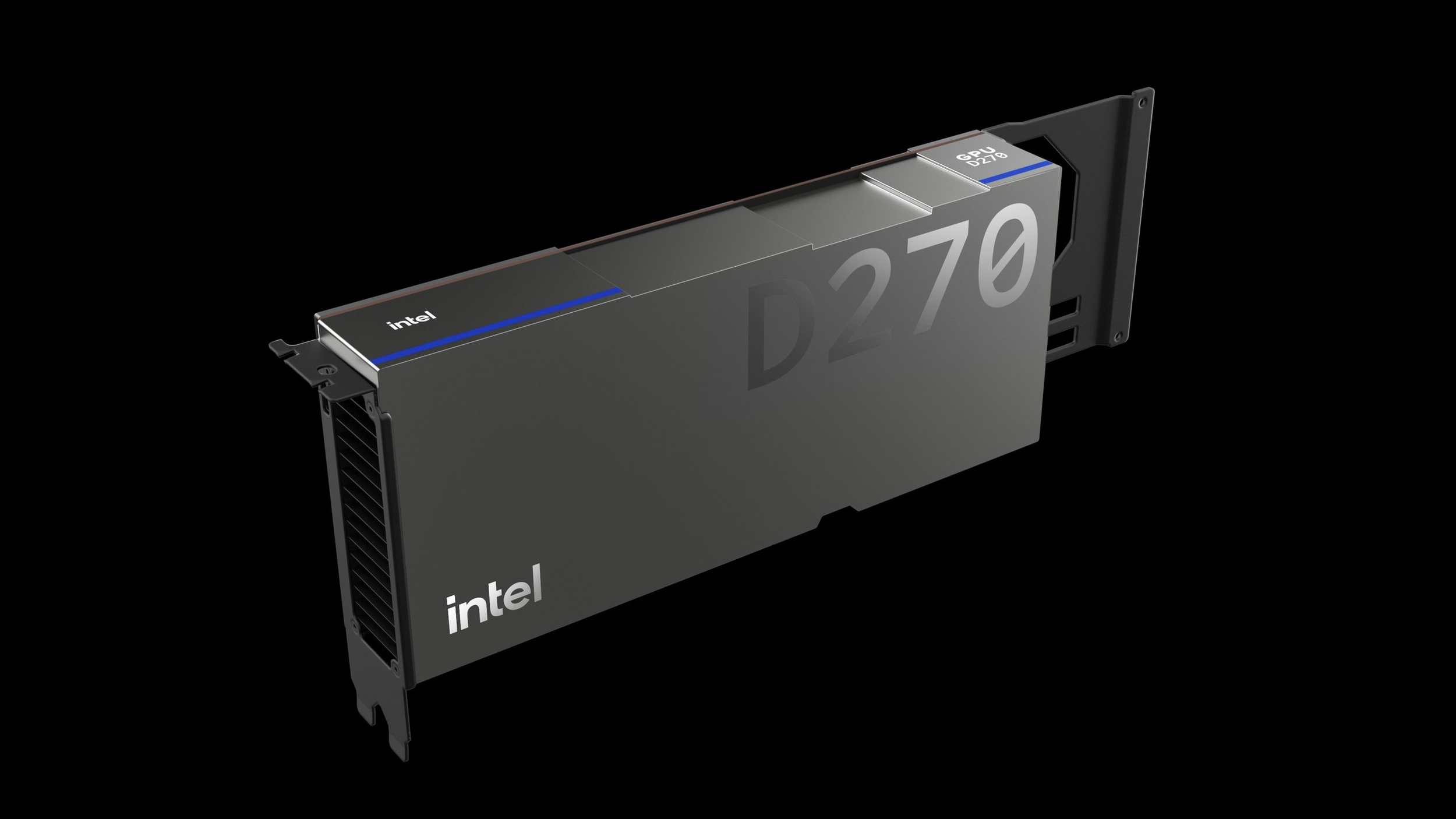
The memory specification needs some clarification. Intel says the D270 architecture supports as much as 480 GB of LPDDR5X per card, but its own branded PCIe card uses 160 GB. The larger configurations are intended for ODM partners building custom implementations around the same platform.
That distinction is particularly important because memory capacity is one of the D270's central selling points. Intel says a single card can support models with up to 300 billion parameters, while an 8 GPU system can scale beyond 1 trillion parameters.
Rather than using HBM, Intel has deliberately chosen LPDDR5X. The result is far lower memory bandwidth than flagship HBM based accelerators, but potentially much higher capacity within a conventional air cooled PCIe deployment and without the cost structure associated with large HBM stacks.
Intel lists 1.5 TB/s of memory bandwidth for D270. For comparison, NVIDIA's Rubin GPU reaches up to 22 TB/s using HBM4, but the 2 products are designed around very different performance and deployment targets. Rubin is a rack scale accelerator aimed at extreme training and inference throughput, while D270 emphasizes memory capacity, standard servers, air cooling, and inference economics.
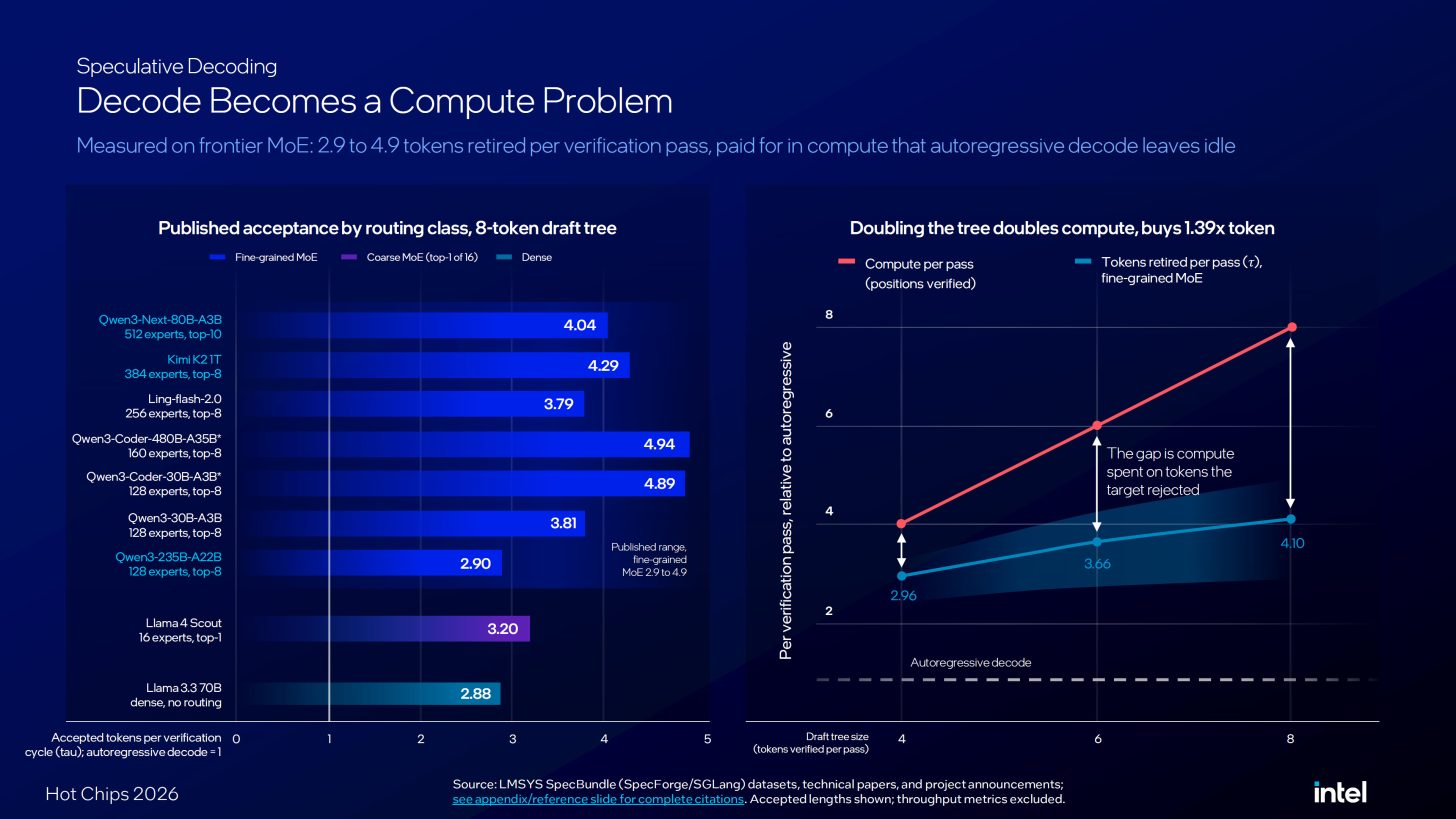
Intel is effectively betting that not every inference workload needs maximum HBM bandwidth. Long context models, large KV caches, concurrent AI agents, and memory bound serving can benefit from keeping more data resident on each accelerator, reducing the need to split workloads across additional GPUs.
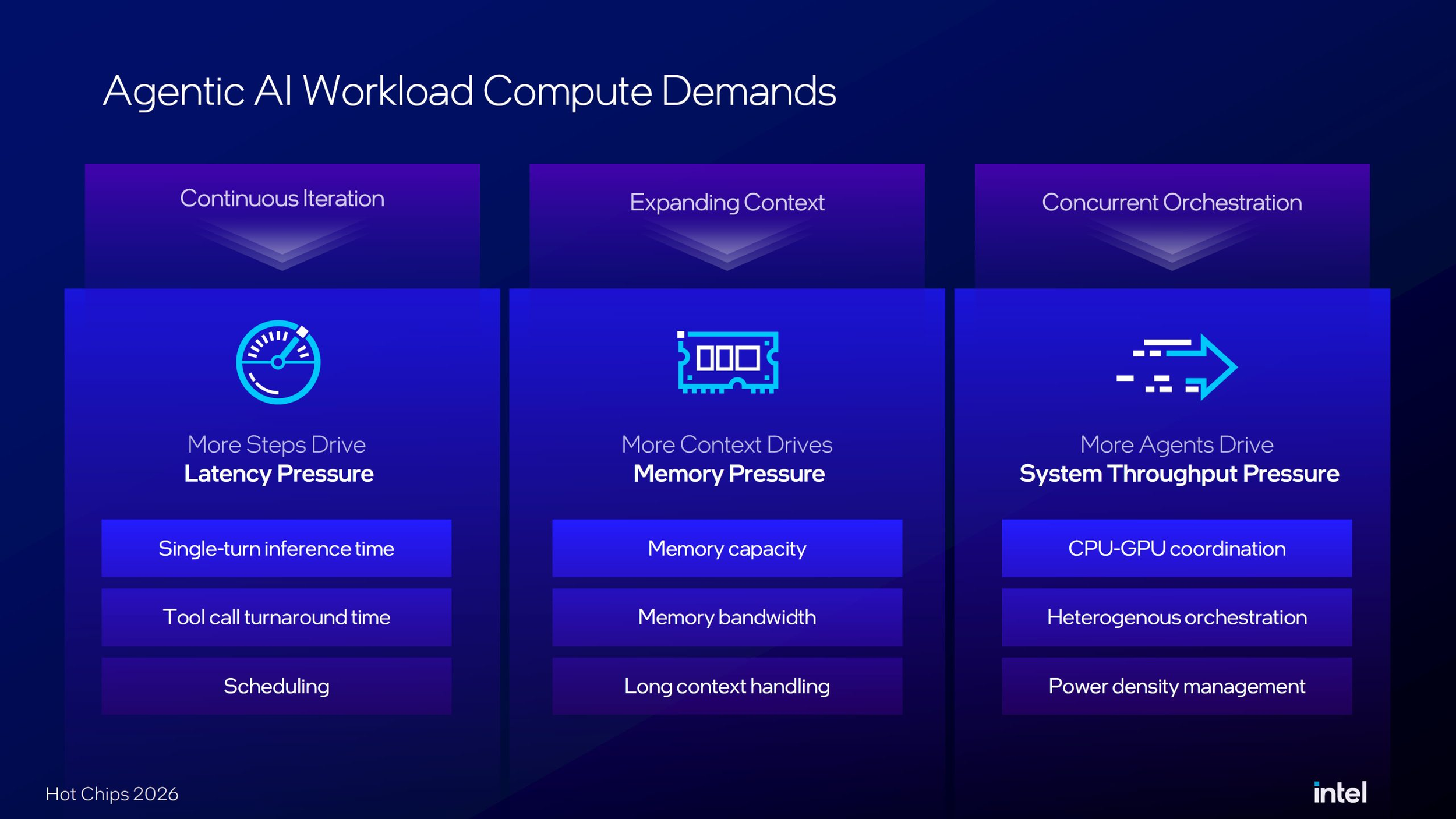
The D270 can provide up to 1.3 PFLOPS of FP8 compute inside a 350 W power envelope. It also supports a broad range of formats extending from FP4 and microscaling formats through FP64, giving the architecture flexibility across AI and scientific workloads.
Intel has also reallocated silicon resources away from traditional graphics and ray tracing functions toward Xe3P compute and XMX matrix engines. That reinforces the D270's role as a purpose built data center accelerator rather than a modified gaming GPU.
The standard PCIe 5.0 form factor and passive air cooling are another major part of Intel's positioning. D270 is intended to fit into conventional data center servers without requiring proprietary rack scale interconnects or liquid cooling infrastructure, potentially simplifying adoption for enterprises that already operate conventional GPU servers.
This direction follows Intel's earlier Xe GPU roadmap, where Crescent Island was already positioned around Xe3P and LPDDR5X rather than the HBM configurations common across the highest end AI accelerator market.
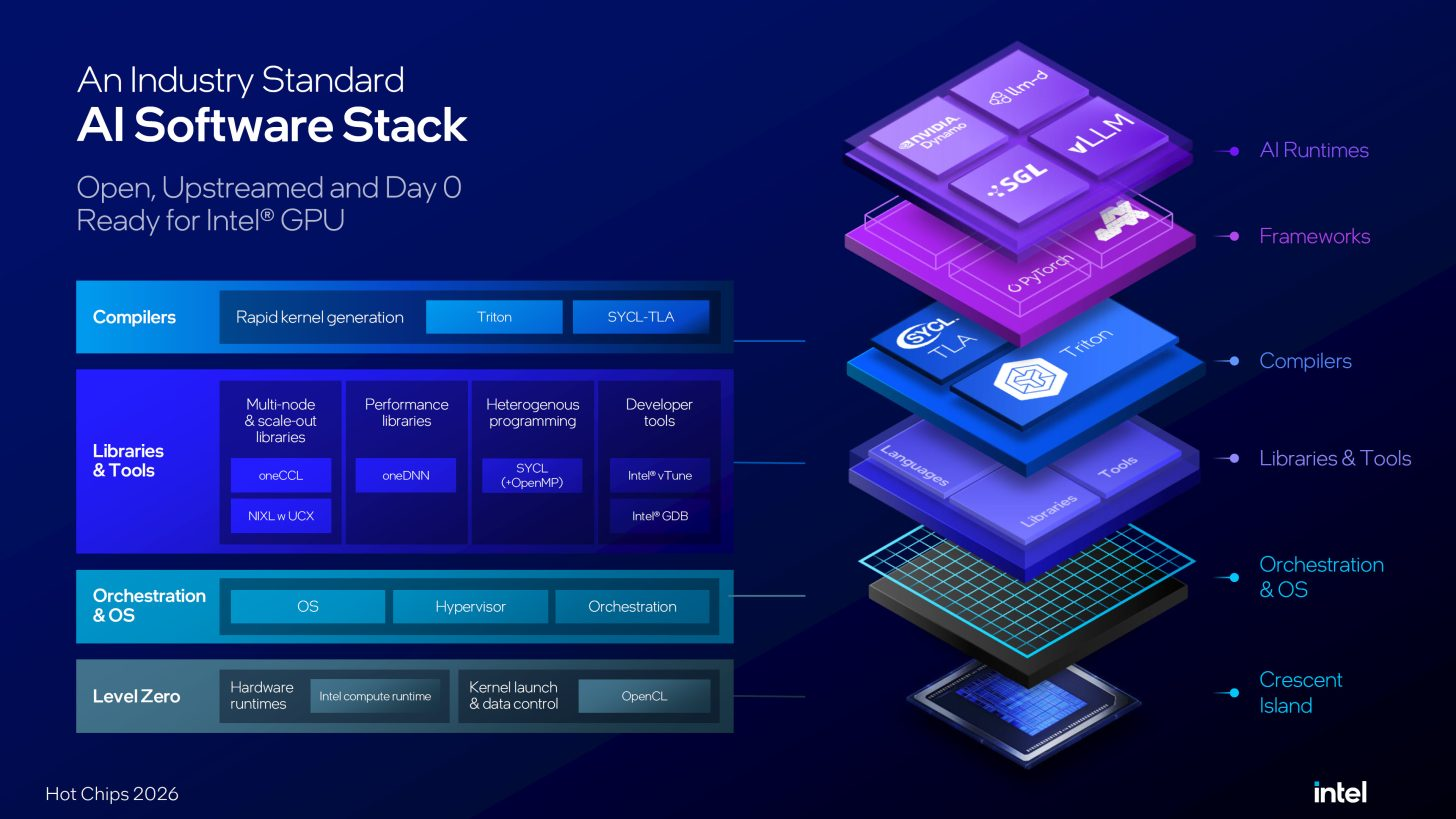
Software support is built around Intel's common Xe foundation, with support planned for frameworks including vLLM and the broader PyTorch ecosystem. Intel says this common architecture is intended to allow developers to move workloads between Arc Pro development hardware and data center GPUs with less software friction.
The D270 therefore represents a different strategy from competing for the absolute highest accelerator specifications. Intel is targeting organizations that need large memory pools and substantial inference performance but want to remain within conventional server power, cooling, and deployment constraints.
Intel's most interesting decision with the D270 is not the 1.3 PFLOPS compute figure. It is the choice to prioritize enormous LPDDR5X capacity instead of chasing HBM bandwidth.
A 480 GB accelerator can keep models, context, and KV cache data resident that might otherwise require multiple smaller cards. For inference workloads where capacity becomes the limiting factor before raw bandwidth, that could materially change the economics.
The tradeoff is obvious. At 1.5 TB/s, D270 is nowhere near the memory bandwidth of top HBM based accelerators, and Intel is not positioning it as a direct replacement for those systems.
Instead, D270 targets a different part of the AI market: standard PCIe servers, air cooling, high memory capacity, and sustained inference within a 350 W envelope.
If Intel can pair that hardware with competitive software support and pricing, Crescent Island could give the company a clearer position in AI acceleration than simply attempting to match NVIDIA on peak specifications.
Would you prefer an AI accelerator with significantly more memory capacity like the D270, or prioritize maximum HBM bandwidth and compute performance even at much higher power and system cost?
