
Google Could Unlock 252.7 Billion$ by Expanding TPU Access Beyond Cloud
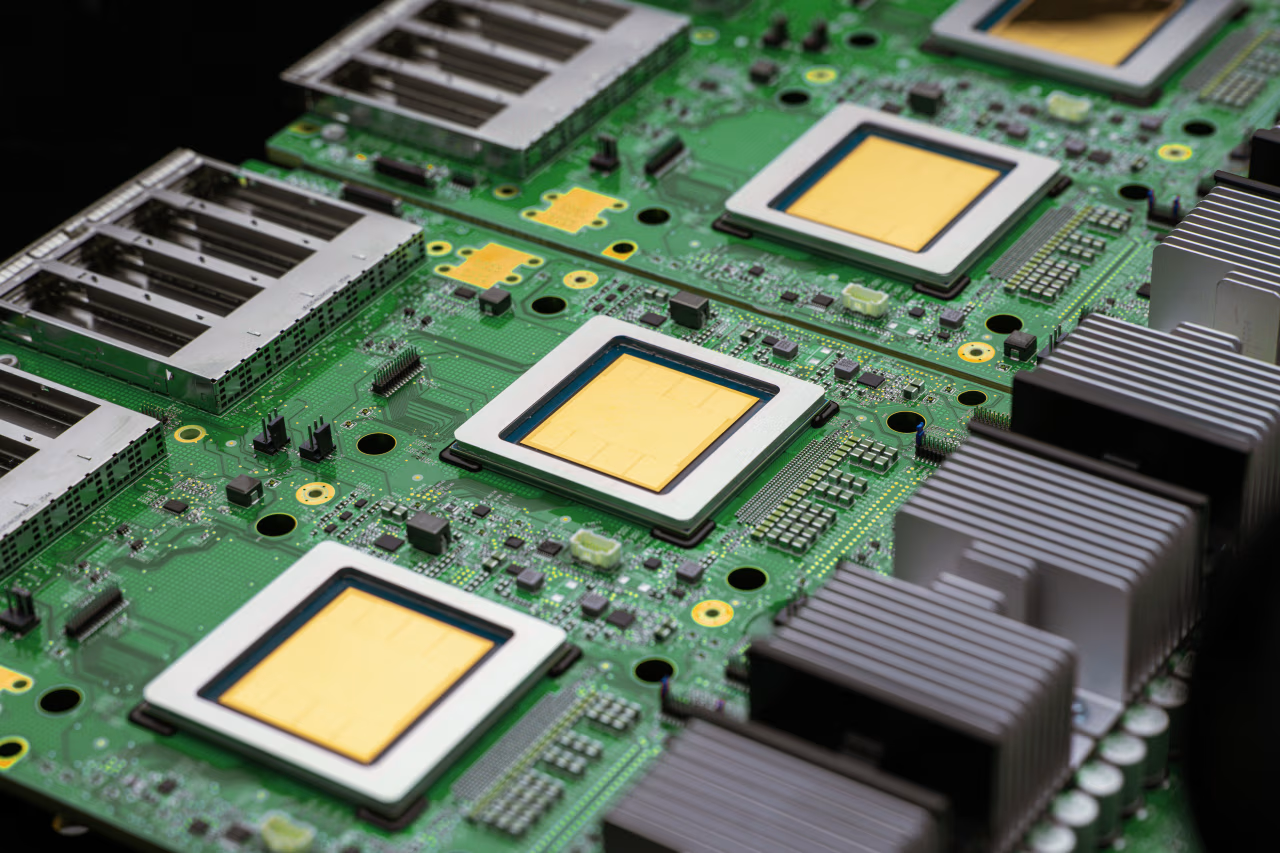
Google could generate as much as 252.7 billion$ in annual external Tensor Processing Unit revenue by 2028 if it expands its custom AI processors beyond the traditional Google Cloud model. The projection comes from a Barclays analysis that models Google supplying TPU systems through independently financed infrastructure companies backed by Broadcom, Blackstone, Apollo, and other capital partners. It is an analyst scenario rather than official Alphabet financial guidance.
NVIDIA remains the dominant supplier of commercial AI accelerators. Epoch AI estimates that NVIDIA accounted for approximately half of dedicated AI accelerator unit shipments and more than 66% of deployed computing capacity by Q4 2025. Google ranked second by estimated chip volume, but most TPUs historically operated inside its own infrastructure rather than being sold through the wider merchant semiconductor market.
Barclays believes Google could change that structure by supplying TPU hardware, software, and services to externally financed operators. Its model estimates approximately 20 billion$ in external TPU revenue during 2026, increasing to 67 billion$ in 2027 as deployed capacity reaches 3.2 GW. By 2028, 11.5 GW of external TPU capacity could theoretically generate 252.7 billion$ in annual sales.
Barclays believes Google can generate $252.7 billion in sales of TPU externally in 2028 by shifting TPUs from internal GCP rentals to an off-platform merchant model, backed by JVs with Blackstone and Broadcom scaling past 11 GW.
— P Equity Research 📰 (@pequityresearch) August 2, 2026
External ASP would grow from $20,000 in 2026 to… pic.twitter.com/6aXSVbxAHA
| Year | Estimated External TPU Revenue | Estimated Capacity |
|---|---|---|
| 2026 | $20 billion | Not specified |
| 2027 | $67 billion | 3.2 GW |
| 2028 | $252.7 billion | 11.5 GW |
The commercial transition has already started through the Google and Blackstone TPU cloud joint venture. Blackstone committed an initial 5 billion$ in equity to establish a separate United States company offering TPU computing capacity outside the conventional Google Cloud environment. The first 500 MW is expected to become operational during 2027, with Google providing the processors, networking, software, and supporting services.
Broadcom, Apollo, and Blackstone have separately established an AI infrastructure platform intended to finance more than 20 GW of custom XPU and networking deployments through 2028. The platform launched with a 35 billion$ transaction supporting more than 1 GW of Anthropic infrastructure, although its capacity will include several custom accelerator programs rather than Google TPUs exclusively.
Google’s existing AI infrastructure business is already expanding rapidly. Alphabet reported that Google Cloud revenue increased 82% year on year to 24.8 billion$ during Q2 2026, driven by enterprise AI infrastructure, AI solutions, and core cloud services. Google Cloud backlog also reached 514 billion$, demonstrating that demand for accelerated computing currently exceeds the company’s available deployment capacity.
Scaling the external TPU business would require significantly more processors, High Bandwidth Memory, advanced packaging, networking equipment, electricity, and data center capacity. Google is reportedly expanding its future custom silicon roadmap through TPUv9 designs featuring HBM4E and larger SRAM, while Broadcom remains a major design and supply chain partner. This expansion would place Google in more direct competition with NVIDIA’s Vera Rubin platform, although NVIDIA retains major advantages through CUDA, system availability, developer support, and its established merchant hardware ecosystem.
The 252.7 billion$ estimate shows how valuable Google’s TPU technology could become if the company treats it as a broader infrastructure platform rather than primarily an internal cost advantage. Blackstone can provide capital and data center expertise, Broadcom can manage physical design and supply execution, while Google contributes the processors, software, networking, and AI ecosystem.
However, revenue does not equal profit. External infrastructure partners, Broadcom, memory suppliers, foundries, energy providers, and financing companies would all capture part of the value. Google would also need to overcome NVIDIA’s software advantage and convince customers that TPU capacity can support workloads developed around CUDA and PyTorch.
The opportunity is still strategically important. Google does not need to replace NVIDIA across the entire AI market. Establishing TPUs as a credible second platform at massive scale could reduce its infrastructure costs, create a major new revenue stream, and weaken NVIDIA’s control over AI computing economics.
Could Google’s externally financed TPU model become a genuine alternative to NVIDIA, or will CUDA keep the majority of AI customers inside the GPU ecosystem?
