
AMD Confirms EPYC Verano Will Bring LPDDR5X SOCAMM2 Memory to AI Rack Scale Systems in 2027
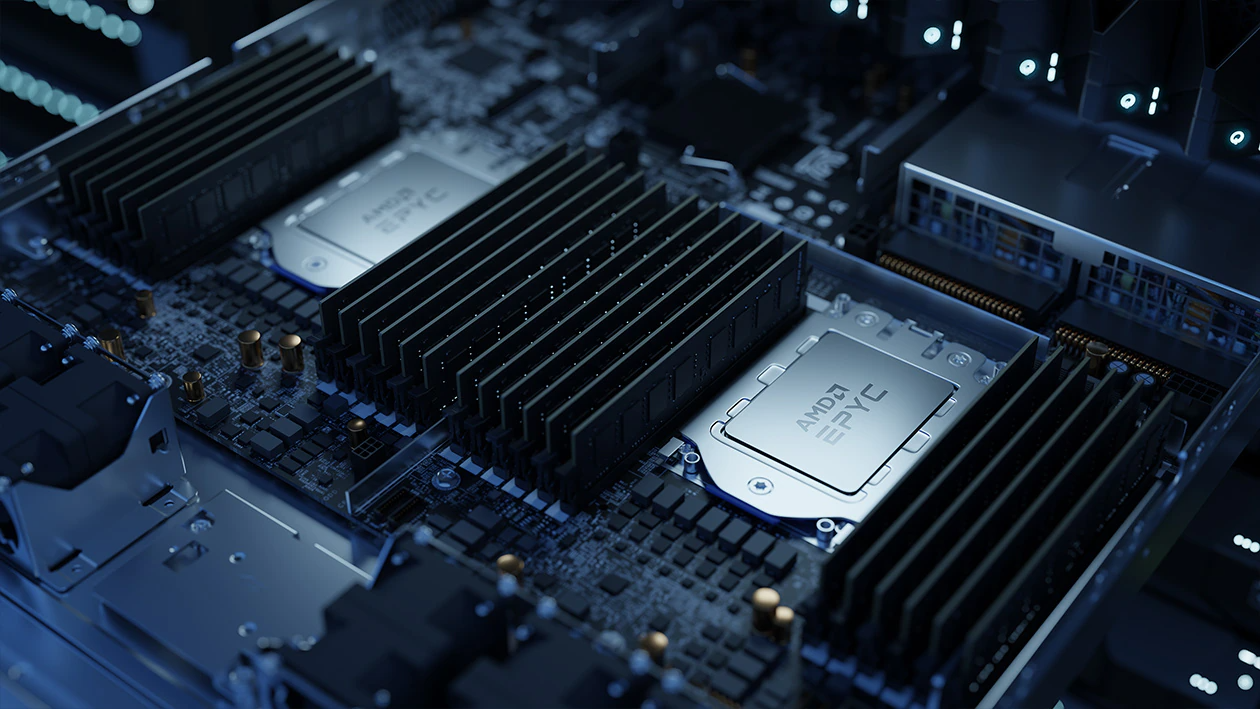
AMD has quietly confirmed an important memory platform detail for its future AI server roadmap. In an official blog post, the company said its 6th Gen EPYC Server CPU family will support standard DDR5 RDIMM and MRDIMM memory, but will also include SKUs that support LPDDR5X SOCAMM2, with first server support arriving through the EPYC processor code named Verano in 2027. AMD further described Verano as the optimized host CPU for future generations of AMD Instinct GPUs and said the platform is intended to deliver stronger performance per system watt in AMD AI rack scale solutions.
That is a meaningful confirmation for several reasons. First, it makes clear that Verano is not just another EPYC step in the roadmap, but a more specialized CPU platform aligned closely with AI infrastructure goals. AMD’s own language positions LPDDR5X SOCAMM2 as a complementary memory option aimed at deployments where bandwidth, power efficiency, and serviceability matter at the rack level, rather than as a blanket replacement for traditional server memory. The company also makes clear that DDR5 RDIMMs and MRDIMMs are still part of the broader 6th Gen EPYC family, which means SOCAMM2 is being added as a targeted option rather than a universal shift across the lineup.
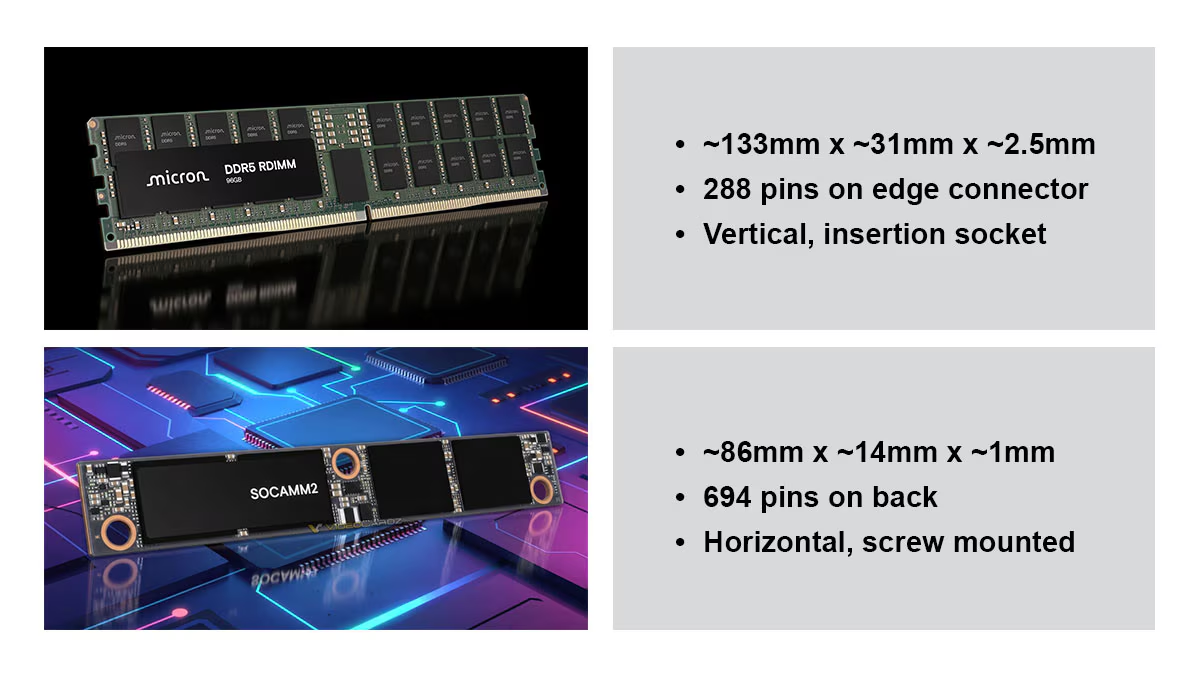
AMD’s explanation of SOCAMM2 also helps clarify why the company is moving in this direction. In the same blog, AMD says LPDDR5X offers lower operating voltage and strong per pin bandwidth, while SOCAMM2 gives that memory a modular and serviceable form factor suited for server environments. The company adds that SOCAMM2 modules are designed to consume less energy, take up less physical space inside the server, and sit horizontally on the board, which can improve airflow and simplify cold plate design. For dense AI racks where every watt and every thermal decision matters, that combination is easy to understand as a strategic advantage.
AMD is also careful not to oversell the format. The company notes that LPDDR5X still needs stronger RAS capabilities to better match mature data center DDR DIMMs, and says its current suitability may initially be more limited to select environments where the software stack is already highly resilient. That is an important caveat because it shows AMD is not presenting SOCAMM2 as the immediate answer for all server deployments. Instead, it is positioning the format as part of a growing toolbox for AI and data center designs that prioritize efficiency and system density.
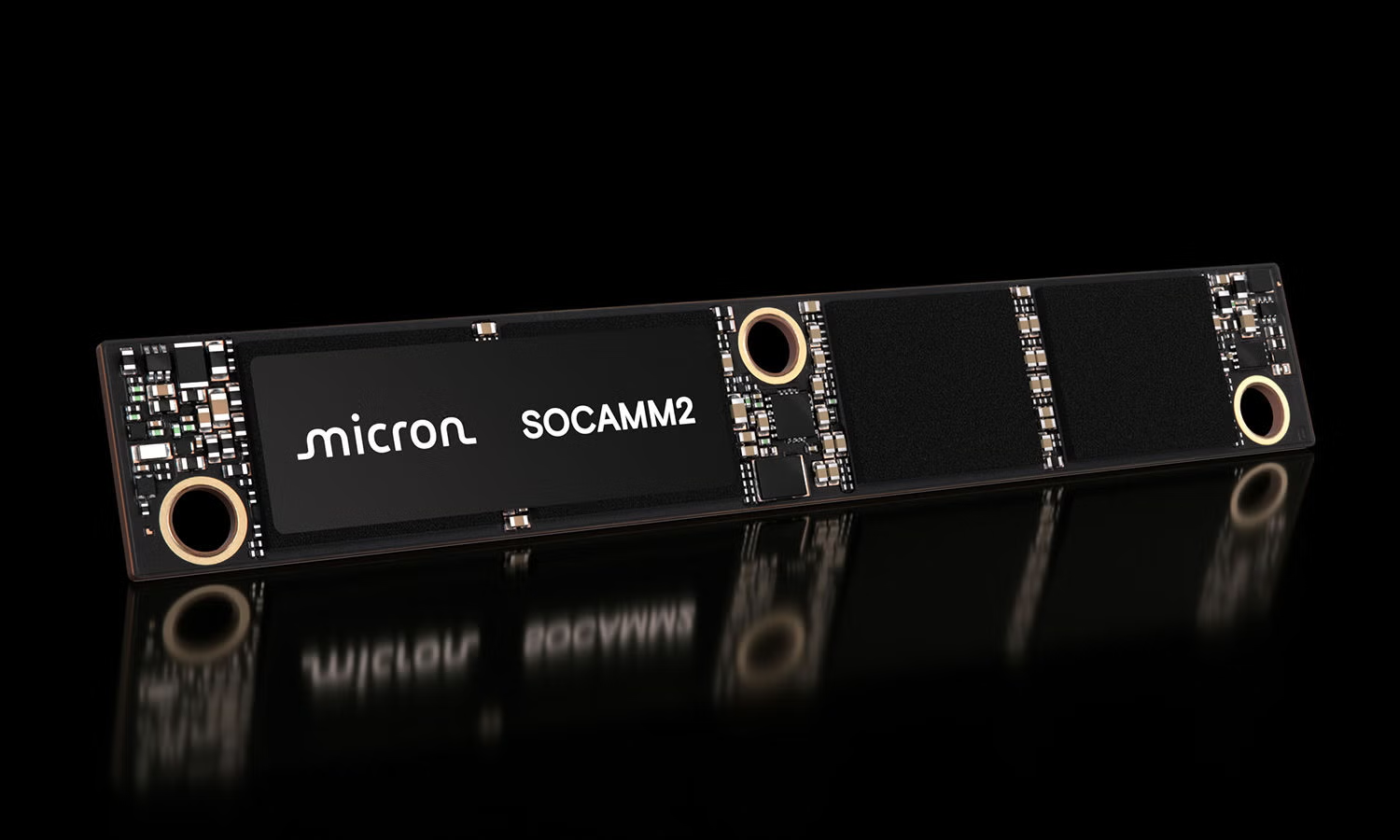
The bigger strategic angle is that AMD is joining a broader industry movement around LPDDR5X based server memory. In its official post, AMD notes that major DRAM manufacturers including Micron, Samsung, and SK hynix have each announced or demonstrated initial SOCAMM2 products for next generation server designs where performance per system watt is crucial. That means Verano’s support is not happening in isolation. It is part of a wider ecosystem buildup around lower power, high bandwidth memory configurations for modern AI infrastructure.
That broader ecosystem push could have real supply implications. AMD itself does not claim that SOCAMM2 adoption will tighten the memory market, but it does acknowledge that power reduction is now a major design objective across systems and that the whole ecosystem will need to work together as deployment models diversify. Given that LPDDR5X is also a critical memory technology in other categories, especially mobile and low power devices, any heavier server side adoption is likely to keep close attention on supply allocation and long term availability. That is a reasonable industry inference based on AMD’s confirmed roadmap and the growing vendor support around LPDDR5X SOCAMM2, though AMD does not directly state that a supply crunch will result.
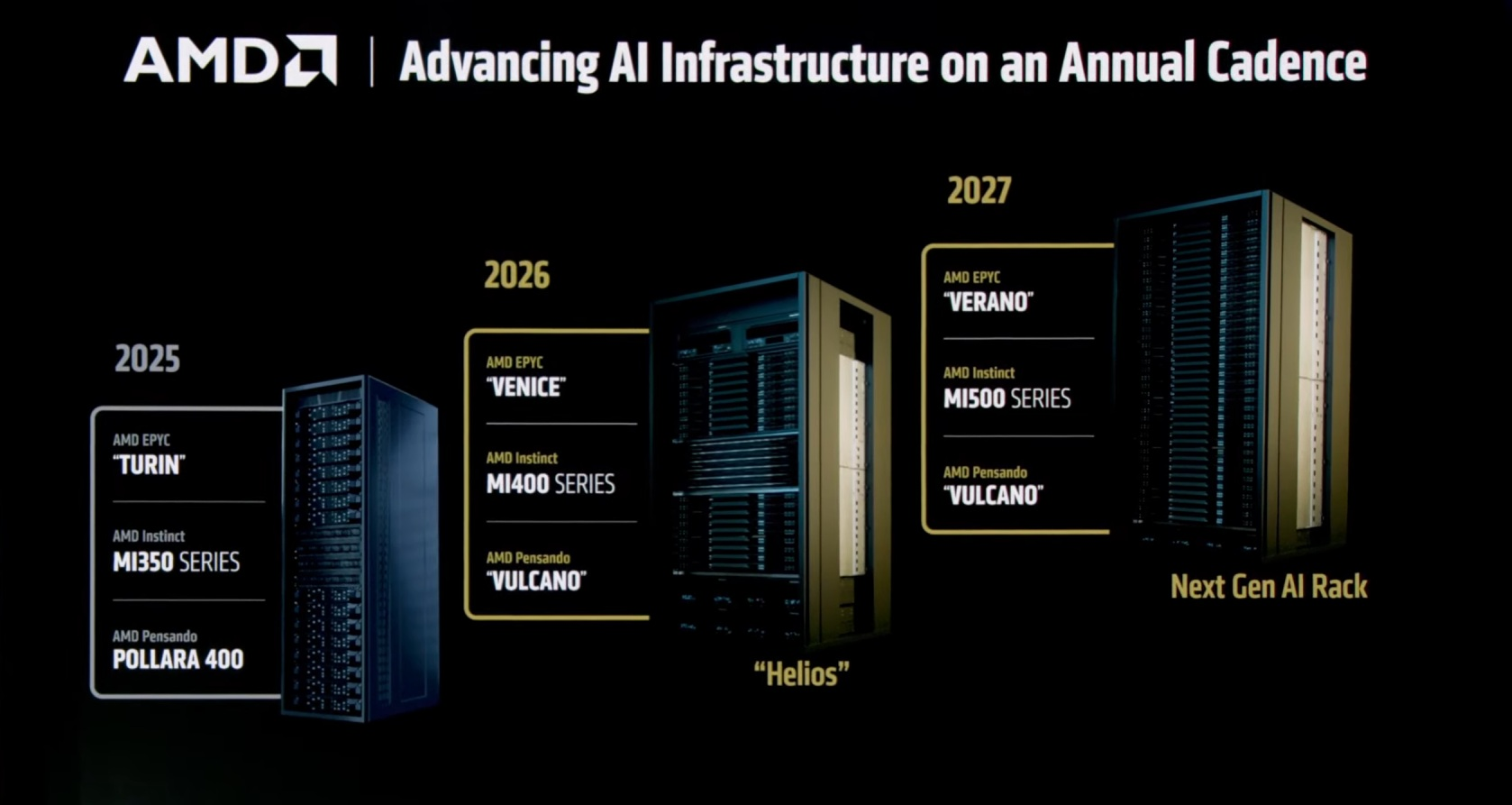
From a competitive standpoint, this gives AMD another lever in the AI infrastructure race. Verano is now confirmed as a 2027 EPYC platform designed specifically to serve as the host CPU for future Instinct GPU generations, and LPDDR5X SOCAMM2 becomes part of the value proposition around optimized rack scale efficiency. In practical terms, AMD is signaling that future AI systems will not be judged only on accelerator performance, but also on how efficiently CPUs, memory, cooling, and board design come together at scale.
For the server market, this is one of the more important under the radar disclosures in AMD’s recent roadmap messaging. Verano is now clearly more than just a codename on a future EPYC slide. It is becoming a visible part of AMD’s next AI platform strategy, and LPDDR5X SOCAMM2 is set to be one of the key technologies shaping how those systems are built.
Do you think LPDDR5X SOCAMM2 will become a major memory standard for AI servers, or will RDIMM class memory remain the safer long term choice for most data center deployments?
