
Elon Musk Reportedly Tried to Buy Intel, TSMC and Micron Chip Factories Before Building Terafab
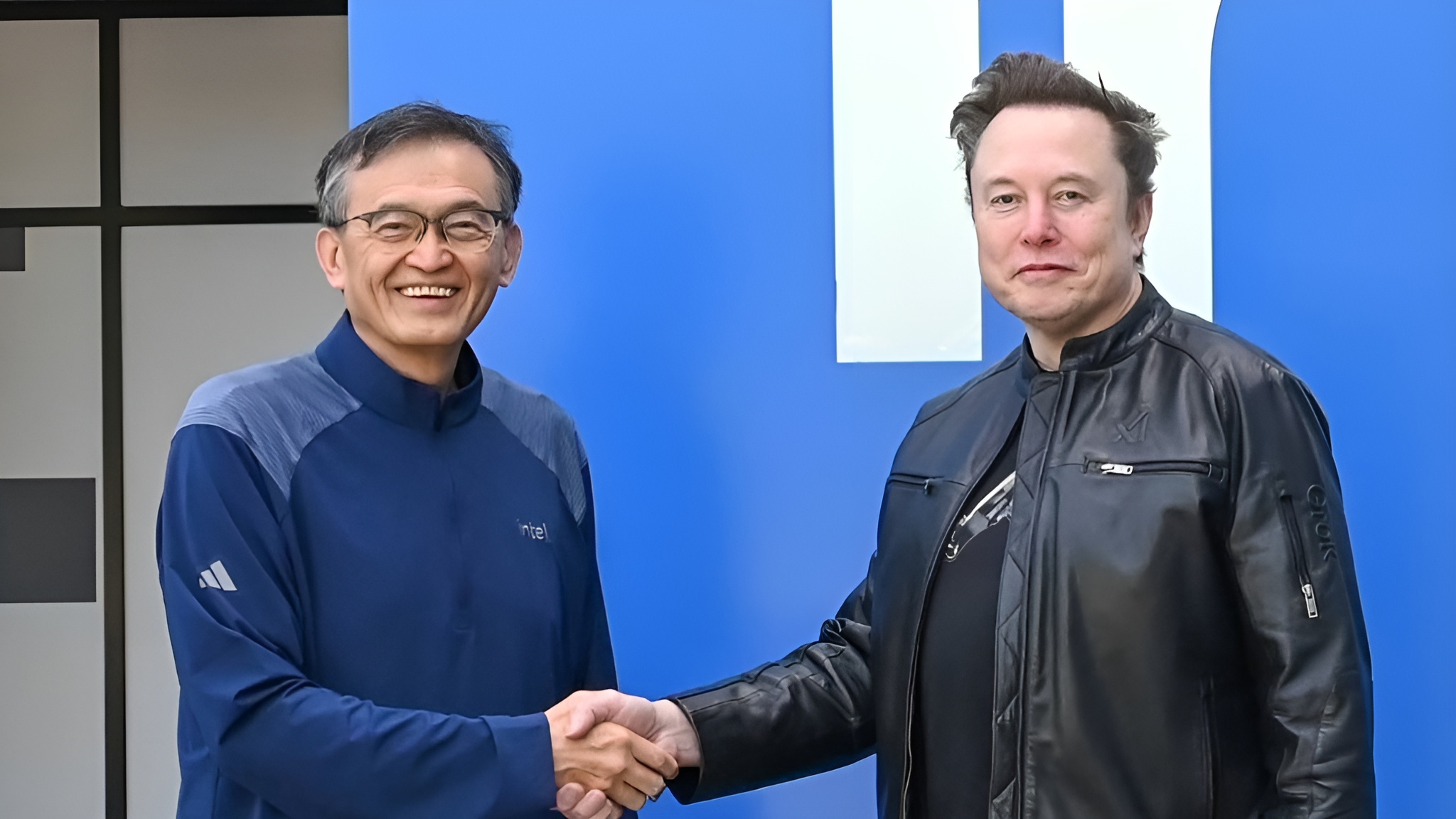
Elon Musk reportedly attempted to acquire semiconductor manufacturing facilities from Intel, TSMC, and Micron before committing to his ambitious Terafab project. According to South Korean industry reporting, the companies rejected the proposed acquisitions, prompting Musk to pursue partnerships and establish a new semiconductor supply chain for Tesla, SpaceX, and xAI.
The claims originated from an investigation by The Elec, which cited an anonymous overseas semiconductor equipment supplier familiar with Terafab's development. The source suggested that acquiring existing manufacturing facilities was initially considered a faster alternative to constructing a semiconductor complex from scratch. However, the reported acquisition approaches have not been independently confirmed by Intel, TSMC, Micron, or Musk.
Since then, Terafab has pursued a different strategy. Intel officially joined the initiative in April 2026, contributing its semiconductor design, fabrication, and advanced packaging expertise. The project is also expected to incorporate Intel's future 14A manufacturing technology, although the companies have not disclosed the final division of responsibilities or the detailed manufacturing arrangements.
Discussions with TSMC have proven more complicated. During its October earnings conference, TSMC CEO C.C. Wei confirmed that the company was evaluating potential cooperation with Terafab, but emphasized that any facility involving TSMC would need to remain under its operational control. Musk subsequently maintained that Tesla and SpaceX intend to operate Terafab themselves, suggesting that TSMC could potentially lease part of the facility instead. According to Reuters, no final agreement has been announced. Micron's involvement also remains unconfirmed.
Meanwhile, Terafab is reportedly accelerating negotiations with approximately 10 South Korean semiconductor suppliers, covering equipment, manufacturing materials, testing components, and factory infrastructure. Companies including Hanmi Semiconductor, HPSP, Dongjin Semichem, Unisem, and KoMiCo have been linked to discussions, with several already signing nondisclosure agreements.
The project has also attracted interest from major international suppliers, including Lam Research, Applied Materials, and Fujifilm. HPSP has reportedly agreed to supply a high pressure hydrogen annealing system for Terafab's research facility, while other negotiations remain at preliminary stages. Industry sources described an unusually fast procurement process, with engineers reportedly authorized to make decisions directly rather than waiting for lengthy management approvals.
Terafab Manufacturing Roadmap
| Development | Reported Target or Status |
|---|---|
| Initial Investment | Approximately $16.8 billion, industry estimate |
| First SRAM Test Chip | May or June 2027, Musk's target |
| Initial Volume Production | Q3 or Q4 2028, highly ambitious target |
| Initial Manufacturing Capacity | 100,000 wafers per month before 2030, industry projection |
| Long Term Manufacturing Capacity | 1 million wafers per month within 10 years |
| Annual Compute Objective | 1 TW of AI computing capacity |
| Manufacturing Partners | Intel confirmed, TSMC discussions ongoing |
The production dates and wafer capacities are targets or estimates, not confirmed operational milestones.
The manufacturing complex is planned for Texas and is intended to combine advanced logic production, memory manufacturing, packaging, and testing. Its purpose is to secure a greater portion of the semiconductor supply needed for Tesla's autonomous driving systems and Optimus robots, alongside SpaceX satellites and future space based AI infrastructure.
During an October 20 SpaceX conference call, Musk outlined plans to produce an initial SRAM test chip around May or June 2027, followed by potential volume production in the second half of 2028. He acknowledged that the schedule carries substantial uncertainty, especially given the complexity of installing advanced lithography systems and bringing semiconductor processes into production. The availability of equipment from ASML and other suppliers remains a critical challenge.
Beyond manufacturing, Musk has linked Terafab to a much broader vision of AI driven economic expansion. During an interview with Walter Isaacson on The Builders podcast, recorded on August 6 and published on October 20, Musk speculated that digital superintelligence could increase global economic output by approximately 20% to 30%. He suggested that combining advanced robotics with space infrastructure could eventually enable an economy as much as 1 million times larger than Earth's current economy.
That projection is a speculative long term vision rather than a measurable Terafab production target. For now, the more immediate challenge is establishing a competitive semiconductor operation capable of producing advanced processors and memory at scale.
Terafab's reported attempt to acquire existing semiconductor factories illustrates how difficult it is to enter advanced chip manufacturing, even with substantial financial resources.
Buying an established facility could potentially reduce construction time, but manufacturing advanced semiconductors requires more than buildings and equipment. Process technology, experienced engineers, established suppliers, production yields, and proprietary manufacturing knowledge are equally important.
Intel's participation gives Terafab access to valuable industry expertise, while discussions with TSMC demonstrate the difficulty of establishing partnerships when operational control remains disputed.
The aggressive timetable is particularly challenging. Bringing a leading semiconductor factory into high volume production requires extensive process development, equipment qualification, and yield optimization. Accelerating construction and procurement does not necessarily shorten those technical requirements.
Terafab could eventually become an important source of chips for AI, robotics, and autonomous systems. However, its success will depend on converting ambitious production targets and supplier negotiations into reliable manufacturing capacity, rather than simply achieving faster construction.
Do you think Elon Musk can successfully build an advanced semiconductor manufacturing operation with Intel and other suppliers, or would partnering directly with established foundries like TSMC and Samsung be a more practical strategy?
