
Microsoft Will Block ReFS USB Drives by Default Starting January 2027
Microsoft has confirmed that Windows will begin blocking ReFS formatted USB drives and external storage devices by default in January 2027, introducing new security restrictions that could prevent users from accessing files stored on affected drives. The change will apply to supported versions of Windows 11, Windows 10, and Windows Server, although most consumers will remain unaffected because commonly used NTFS, exFAT, and FAT32 storage devices are not targeted.
According to Microsoft's official support documentation, published on October 13, 2026, the company is introducing additional security controls for external storage devices using the Resilient File System (ReFS). Although Windows has historically allowed these volumes to mount in certain configurations, Microsoft states that ReFS on removable media has never been officially supported. The new restrictions aim to improve security by identifying unsupported configurations and preventing them from mounting by default.
ReFS was originally designed for enterprise and server environments, offering enhanced data integrity, resilience against corruption, and support for extremely large storage volumes. It also includes features such as block cloning, which can accelerate certain file operations. Microsoft later expanded its use through Dev Drive in Windows 11, providing developers with optimized storage for source code, build files, and development workloads. However, these officially supported configurations rely on appropriate fixed storage rather than removable drives.
Windows ReFS Security Update Timeline
| Date | Change | Impact |
|---|---|---|
| October 13, 2026 | Audit phase begins | Windows records affected external ReFS volumes without blocking them by default |
| January 2027 | Enforcement phase begins | Affected external ReFS volumes are blocked from mounting by default |
| After enforcement | Administrative override available | Administrators can change the policy through Group Policy or Registry settings |
The October security update introduces an auditing mechanism that identifies affected drives and records warnings in Windows Event Viewer under Event ID 524, using ReFS as the event source. This allows administrators to identify unsupported storage configurations before the blocking policy becomes active with the January 2027 security update.
Once enforcement begins, Windows will prevent qualifying external ReFS volumes from mounting unless an administrator explicitly changes the restriction. The update does not erase or format the drives, but users could temporarily lose access to their existing files because Windows will refuse to mount the affected volumes.
Microsoft provides a configurable policy named RefsRemovableDeviceMountPolicy, which supports 3 settings: 0 disables the restriction, 1 enables auditing, and 2 blocks affected volumes. These controls can be configured through Group Policy or the Windows Registry, with Group Policy taking precedence when both are present. A system restart is required for changes to take effect.
For users relying on ReFS formatted external HDDs, SSDs, or USB drives, Microsoft recommends reviewing their storage configurations and migrating important data to supported storage before enforcement begins. Users can identify their drive's file system through the Properties menu in Windows File Explorer. Those using standard NTFS, exFAT, or FAT32 drives do not need to take action because of this particular change.
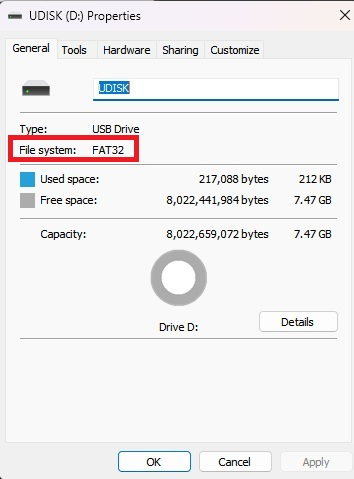
The restriction is unlikely to significantly affect conventional gaming PCs, where external game libraries and portable storage typically use NTFS or exFAT. However, developers, workstation users, and storage enthusiasts who have configured external ReFS volumes could encounter unexpected accessibility problems if they do not prepare before January 2027.
Microsoft's decision reinforces the distinction between advanced file system capabilities and officially supported storage configurations. ReFS offers meaningful advantages for data integrity and development workloads, but its use on removable storage has remained outside Microsoft's supported deployment scenarios.
The biggest concern is the potential disruption for users who have successfully relied on external ReFS drives for years. Even though the new policy does not delete data, losing access to an existing storage volume after a Windows update could create considerable inconvenience.
The phased rollout is a sensible approach because it gives administrators time to identify affected devices and migrate their data. However, Microsoft has not identified a specific vulnerability behind the change, making the broader security benefits difficult to evaluate independently.
For most PC users, the update will have little practical impact. For anyone maintaining specialized ReFS storage configurations, checking compatibility and securing important files before January 2027 should be a priority.
Do you think Microsoft is making the right decision by blocking unsupported ReFS external drives for security, or should Windows continue allowing users to choose their preferred file system?
