
China Begins Producing Domestic DUV Lithography Tools, but ASML Faces No Immediate Threat
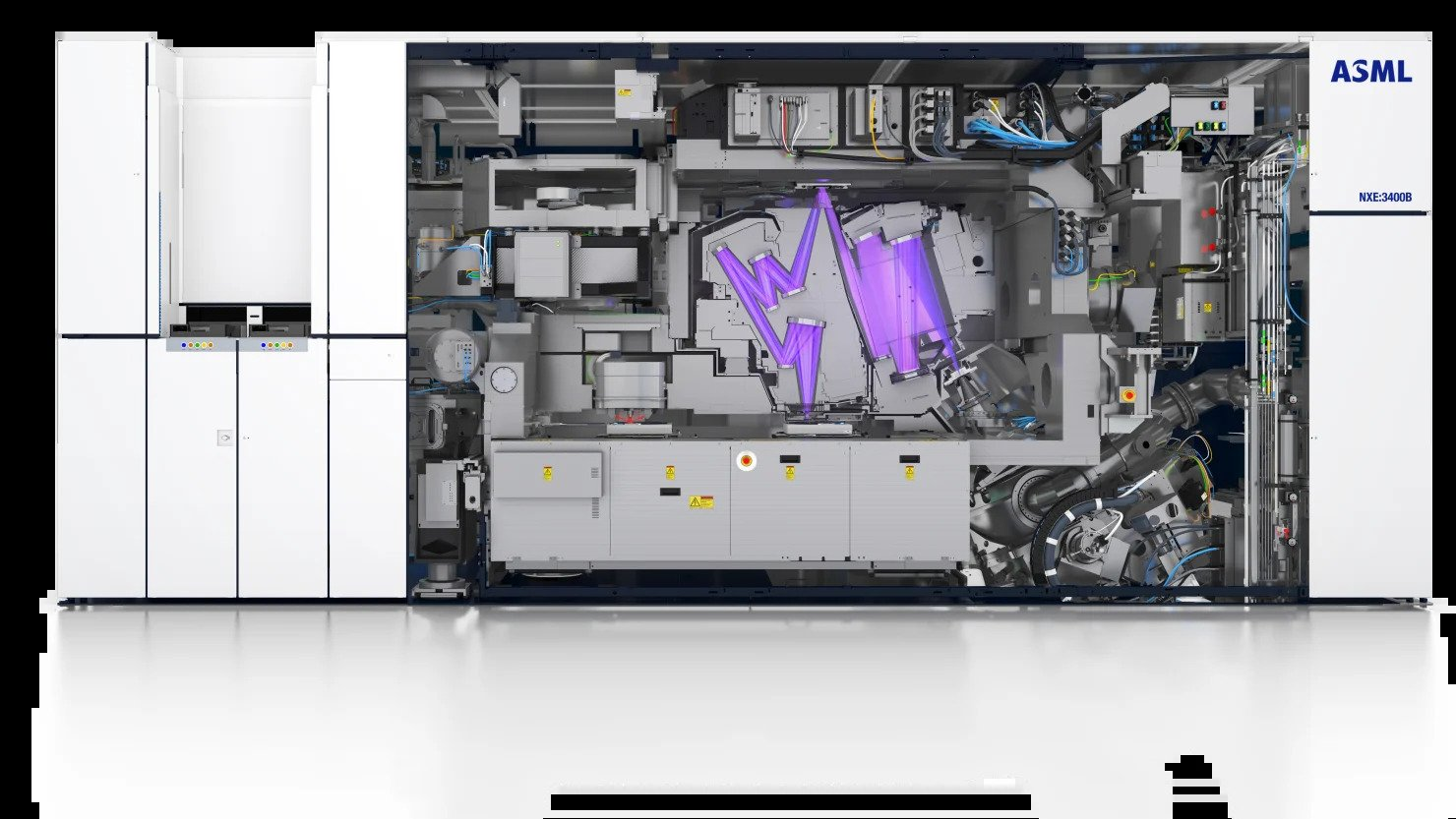
China has reportedly begun producing domestically developed immersion deep ultraviolet lithography machines, marking an important step in Beijing’s semiconductor self sufficiency strategy. However, the equipment still requires extensive testing and remains far behind the manufacturing performance, reliability, and scale delivered by ASML.
According to Reuters, production is being led by Shanghai Aishengna Electronic Technology Group, a little known Chinese state owned company established in August 2023 with registered capital of 7 billion yuan, approximately $1 billion. The company is reportedly backed by Shanghai Electric Holding and a subsidiary of Shanghai International Trust.
Aishengna has reportedly incorporated technical teams from Shanghai Micro Electronics Equipment and Yuliangsheng, an affiliate of Huawei backed semiconductor equipment company SiCarrier. These groups have been involved in China’s wider effort to develop domestic lithography equipment and reduce dependence on foreign suppliers.
The Information previously reported that the unidentified manufacturer planned to produce approximately 5 immersion DUV machines during 2026 and around 20 systems in 2027. The first machines are expected to be delivered to major Chinese semiconductor manufacturers including SMIC, Hua Hong Semiconductor, and memory producer CXMT.
Immersion DUV lithography places a layer of highly purified water between the projection lens and the silicon wafer, increasing the numerical aperture and allowing smaller circuit patterns to be printed using 193 nm light. ASML explains that modern immersion systems can support advanced logic and DRAM production through multiple patterning, where a complex chip layer is divided into several simpler exposure steps.
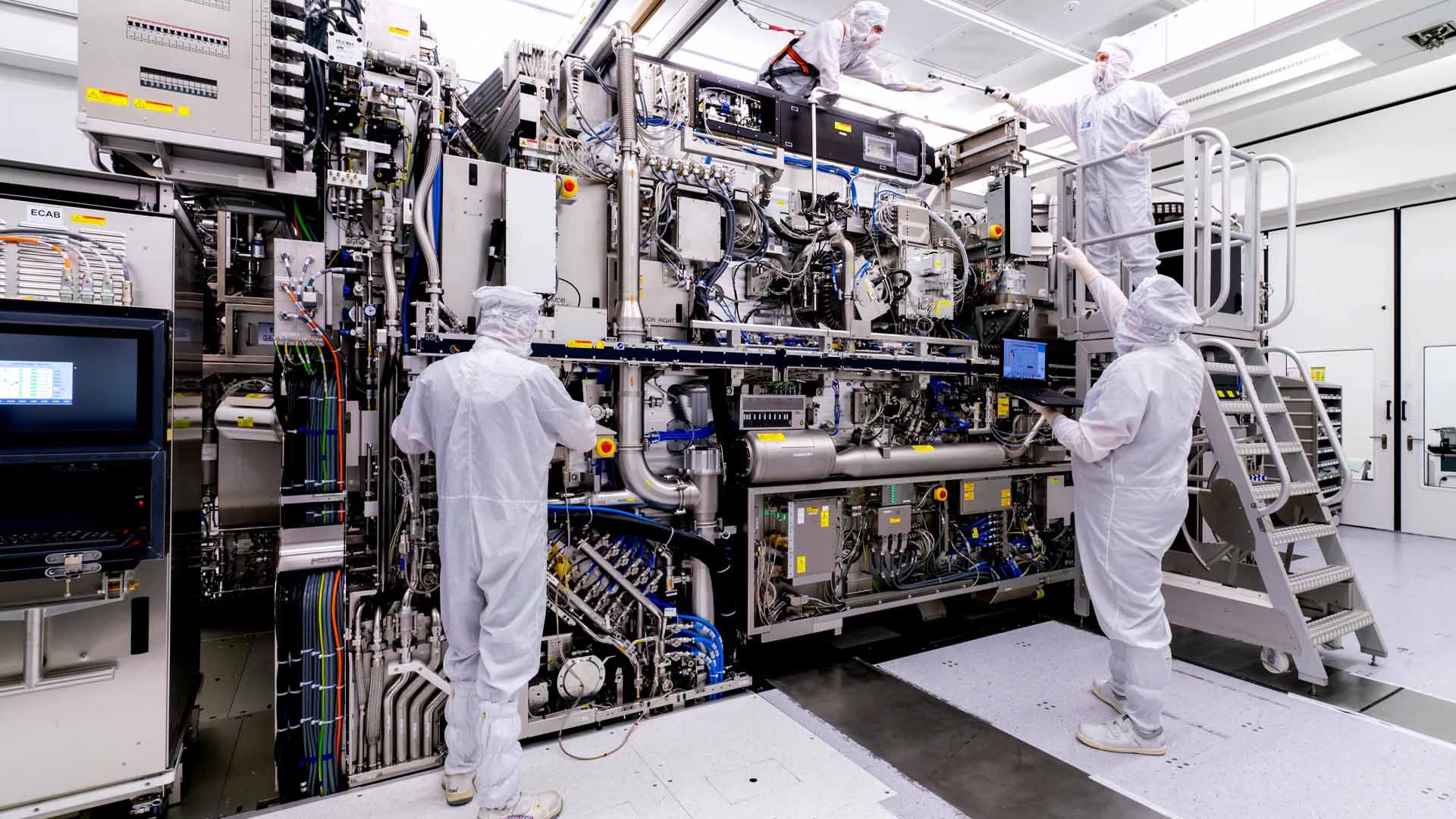
This approach can extend DUV technology into more advanced semiconductor processes, but it increases manufacturing complexity. Each additional exposure must be aligned with extreme precision, making overlay accuracy, throughput, defect control, uptime, and long term reliability essential for commercial production.
"Producing a handful of immersion DUV tools is not the same as producing tools that can be used for high volume manufacturing."
— Quote by: JPMorgan analysts
The Chinese equipment is therefore not considered an immediate commercial threat to ASML. Building a functional lithography machine is an important technical achievement, but semiconductor manufacturers require equipment capable of processing thousands of wafers consistently while maintaining acceptable yields and operating costs. Aishengna’s machines must still prove that they can perform reliably inside real production environments.
China is prohibited from purchasing ASML’s advanced extreme ultraviolet systems, while Dutch export controls also restrict access to selected high performance DUV equipment. A domestic immersion scanner could provide Chinese chipmakers with an alternative if export controls expand or if maintenance and servicing for imported systems become more difficult.
China nevertheless remains an important market for ASML, accounting for approximately 16% of the company’s net sales during the first half of 2026. This commercial relationship shows that China continues to depend heavily on imported lithography systems even as it invests aggressively in local alternatives.
The announcement initially placed pressure on ASML shares, which fell approximately 8% after reports of the Chinese production effort emerged. However, analysts do not expect the development to materially affect ASML’s earnings trajectory over the medium term because the performance and production maturity of Aishengna’s equipment remain unproven.
The development is still strategically important for companies such as CXMT. The Chinese memory manufacturer is expanding its DRAM and HBM capabilities but remains limited by access to advanced lithography and other foreign semiconductor equipment. A reliable domestic DUV platform could strengthen conventional DRAM production and reduce supply chain vulnerability, even if it cannot immediately replace ASML’s most advanced systems.
China does not need to surpass ASML immediately for this project to matter. The first strategic objective is creating equipment that can support domestic production when foreign machines, components, software updates, or servicing become restricted.
The gap remains substantial. ASML has spent decades refining optics, lasers, wafer stages, computational lithography, metrology, service infrastructure, and process control. A lithography system must deliver more than resolution. It must maintain overlay accuracy and production reliability across millions of repeated operations.
Aishengna’s initial machines should therefore be viewed as an industrial foundation rather than an ASML competitor. If Chinese manufacturers can improve yield, throughput, uptime, and local component sourcing over several generations, the long term impact could become significant. For now, ASML’s technological and commercial position remains secure.
The contrast is especially visible as ASML begins deploying High NA EUV in volume production. While China is working to establish a competitive immersion DUV platform, ASML is already moving its customers toward another generation of advanced lithography.
Can China close the lithography gap through sustained domestic investment, or is ASML’s technology and manufacturing experience too difficult to replicate?
