
BIWIN DW100 48 GB DDR5 6000 CL28 Adds AMD EXPO ULL for Lower Gaming Latency
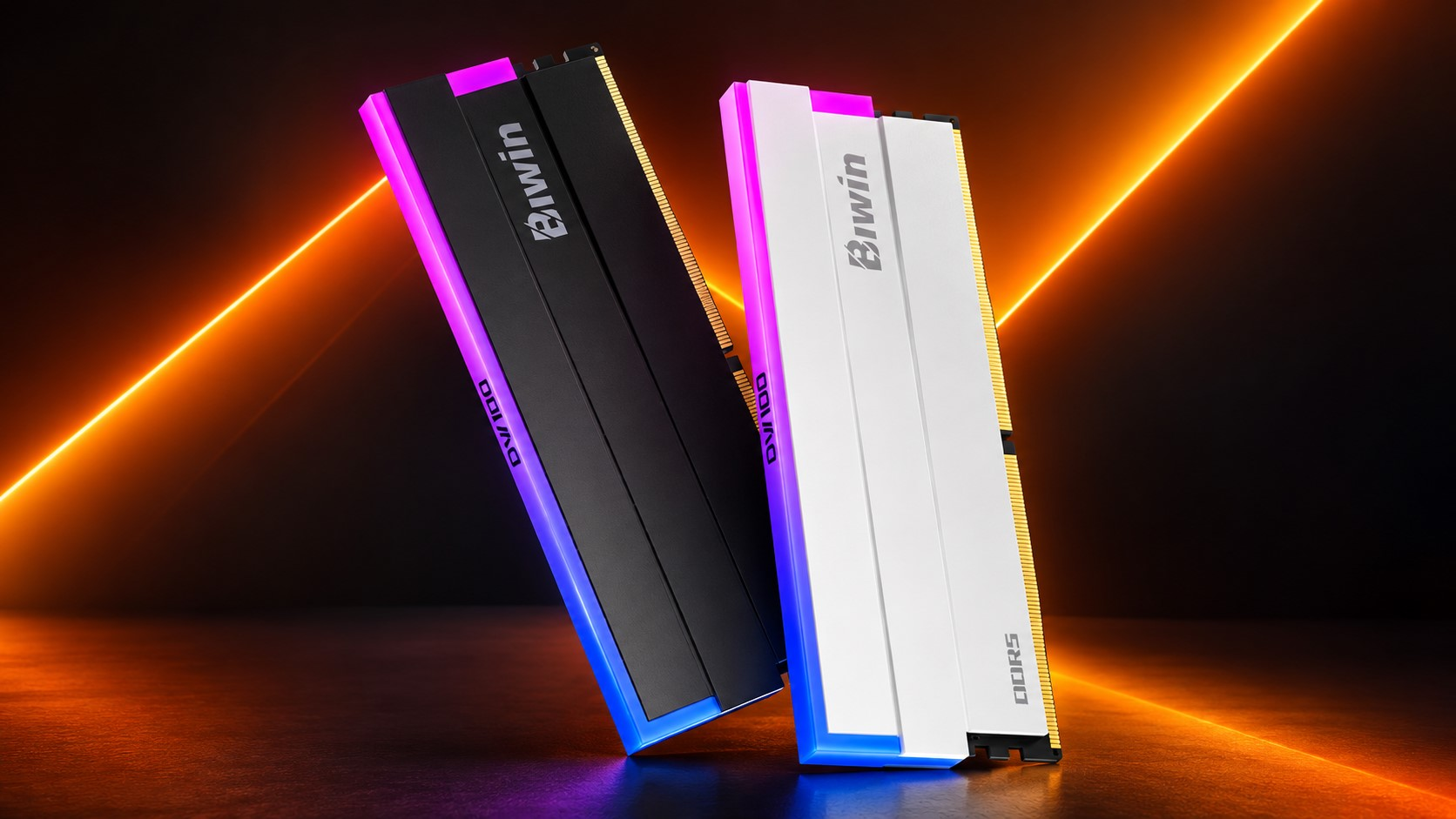
BIWIN has introduced a new 48 GB Black Opal DW100 memory kit built around AMD EXPO Technology Featuring Ultra Low Latency, combining 2 × 24 GB DDR5 modules at 6000 MT/s with CL28 primary latency. Rather than pushing memory frequency higher, the new configuration focuses on tightening the secondary and tertiary timings that can have a meaningful effect on gaming latency and frame consistency.
According to IT Home, BIWIN announced the AMD EXPO ULL certified version of the DW100 on September 11. The profile optimizes memory parameters that conventional EXPO configurations may leave at more conservative values, including settings such as tREFI, tRRDS and tWRWRSCL. These subtimings normally require manual BIOS tuning from experienced users, but EXPO ULL allows a validated set of lower latency values to be stored in the memory profile and applied through a supported AMD motherboard.
AMD introduced EXPO ULL at Computex 2026 as an extension of its existing EXPO memory overclocking technology. AMD says certified ULL memory can deliver an additional 4% average gaming performance compared with conventional EXPO memory across its selected test suite. That figure represents AMD’s own testing and should not be interpreted as a guaranteed improvement for every Ryzen processor, motherboard or game.
BIWIN is reporting considerably larger gains in selected games. Using a Ryzen 5 9600X and GeForce RTX 5070 at 1080p with low graphics settings, the company measured an 8% increase in average FPS and an 11.91% improvement in 1% Low performance in Counter Strike 2. Black Myth: Wukong reportedly showed an 18.18% improvement in minimum frame rate. These results come from BIWIN’s own laboratory testing and have not yet been independently validated.
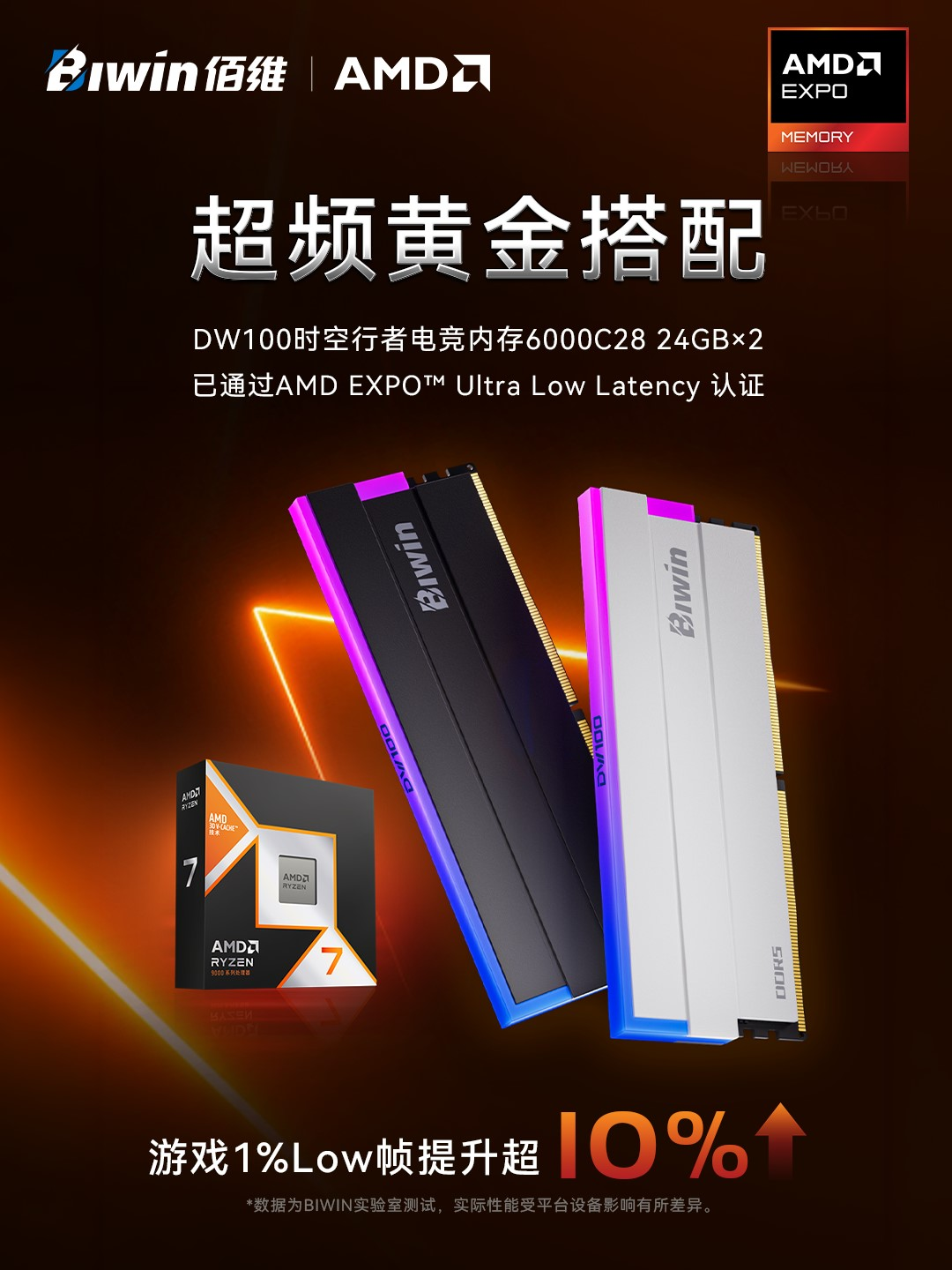
The test methodology is important because lowering graphics settings at 1080p shifts more of the performance limitation toward the CPU and memory subsystem. That makes memory latency differences easier to expose than they would be at higher resolutions or graphics settings where GPU performance becomes the dominant limitation. The results therefore demonstrate the potential benefit of tighter memory timings under CPU limited conditions rather than suggesting every game will receive an 11% or 18% frame rate increase.
The new model belongs to BIWIN’s existing Black Opal DW100 family. BIWIN lists the broader DW100 lineup with capacities up to 96 GB in 2 module configurations, data rates ranging from 6000 MT/s to 8400 MT/s and primary timings covering CL28 through CL40. The modules use selected Hynix memory ICs, a 10 layer PCB, an unlocked PMIC and BIWIN’s 3 fin heat spreader design, alongside RGB lighting compatible with major motherboard control software.
The 48 GB configuration is particularly interesting for gaming systems because 2 × 24 GB provides more capacity than conventional 32 GB kits without moving into the heavier memory controller load associated with 4 DIMM configurations. DDR5 6000 also remains an important operating point for AM5, while EXPO ULL gives memory manufacturers another way to extract performance without relying exclusively on higher transfer rates.
The new BIWIN kit enters a growing EXPO ULL market. G.SKILL has already released several DDR5 6000 ULL configurations, including CL36, CL30, CL28 and CL26 models. As previously covered in our report on G.SKILL EXPO ULL pricing, the first retail kits carried substantial premiums over conventional EXPO memory despite using the same headline transfer rate.
Motherboard manufacturers are also developing alternatives. MSI High Efficiency Mode testing previously showed conventional DDR5 6000 EXPO memory dropping from 79.4 ns to 71.6 ns in AIDA64 after aggressive BIOS timing optimization, nearly matching a dedicated EXPO ULL kit at 71.4 ns. That comparison reinforces what EXPO ULL is actually doing. The advantage comes primarily from validated subtiming optimization rather than a fundamentally different type of DDR5 memory.
BIWIN has not yet disclosed international pricing or a complete regional availability schedule for the new 48 GB EXPO ULL configuration. The most interesting part of the new DW100 is that BIWIN is targeting frame consistency rather than another headline memory frequency.
DDR5 6000 CL28 is already a familiar specification for AMD gaming systems, but EXPO ULL allows manufacturers to optimize many of the secondary and tertiary timings that most users never touch. That can improve memory latency without requiring enthusiasts to manually tune dozens of BIOS parameters and repeatedly stress test the system.
BIWIN’s 11.91% improvement in CS2 1% Low performance is significant, but it also comes from a deliberately CPU sensitive test configuration. Real world gains will vary substantially depending on the processor, game, resolution and GPU load.
The value question will therefore come down to pricing. If BIWIN can offer certified ULL tuning without the large premiums seen on some early EXPO ULL kits, the 48 GB DW100 could become an attractive middle ground between standard EXPO memory and manual enthusiast tuning.
Would you pay more for a validated EXPO ULL profile, or would you rather buy standard DDR5 6000 memory and tune the subtimings yourself?
