
Steam Frame Reviews Praise Comfort but Battery Life and $1,059 Price Hurt
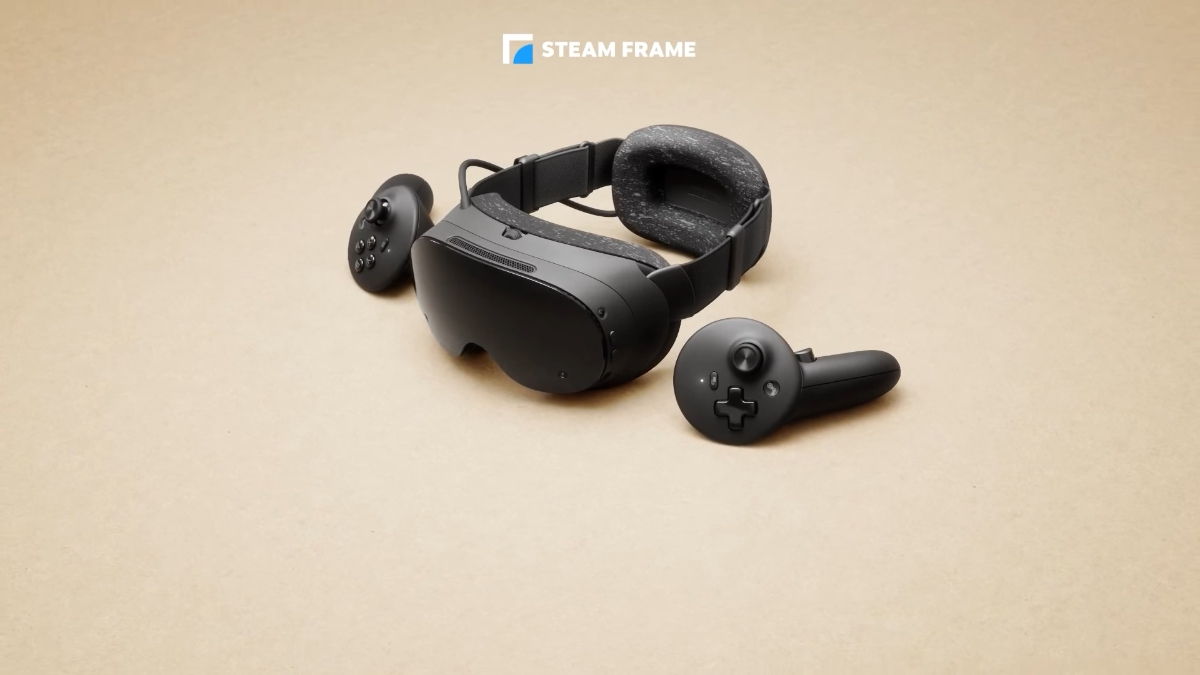
Valve has officially launched Steam Frame and opened reservations for its long awaited standalone VR headset, with the first wave of reviews presenting a surprisingly consistent picture. Comfort and wireless PC VR streaming are emerging as the hardware's strongest advantages, while its $1,059 starting price, short battery life, and still developing standalone software make Valve's latest hardware considerably harder to recommend as a mainstream alternative to Meta Quest.
Valve is selling the 256 GB Steam Frame for $1,059 and the 1 TB model for $1,299. Both configurations include the Steam Frame Controllers, dedicated Wi Fi 6E wireless adapter, and Half Life: Alyx. A 45 W USB C power supply is not included and costs another $29 directly from Valve, although compatible third party USB C chargers can also be used. Reservations remain open until September 17 at 10 AM Pacific Time, after which Valve will randomize the initial allocation before sending the first purchase invitations beginning September 18.
| Steam Frame | Specification |
|---|---|
| Processor | Snapdragon 8 Gen 3 |
| Memory | 16 GB LPDDR5X |
| Storage | 256 GB or 1 TB |
| Display | LCD, 2160 × 2160 per eye |
| Refresh Rate | 72 Hz to 120 Hz, experimental 144 Hz |
| Field of View | Up to 110 degrees |
| Wireless Streaming | Dedicated Wi Fi 6E adapter |
| Eye Tracking | Yes, with foveated streaming |
| Weight | Approximately 440 g |
| Battery Life | Around 1 to 2 hours depending on mode |
| Starting Price | $1,059 |
| 1 TB Price | $1,299 |
That price immediately places Steam Frame in premium VR territory. Valve had originally hoped to launch the headset at a lower price, but company engineers have acknowledged that rapidly increasing memory and storage costs affected the final target. Steam Frame includes 16 GB of unified LPDDR5X memory, significantly more than many standalone competitors, but the resulting $1,059 entry point makes it difficult to position as an accessible route into VR.
The hardware itself is considerably more ambitious than a conventional PC VR headset. Steam Frame combines a Snapdragon 8 Gen 3 processor with 16 GB of unified LPDDR5X memory, 256 GB or 1 TB of internal storage, expandable microSD support, and SteamOS running on ARM architecture. Its LCD displays provide 2160 × 2160 resolution per eye with refresh rates ranging from 72 Hz to 120 Hz, while an experimental 144 Hz mode pushes the display even further. Custom pancake optics provide up to a 110 degree field of view, while integrated eye tracking drives Valve's foveated streaming system.
Valve designed Steam Frame primarily around wireless PC streaming. The included Wi Fi 6E adapter creates a dedicated 6 GHz connection between the gaming PC and headset rather than forcing the video stream through the user's existing home router. Eye tracking then allows the headset to concentrate available streaming bandwidth around the area where the player is looking. Early testing from multiple reviewers has been positive, with the dedicated wireless connection providing low latency PC VR without the network configuration that can complicate wireless streaming on other headsets.
Comfort may be Steam Frame's strongest hardware achievement. The complete headset weighs roughly 440 g, while the battery is positioned toward the rear of the strap to balance the front optics and processing hardware. Early reviews consistently praise the weight distribution and overall ergonomics, making Steam Frame considerably easier to wear for longer sessions than heavier standalone designs.
Unfortunately, the headset itself may be comfortable enough for sessions that its battery cannot actually sustain. Testing shows around 1.5 hours of battery life while using the higher quality Performance mode. Switching to Playtime mode can push runtime beyond 2 hours, but the tradeoff includes lower rendering resolution and operation around 72 Hz, resulting in visibly softer image quality and less fluid motion.
The battery has a relatively modest 21.6 Wh capacity, and Valve appears aware that longer sessions will require another solution. The company is already developing an upgraded head strap that will support hot swappable batteries alongside improved audio hardware inspired by the Valve Index. No release date or price has been announced for that accessory.
Steam Frame's standalone capabilities are more complicated. The Snapdragon 8 Gen 3 allows the headset to run software locally through SteamOS, with FEX translating x86 code for ARM hardware and Proton handling Windows compatibility. Valve says more than 100 games are already Steam Frame Standalone Verified, and the headset can also run conventional non VR Steam games on a virtual display without requiring a PC.
Reviewers have nevertheless encountered a less mature experience when moving away from PC streaming. Crashes, software bugs, and connection inconsistencies have appeared during testing, while some controller and desktop functionality remains unfinished. This makes Steam Frame feel significantly more polished as a wireless extension of a gaming PC than as a completely independent replacement for one.
Another unusual compromise is passthrough. The integrated external cameras provide monochrome passthrough rather than the full color environment view found on devices such as Meta Quest 3. A third party Arcturus Vision module adds 6 megapixel per eye color passthrough, 3D HDR recording, and additional spatial capabilities, but costs another $149. For a headset already starting above $1,000, requiring another accessory for high quality color passthrough makes the overall package even more expensive.
The controllers are more straightforward. Each provides 6 degree of freedom tracking, capacitive finger sensing, magnetic TMR thumbsticks, haptic feedback, and enough conventional controls to function as a standard gamepad for non VR titles. Each controller uses a replaceable AA battery rated for approximately 40 hours, allowing the same pair to handle both immersive VR games and conventional Steam titles displayed inside the headset.
The result is a headset that reviewers generally admire more than its price would suggest. Steam Frame is being praised for comfort, display quality, wireless PC integration, and eye tracked streaming, while battery endurance, standalone software maturity, and overall cost are emerging as the main weaknesses.
Steam Frame also arrives into a VR market very different from the one that surrounded Valve Index in 2019. Global headset shipments declined during 2026, while Meta has established considerably cheaper standalone hardware with mature software libraries. Valve is therefore not simply replacing Index. It is attempting to convince PC gamers that a premium wireless SteamOS headset still has a place in a market where VR remains relatively niche.
The launch completes another major step in the hardware strategy Valve outlined when it first revealed Steam Frame alongside Steam Machine and its new Steam Controller. Valve originally positioned Steam Frame as a streaming first headset capable of running both VR and conventional Steam games. The final hardware largely delivers that vision, but the combination of premium pricing and limited battery endurance makes the value argument considerably more complicated than the original announcement suggested.
Steam Frame appears to have solved several of the problems that made high end PC VR inconvenient. It is wireless, light, comfortable, tightly integrated with Steam, and its dedicated streaming connection removes much of the setup friction normally associated with wireless PC VR.
The problem is that Valve solved convenience without solving affordability or battery life.
At $1,059 before even adding a power supply, Steam Frame is not positioned to become the Steam Deck of VR. It is enthusiast hardware for players who already understand why dedicated PC VR streaming, eye tracked foveated transmission, SteamOS, and an open platform matter enough to justify spending more than twice the price of several competing headsets.
Battery endurance is the harder compromise. Around 1.5 hours in Performance mode can interrupt exactly the kind of immersive gaming sessions the headset is designed to make more comfortable. Valve's planned hot swappable battery strap could address that weakness, but it also means another accessory is required to solve a limitation present at launch.
Steam Frame may be one of the best designed gaming VR headsets available today, but its first reviews make something equally clear: excellent engineering does not automatically make $1,059 easy to justify.
Would Steam Frame's wireless PC VR experience and comfort justify $1,059 for you, or does the battery life and premium price keep Meta Quest ahead?
