
AOOSTAR Teases NEX495S Mini PC With Ryzen AI Max+ PRO 495 and 192 GB Memory
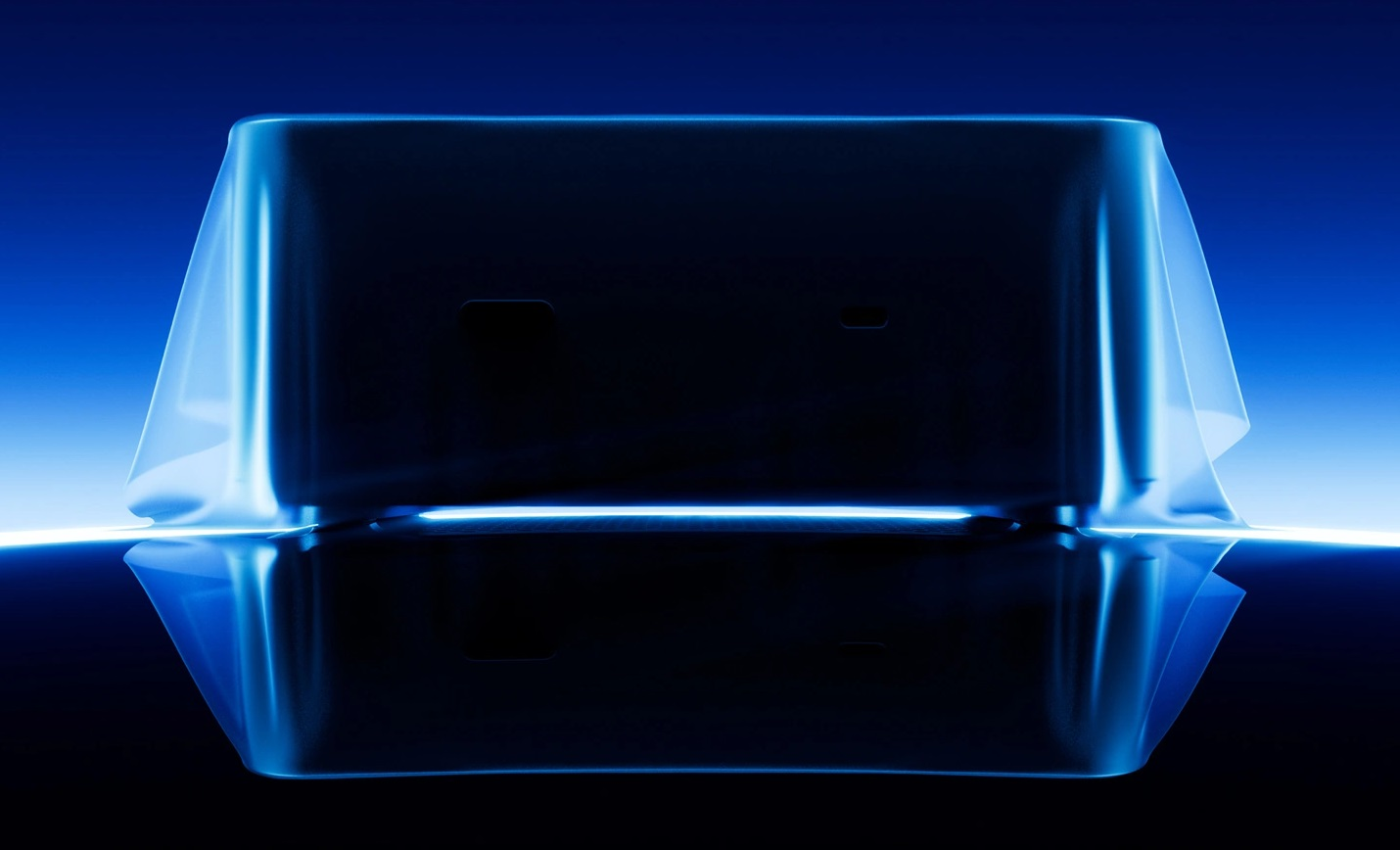
AOOSTAR has previewed its next flagship compact AI workstation, the NEX495S, built around AMD's Ryzen AI Max+ PRO 495 processor and supporting up to 192 GB of LPDDR5X unified memory. The new system succeeds the company's NEX395 and moves directly into the growing market for compact PCs capable of running large AI models locally without relying on a discrete graphics card.
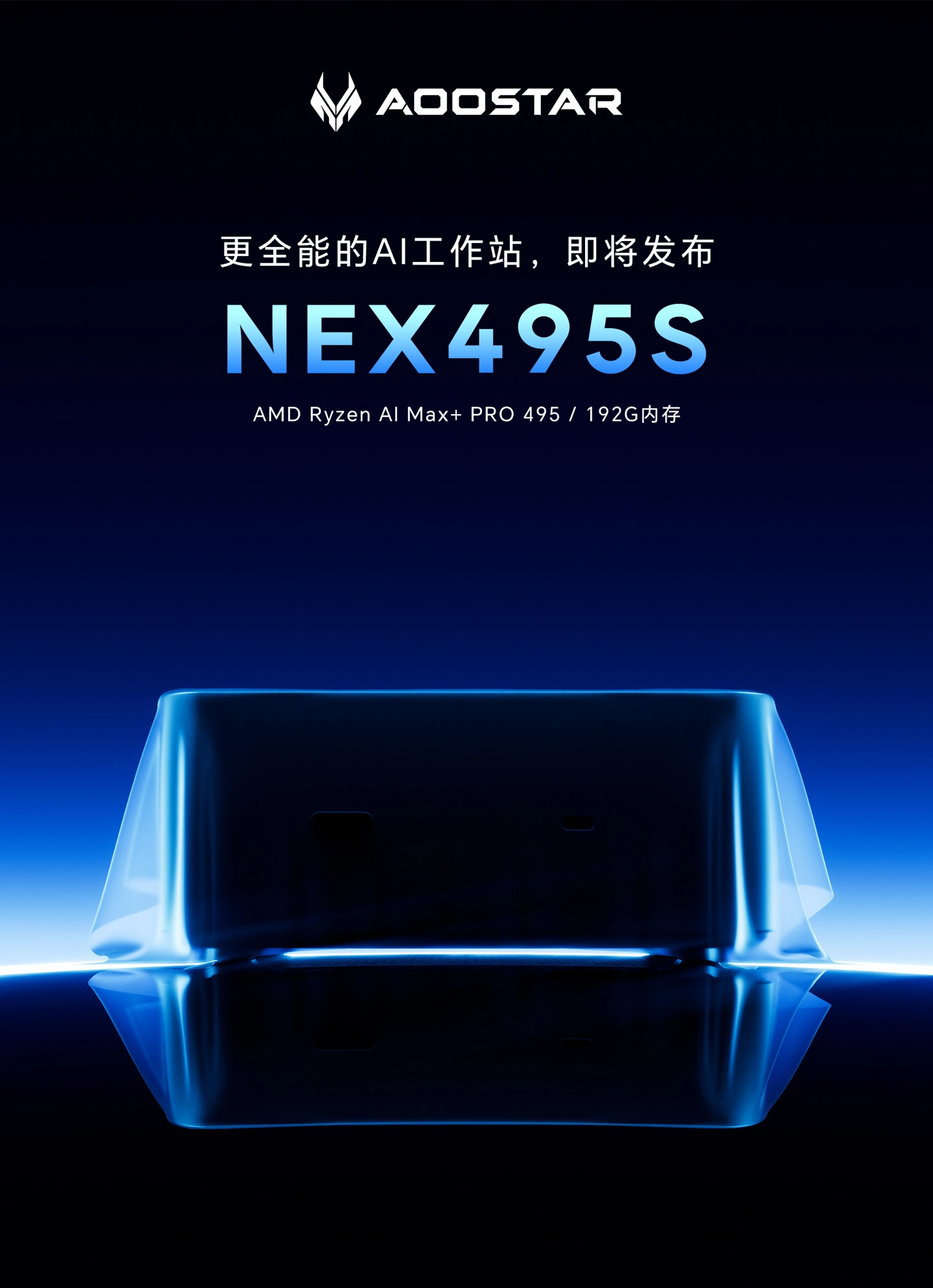
The first NEX495S teaser, reported by ITHome, confirms AMD's Ryzen AI Max+ PRO 495 and 192 GB memory support. AOOSTAR has also redesigned the chassis compared with the previous NEX395, with the teaser image showing a noticeably different enclosure and overall profile. Full connectivity, storage, cooling, power limits, pricing, and release availability have not yet been disclosed.
At the center of the system is AMD's flagship Gorgon Halo processor. According to AMD, the Ryzen AI Max+ PRO 495 combines 16 Zen 5 CPU cores and 32 threads with boost frequencies reaching 5.2 GHz. It carries 80 MB of total cache and operates across a configurable 45 W to 120 W power range.
Graphics are handled by the integrated Radeon 8065S, featuring 40 RDNA 3.5 compute units clocked at up to 3.0 GHz. AMD rates the complete processor at up to 131 TOPS of AI performance, with the XDNA 2 NPU contributing up to 55 TOPS. More importantly for local AI workloads, the platform supports 192 GB of LPDDR5X 8533 memory through a 256 bit interface, with AMD stating that as much as 160 GB can be allocated as graphics memory in supported configurations. AMD says this enables the platform to work with AI models exceeding 300 billion parameters when using suitable 4 bit quantization.
That memory capacity is becoming one of the defining advantages of AMD's new local AI platform. Conventional high end consumer graphics cards offer much faster dedicated graphics memory but considerably smaller capacities, while Gorgon Halo allows the CPU and integrated GPU to access the same large memory pool. The approach is particularly attractive for local language models, generative AI, development environments, and workloads where memory capacity becomes the limitation before raw compute performance.
AOOSTAR is entering an increasingly crowded field. AMD recently confirmed that more than 20 systems based on the Ryzen AI Max+ PRO 495 are preparing to reach the market, with mini PCs representing a large portion of those designs. GMKtec, Minisforum, Framework, Lenovo, and other manufacturers are already preparing competing systems around the same platform.
The NEX495S also follows a broader shift toward compact AI workstations that we have already seen with AMD's Ryzen AI Halo developer platform, which targets local model development through high capacity unified memory and ROCm support. More recently, AMD expanded that strategy with the Ryzen AI Max 400 generation, increasing available unified memory to 192 GB and pushing these compact systems further into workstation territory.
The NEX495S is another sign that 192 GB compact AI systems are moving quickly from experimental hardware into a competitive product category. The Ryzen AI Max+ PRO 495 does not simply provide a faster CPU than the previous generation. Its larger unified memory ceiling changes what a mini PC can realistically handle without external accelerators.
The deciding factors for AOOSTAR will be cooling, sustained 120 W performance, memory configuration, software support, and price. With several manufacturers building around the same processor, the Ryzen AI Max+ PRO 495 itself will no longer be enough to differentiate these systems.
Would you choose a 192 GB unified memory mini PC for local AI, or would you still prefer a desktop with a dedicated NVIDIA or AMD GPU?
