
Radeon RX 7900 XTX Owner Finds Melted 8 Pin Connectors on Thermal Grizzly WireView
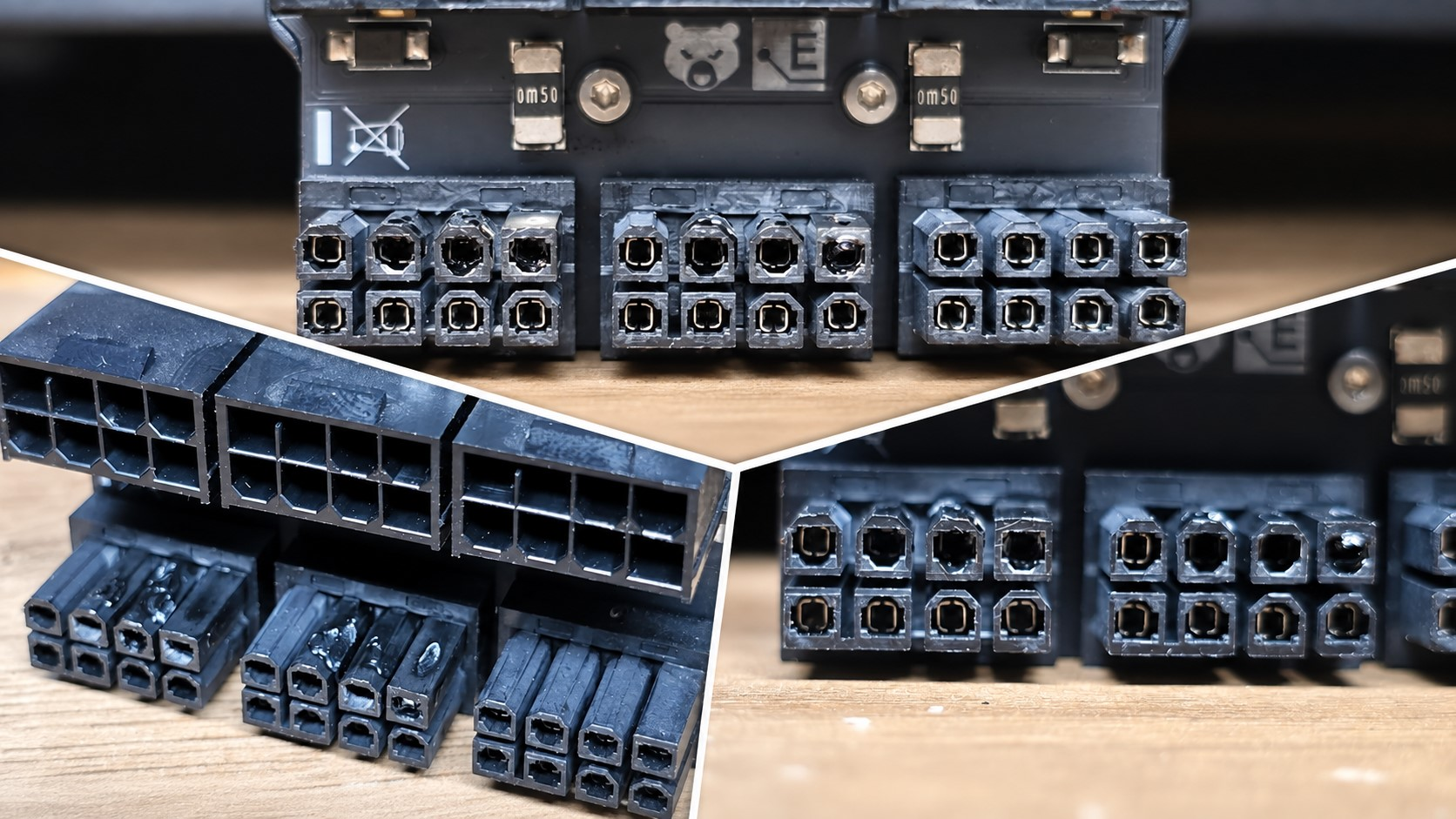
A Radeon RX 7900 XTX owner has discovered severe heat damage across multiple traditional PCIe 8 pin power connections while using a Thermal Grizzly WireView GPU power monitoring adapter. The case is particularly notable because recent GPU connector failures have largely centered around the newer 12V 2x6 design, while conventional 8 pin PCIe connections are generally regarded as considerably more tolerant of high power loads.
The incident was documented by Reddit user AwarenessHour9192, who explained in the original Reddit report that the PC had been suffering from repeated system freezes and black screens for several months. The system was even taken to a computer repair shop, where stress testing, benchmarks, and a Windows installation reportedly failed to identify the cause.
After the problems continued at home, the owner decided to remove and reinstall the Radeon RX 7900 XTX in case something had become loose. During removal, visible melting and discoloration were discovered around the WireView connectors attached directly to the graphics card. Images shared with the post show substantial thermal damage around multiple contacts across 2 of the 3 visible 8 pin connections.
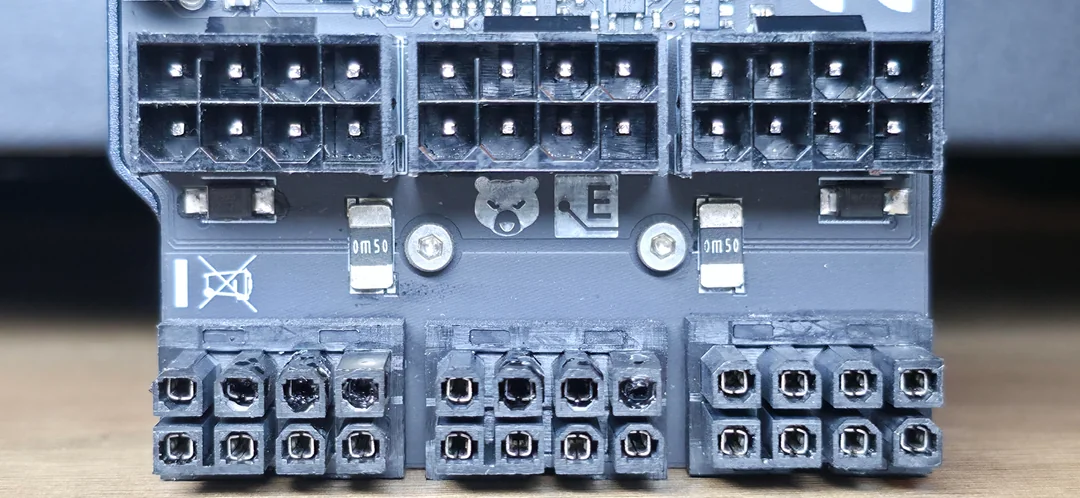
The owner maintains that the connectors had been fully inserted and described them as fitting tightly enough that removing the adapter from the graphics card was difficult. Thermal Grizzly has already responded directly to the case and asked the owner to contact its support team so the hardware can be examined in greater detail. The company noted that this type of damage can occur if a connector is not completely or correctly inserted, but also highlighted other possible causes including interference from a GPU backplate or connection contacts that are not perfectly aligned or soldered. Thermal Grizzly has not yet established the root cause.
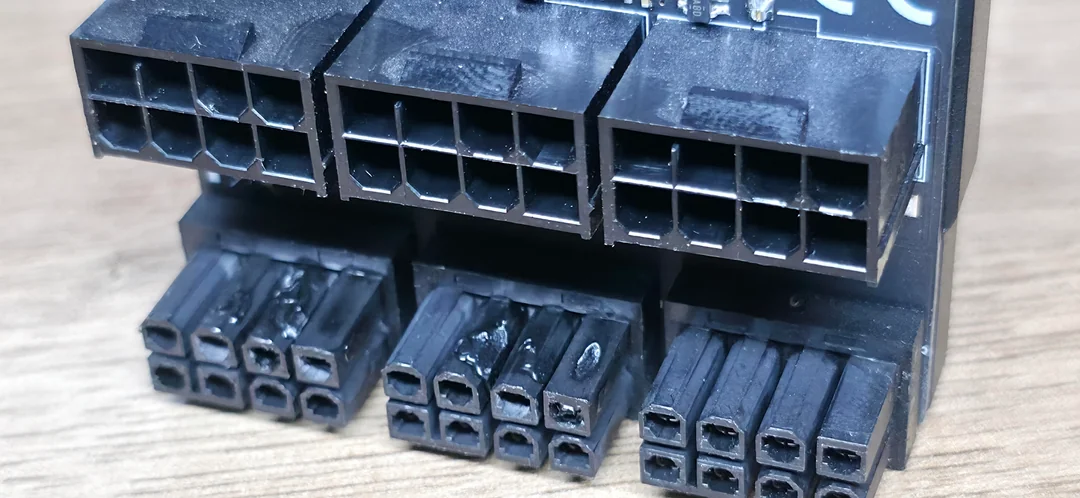
One particularly interesting development came after the WireView was removed. The owner reported playing Helldivers 2 for around 2 hours without experiencing another crash, considerably longer than the system had recently managed while the adapter was installed. Using an infrared temperature meter, the user later measured the GPU power connectors at approximately 30°C to 33°C and reported no additional problems. That observation does not prove the WireView itself caused the failure, but it strengthens the case for examining the adapter, connector alignment, and contact quality rather than immediately blaming the graphics card or power supply.
The affected accessory is part of Thermal Grizzly's original WireView GPU family, which sits directly between a graphics card and its PCIe power cables. The device was developed to measure GPU power consumption while also providing a cleaner cable routing position, with versions produced for 1, 2, and 3 conventional 8 pin connectors alongside higher power variants designed for 12VHPWR hardware.
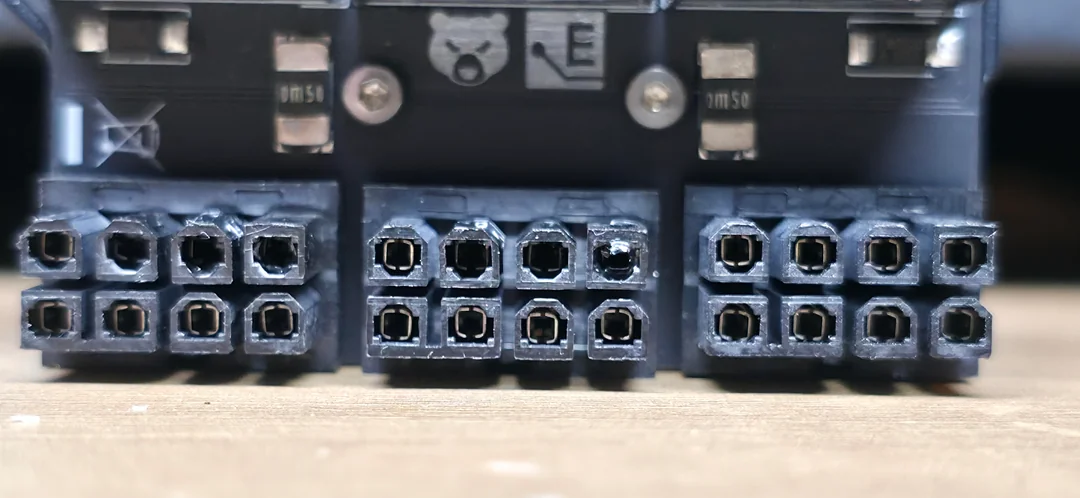
Thermal Grizzly itself warns that substantial heat can develop around WireView hardware under sustained high power operation. Its product documentation explains that workloads approaching 450 W can cause the WireView PCB around the connector area to reach approximately 60°C with an air cooled graphics card. In systems using water cooling without direct airflow, the company says the PCB can approach 100°C. Those figures do not indicate that melting should occur, but they demonstrate the significant thermal load that can exist around GPU power delivery components.
Traditional PCIe 8 pin connectors are typically associated with up to 150 W each under the standard specification. A graphics card using 3 separate 8 pin connections therefore distributes auxiliary GPU power across considerably more physical connector area than a single compact 16 pin interface. This is one reason conventional 8 pin designs have generally avoided the widespread attention surrounding recent 12VHPWR and 12V 2x6 failures.
However, 8 pin connectors are not immune to overheating. High electrical resistance caused by poor contact, connector misalignment, damaged terminals, contamination, manufacturing tolerances, or an incompletely seated connection can create localized heating even when total power remains within expected limits. This particular incident is also not the first documented example of an 8 pin WireView failure. Older user reports describing melted connections on similar hardware can be found online, although such cases remain considerably less common than recent reports involving high power 16 pin GPU connections.
The case arrives amid renewed discussion around GPU power delivery safety. Recent high power graphics cards have generated extensive debate around 12V 2x6 current distribution, prompting manufacturers to develop products capable of monitoring individual contacts or balancing electrical load. Devices such as the Aqua Computer Ampinel actively redistribute current across the 12V 2x6 connection, while products including the ASUS ROG Equalizer attempt to reduce voltage drop and improve current handling through revised cable and contact designs.
The important takeaway is not that traditional 8 pin PCIe connectors suddenly have the same reliability problem as 12V 2x6. They do not. What this case demonstrates is that no high current electrical connection is completely immune to localized heating when contact quality deteriorates.
The most interesting part of this incident is that the damage appears around a monitoring adapter positioned between the GPU and its power cables, while the system reportedly became stable after that adapter was removed. That still does not identify the cause. Connector alignment, manufacturing tolerances, contact pressure, or another electrical problem could all be involved, which is why Thermal Grizzly examining the damaged unit will be important.
It also reinforces a simple rule for high power PC builds. Additional adapters and monitoring hardware can provide valuable information, but every additional electrical connection introduces another physical contact point that must remain properly seated and capable of carrying substantial current.
Would this case make you avoid GPU power adapters completely, or do the monitoring benefits of products like WireView still outweigh the additional connection point?
