
AMD Ryzen AI Halo Mini PC Targets AI Developers With Ryzen AI MAX Strix Halo, ROCm 7.2.2, And Day 0 Model Support, Setting Up A Direct Fight With NVIDIA DGX Spark
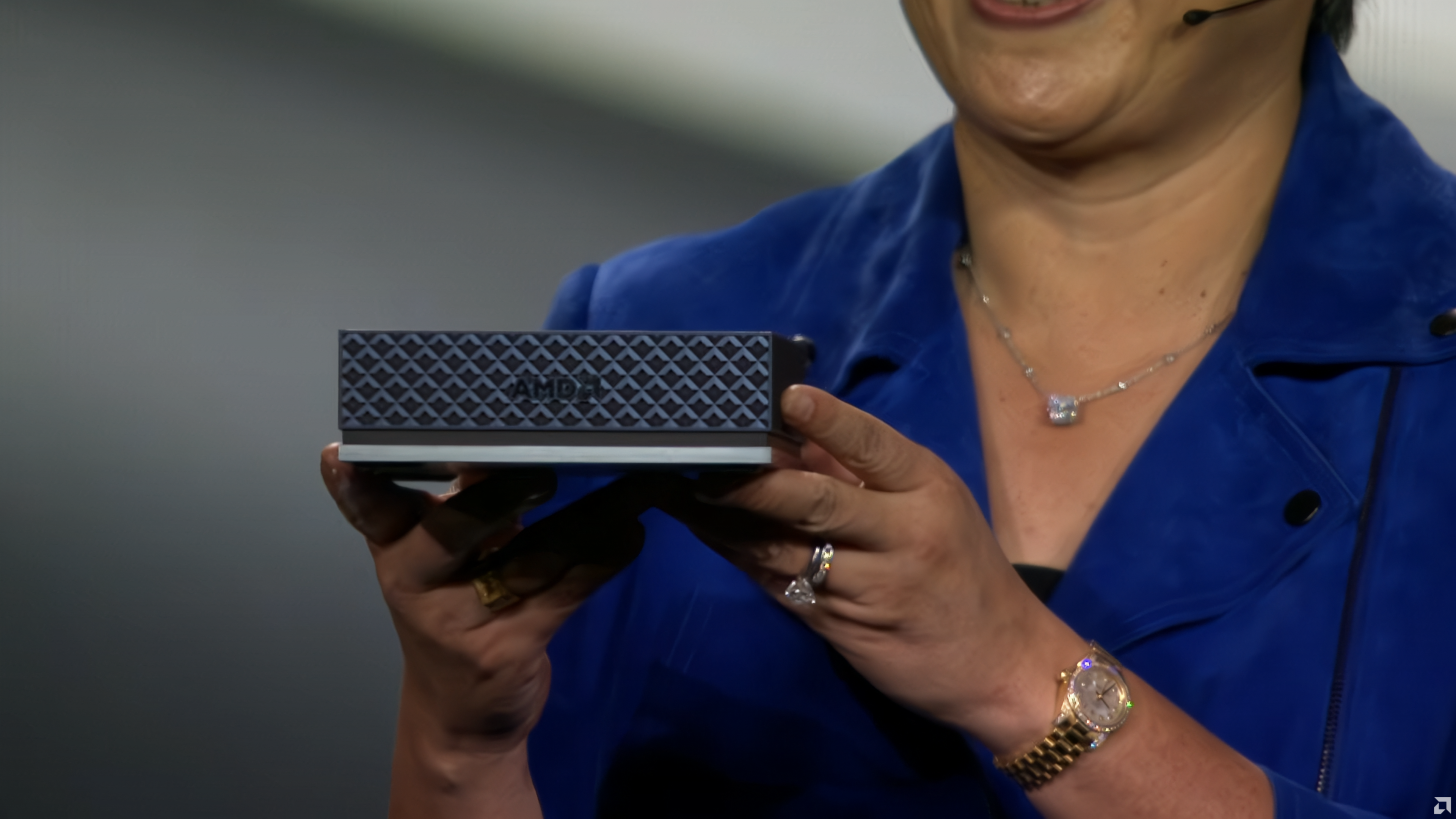
AMD is preparing a new compact AI development system that goes straight at NVIDIA’s DGX Spark positioning, this time with an in house Mini PC built around the Ryzen AI MAX CPU family, codenamed Strix Halo. The device is branded as the Ryzen AI Halo Mini PC, and AMD is framing it as an AI Developer Platform designed to accelerate local AI workflows, model testing, and dev ready application pipelines in a small form factor that can sit on a desk like a traditional Mini PC while still offering serious compute density.
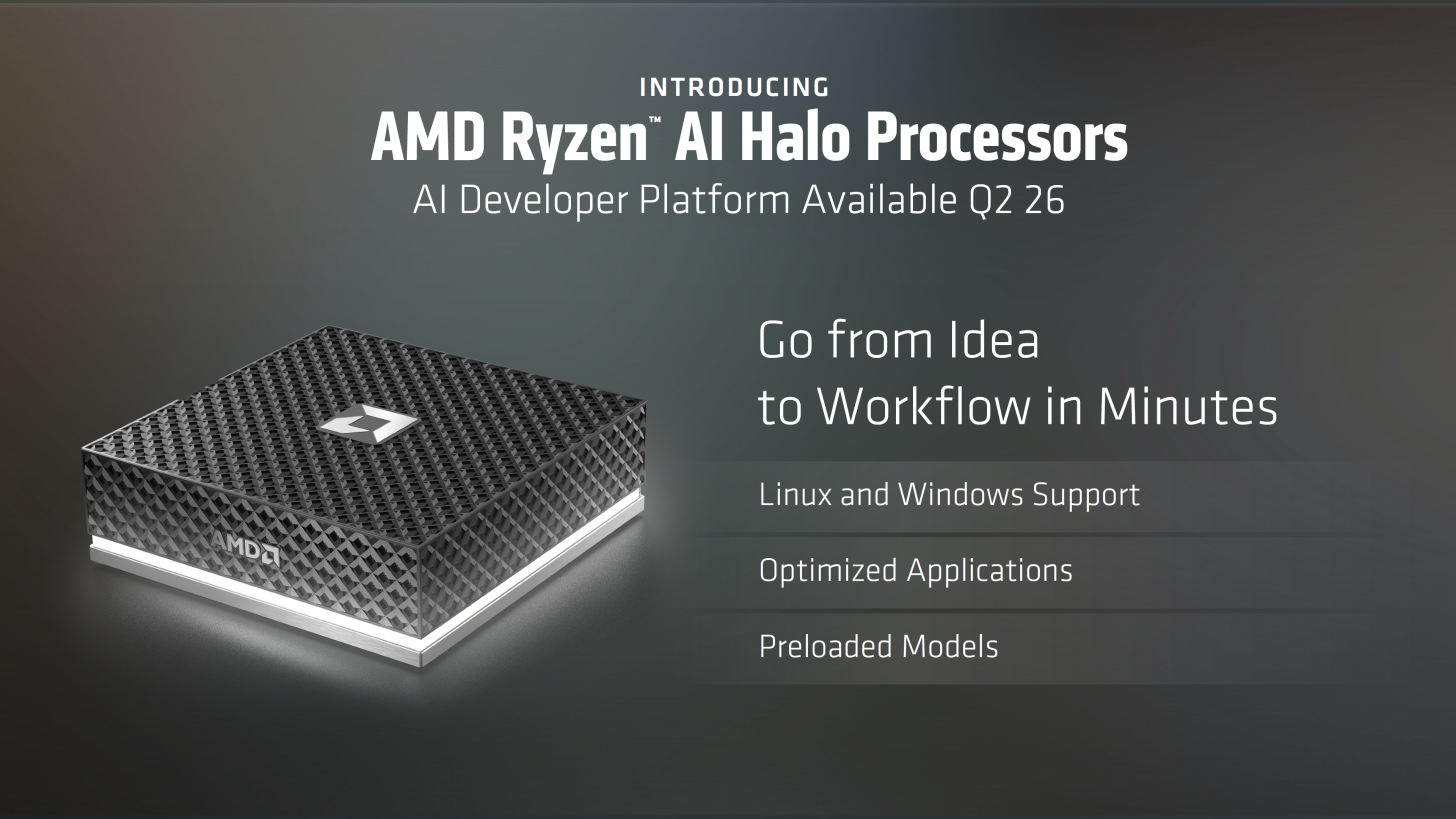
The strategic angle here is clear. Strix Halo class Ryzen AI MAX SoCs have been spreading rapidly across premium laptops, handheld style devices, and compact systems, and AMD now appears ready to unify that momentum into a reference platform experience that developers can buy, deploy, and iterate on without the complexity of a full workstation build. From a market standpoint, this is AMD leaning into a developer first go to market motion, aiming to convert the growing interest in on device AI into a repeatable ecosystem product rather than leaving everything to OEM implementations.
Under the hood, the Ryzen AI Halo Mini PC is expected to support the full range of Ryzen AI MAX configurations, scaling up to 16 CPU cores, 40 GPU compute units based on RDNA 3.5, and up to 128GB of LPDDR5X 8533 memory. That last spec is a critical unlock for local AI use cases because memory capacity and bandwidth often become the primary limiting factor when running larger models, higher resolution image generation, or multi app pipelines. The combination of a high bandwidth unified memory pool and a strong integrated GPU stack is exactly why Strix Halo has become a compelling platform for creators and AI enthusiasts who want meaningful performance without jumping straight to a discrete GPU desktop.
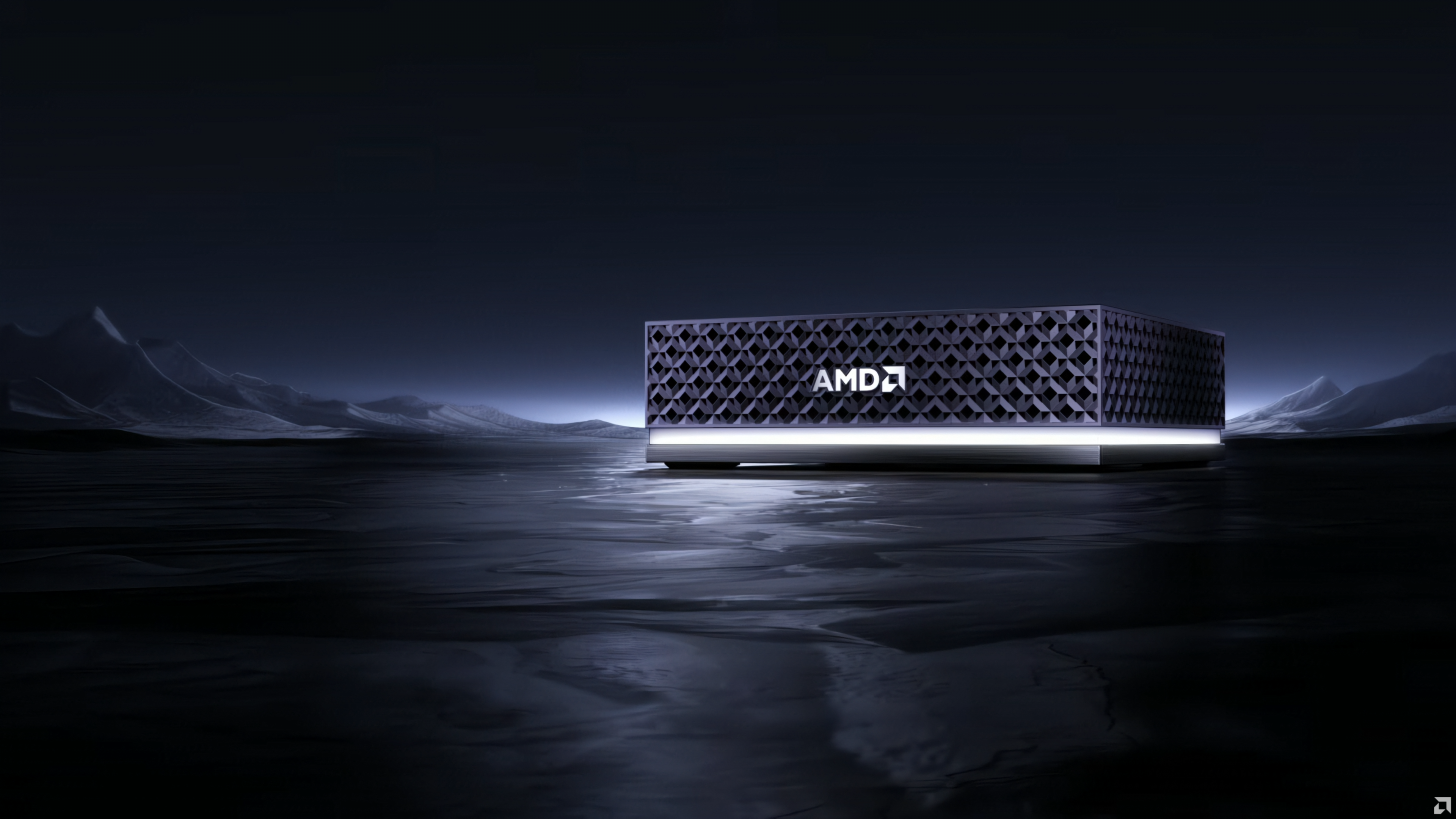
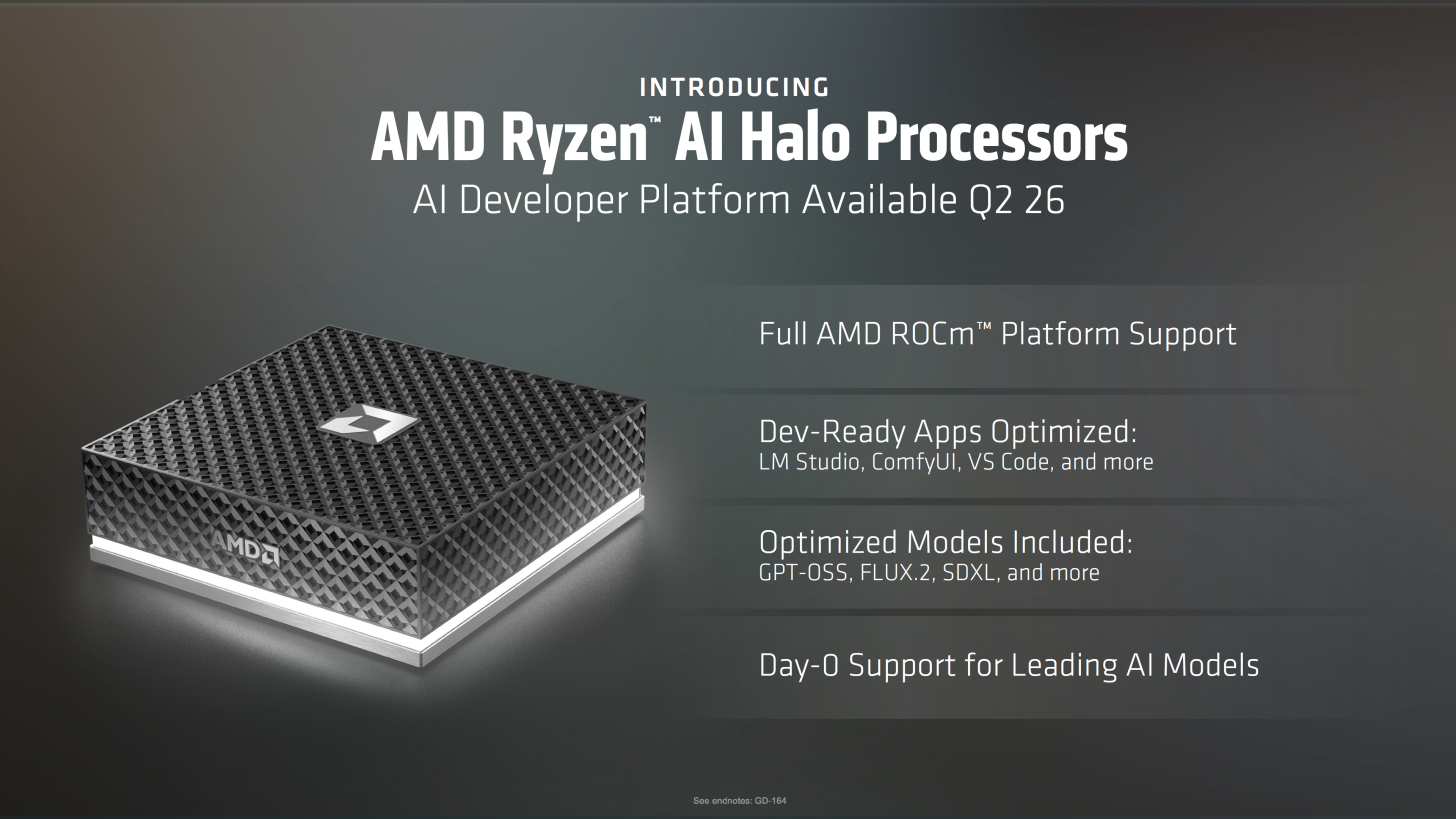
AMD is also putting a major spotlight on software enablement and time to productivity. The Ryzen AI Halo Mini PC is positioned to ship with full AMD ROCm support, including ROCm 7.2.2, and will be optimized for developer friendly tools and workflows such as LM Studio, ComfyUI, and VS Code. AMD is also calling out model level optimizations and day 0 support for leading AI models, including GPT OSS, FLUX.2, and SDXL. For buyers, the operational value proposition is that the platform is meant to be ready for AI work immediately, reducing the friction that typically comes with driver mismatches, dependency gaps, and early adopter setup time.
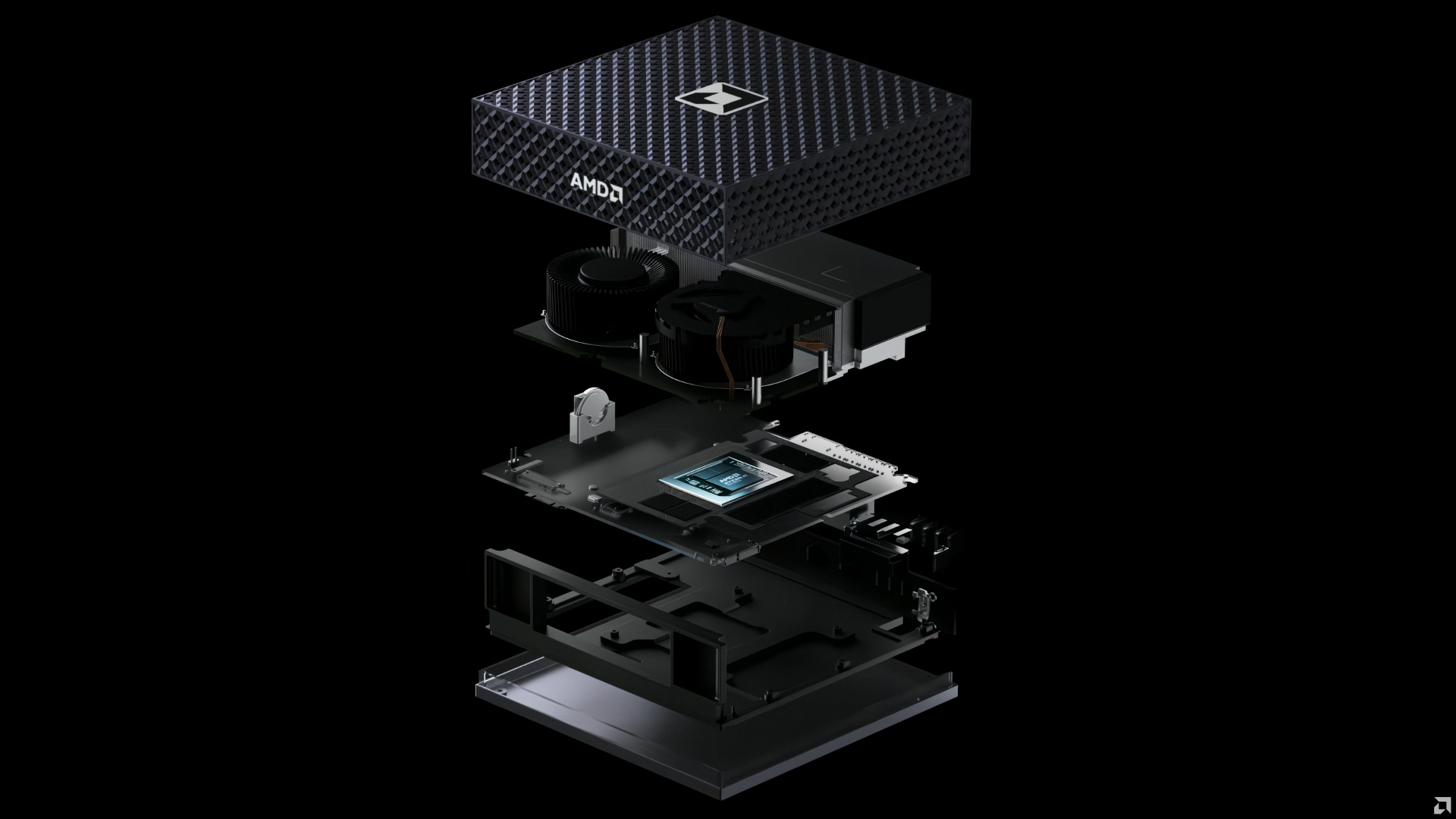
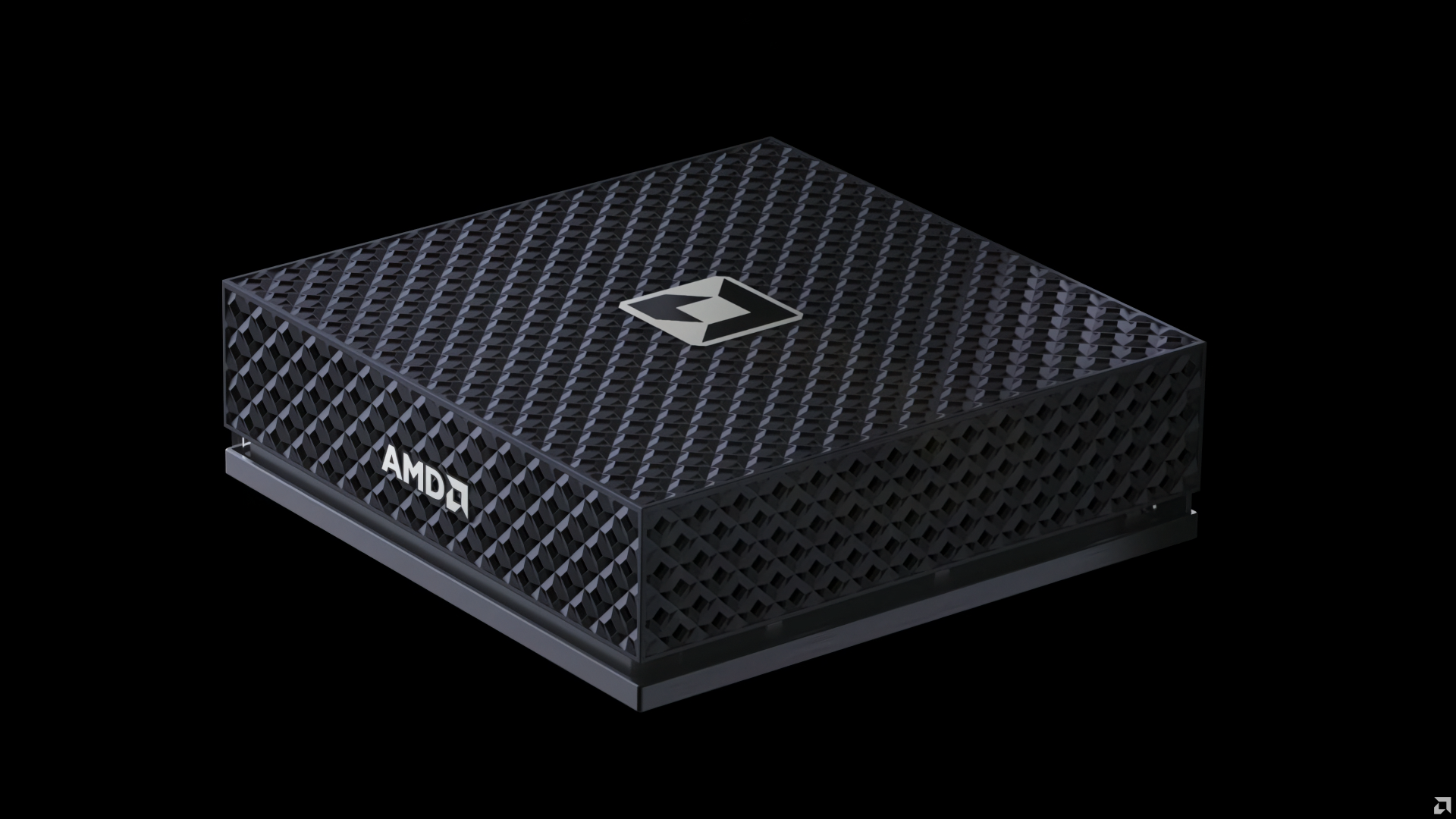
Thermals and acoustics matter in this segment, and AMD appears to be treating the Ryzen AI Halo Mini PC as a real consumer product rather than a dev kit that sacrifices usability. The device is described as using a dual fan cooling solution, paired with large storage capacity support, which aligns with the practical needs of local inference and content generation workflows where sustained performance and fast storage directly impact iteration speed. The message is that this is a compact box designed to stay in boost behavior while running heavy workloads, not just burst benchmarking.
On timeline, AMD has not disclosed pricing yet, but the Ryzen AI Halo Mini PC is scheduled for a retail launch in Q2 2026. That places it directly into a window where interest in local AI development boxes is rising, and where NVIDIA’s DGX Spark is actively setting expectations for what a small AI workstation can look like in a plug and play package. If AMD executes on aggressive pricing and delivers strong out of box ROCm stability, the Ryzen AI Halo Mini PC could become a high leverage option for developers who want a compact local AI machine without buying into a fully proprietary stack.
The bigger picture is that we are watching the Mini PC category evolve into a new kind of prosumer AI segment. In the same way that small form factor gaming PCs normalized high performance in compact chassis, AI developer Mini PCs are now trying to normalize local model workflows and creator pipelines on the desktop. AMD’s Ryzen AI Halo Mini PC is a direct bet that Strix Halo’s balanced CPU, GPU, and NPU design can compete in that space on both performance and platform openness.
Engagement
If you were buying a compact AI box in 2026, would you prioritize maximum unified memory like 128GB LPDDR5X 8533, or would you still prefer a discrete GPU system even if it is bigger and less power efficient?
