
AMD Brings Threadripper Halo Station and Ryzen AI MAX 400 Local AI PCs to IFA 2026
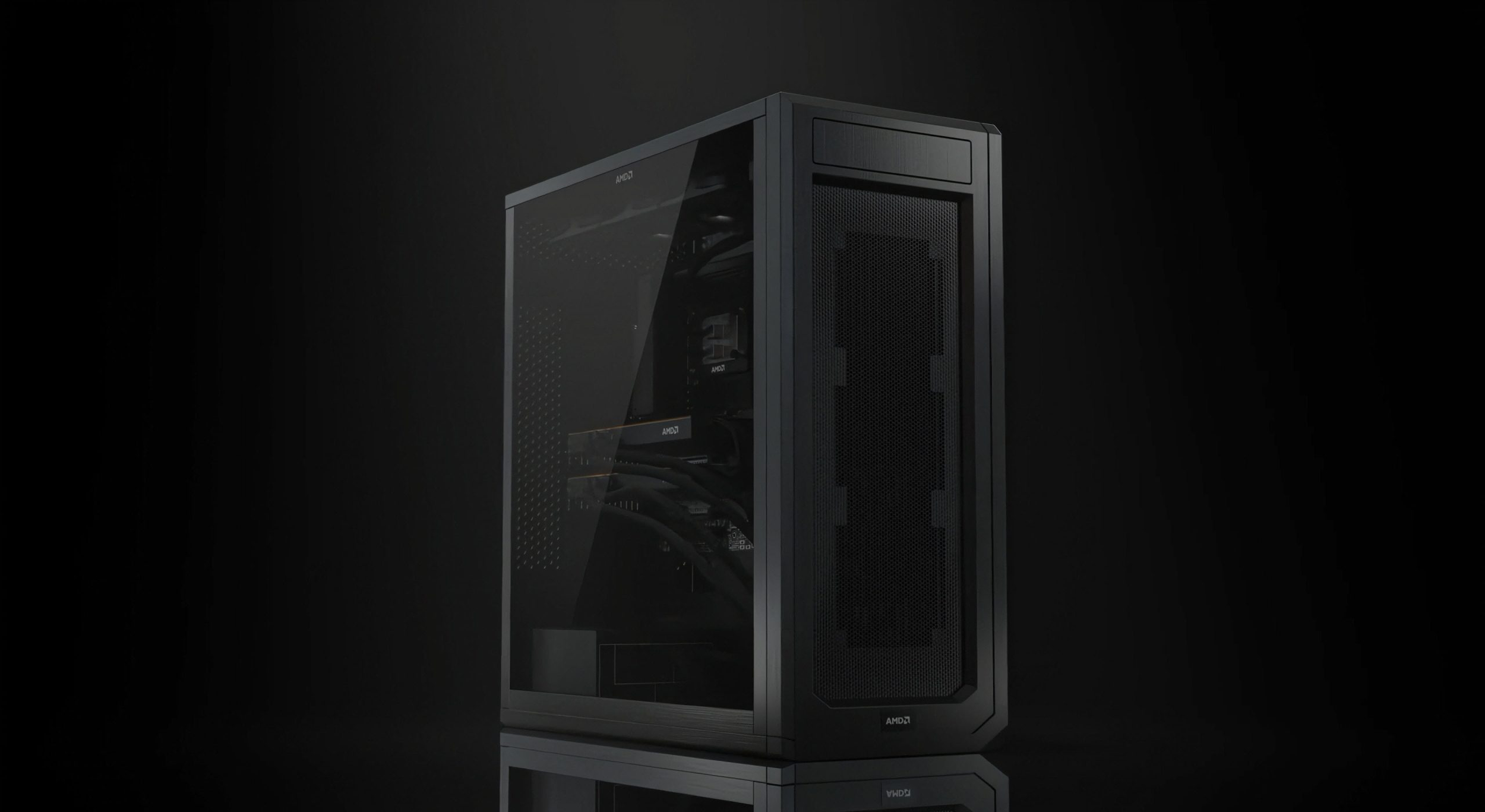
AMD used IFA 2026 to push local AI computing further across 2 very different classes of hardware, unveiling the Threadripper Halo Station for extreme workstation workloads while showcasing a growing ecosystem of compact Ryzen AI MAX systems. AMD is positioning both platforms around the same broader objective: giving developers, creators, researchers, and professional users enough local compute and memory capacity to run increasingly demanding AI models without depending entirely on cloud infrastructure. The difference is scale, with Ryzen AI MAX targeting compact personal systems while the AMD Threadripper Halo Station pushes considerably closer to datacenter class hardware.
The Threadripper Halo Station is currently a prototype scheduled for 2027 and combines the 96 core, 192 thread Ryzen Threadripper PRO 9995WX with AMD Instinct class accelerators. AMD lists support for up to 2 TB of DDR5 RDIMM system memory alongside as much as 576 GB of HBM3e accelerator memory, bringing maximum combined memory capacity to 2.6 TB. AMD also specifies up to 16 TB/s of aggregate GPU memory bandwidth and 16.4 TB/s of total system memory bandwidth. The system demonstrated at IFA used 2 Instinct MI350P accelerators, providing 288 GB of HBM3e, while AMD describes support for configurations reaching 4 accelerators and 576 GB. Each Instinct MI350P accelerator carries 144 GB of HBM3e with up to 4 TB/s of memory bandwidth, making memory capacity and bandwidth central to AMD’s plan for running frontier class models and large agentic workloads locally.
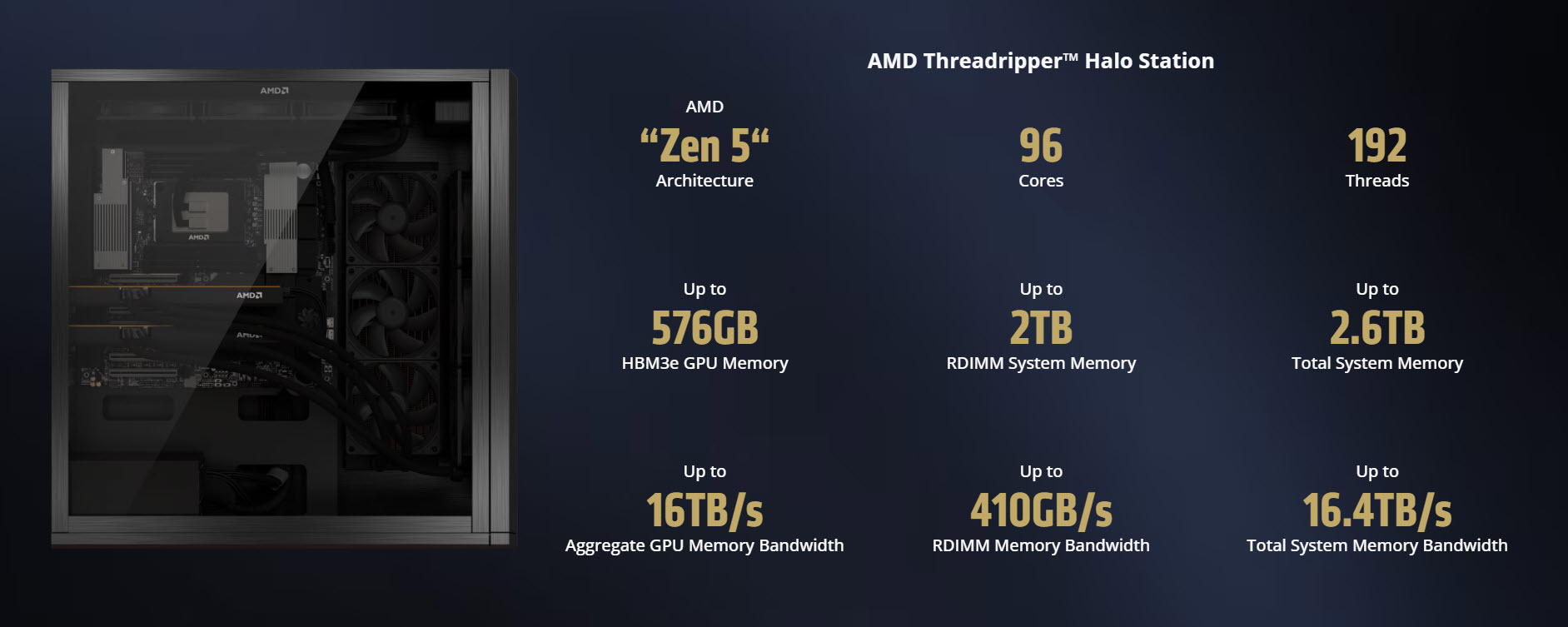
AMD is effectively positioning Halo Station against systems such as NVIDIA’s DGX Station, although the architectures approach memory very differently. AMD combines conventional DDR5 system memory with dedicated HBM3e pools attached to its Instinct accelerators, while NVIDIA’s GB300 platform uses a more tightly connected Grace and Blackwell architecture. AMD claims its maximum Halo Station configuration can reach 2.6 TB of combined memory and handle models exceeding 1 trillion parameters, but these remain AMD platform claims until broader independent testing becomes available. Final commercial configurations and pricing have also not been announced, making it important to view the IFA presentation as a preview of AMD’s 2027 workstation strategy rather than a finished retail launch.
We’re excited to see Project Zenith first become available on AMD Ryzen AI Halo, bringing developers a ready-to-code Windows experience designed to help them jump right in. https://t.co/eUDaNhwxrh
— AMD (@AMD) September 4, 2026
At the more accessible end of AMD’s local AI strategy, Ryzen AI MAX continues to expand through compact desktops, mini PCs, and mobile workstations. The upcoming Ryzen AI MAX+ PRO 495 supports up to 192 GB of unified LPDDR5X memory, with as much as 160 GB configurable for graphics workloads. That increased memory capacity is one of the biggest changes in the Ryzen AI MAX 400 platform, giving a single x86 client processor enough memory headroom for AI models that would previously have required substantially larger accelerator hardware. AMD and its partners including HP, Lenovo, GMKtec, Acer, Minisforum, GEEKOM, and ACEMAGIC displayed Ryzen AI MAX systems during IFA, expanding the number of compact platforms targeting local inference and professional AI development.
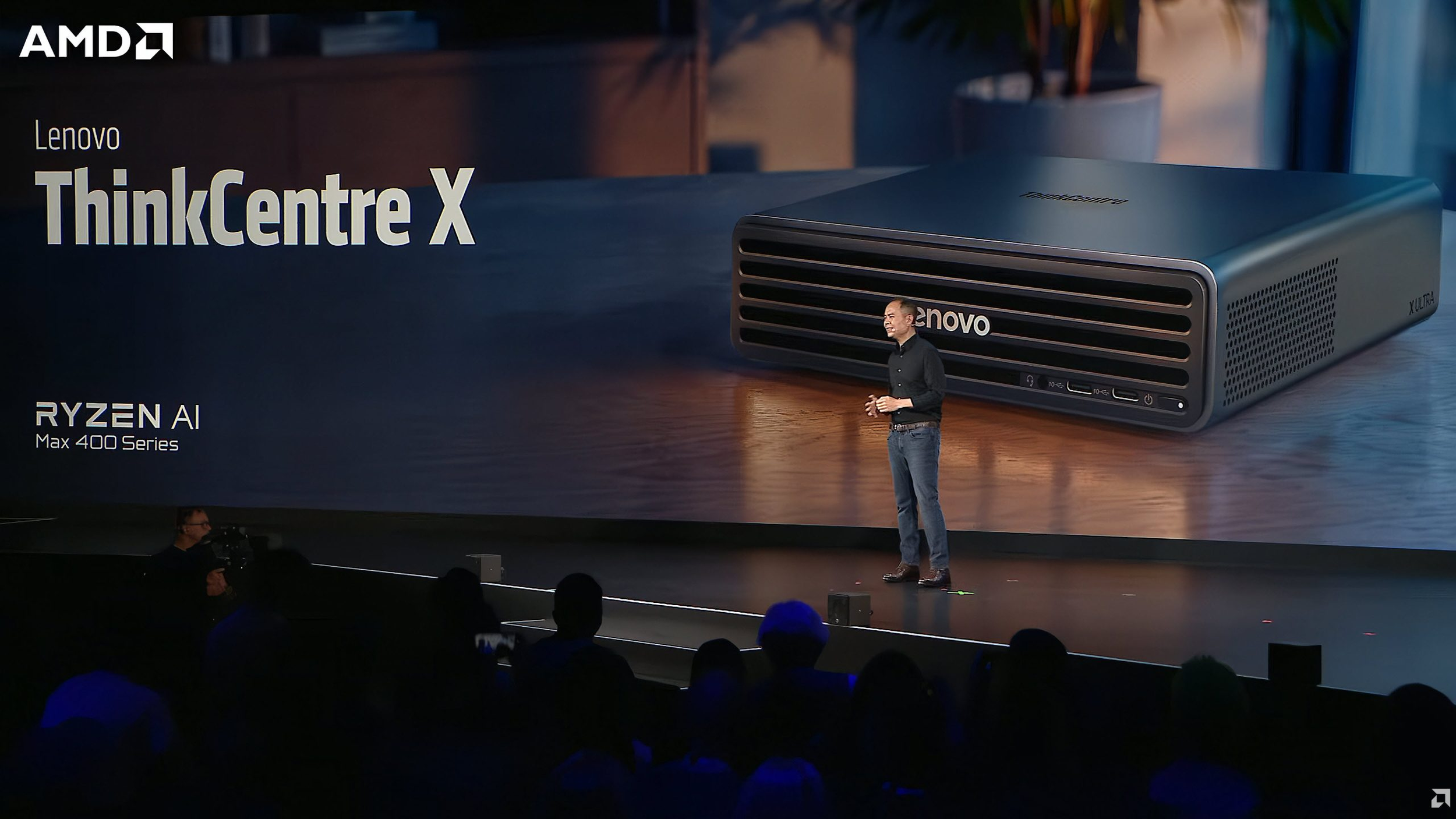
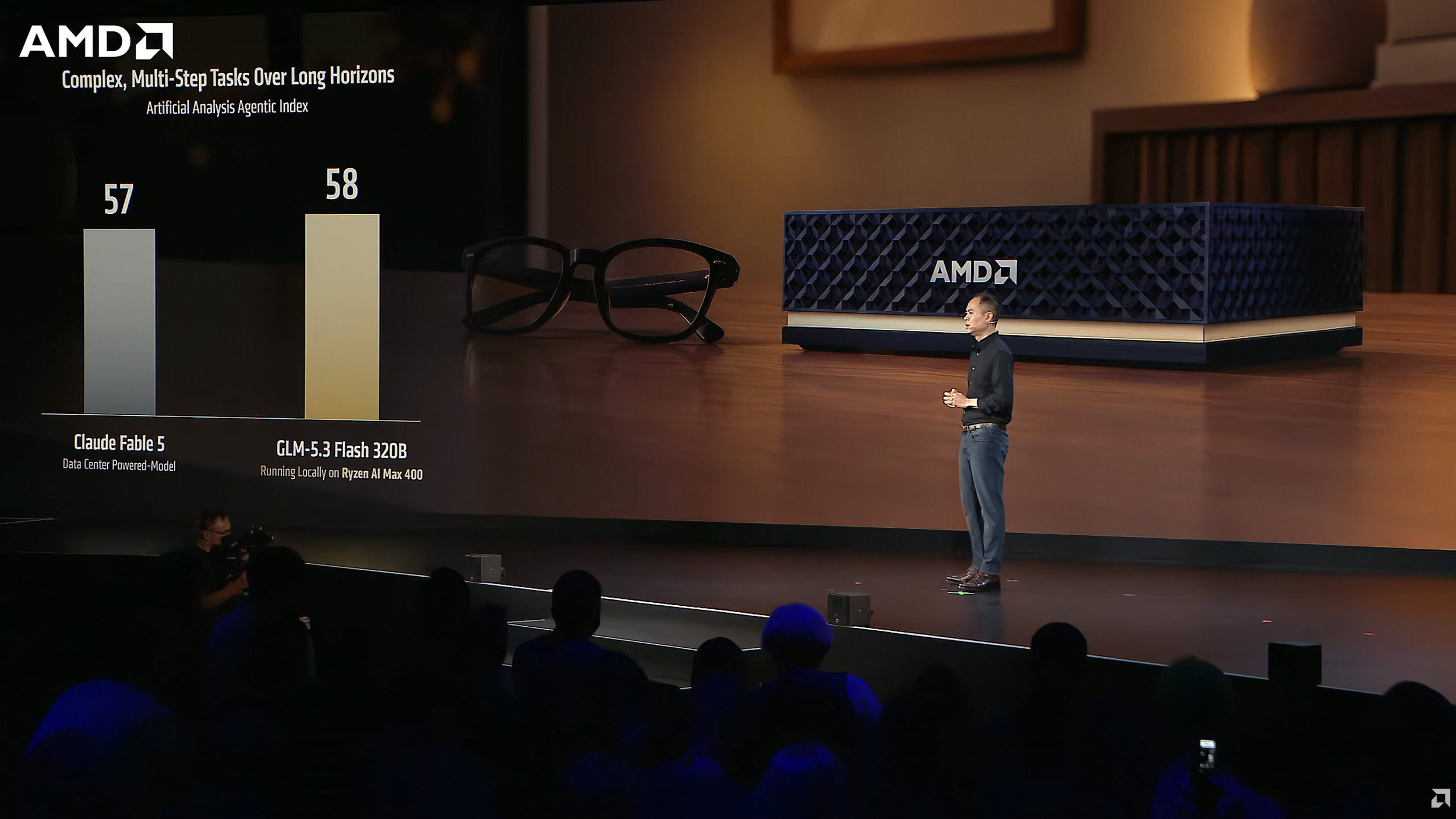
Software is becoming equally important to that strategy. Microsoft confirmed that Project Zenith will initially launch on AMD Ryzen AI Halo systems, providing a Windows environment prepared for developers with tools including Visual Studio Code, WSL, GitHub Copilot CLI, and PowerShell. Microsoft says Zenith class devices are designed around systems with at least 64 GB of unified memory and more than 250 GB/s of memory bandwidth, with support for running 30B parameter models locally. AMD also highlighted collaboration with SUSE as part of a broader effort to make it easier for developers to move AI applications from local experimentation toward managed enterprise deployment.
"We’re excited to see Project Zenith first become available on AMD Ryzen AI Halo, bringing developers a ready to code Windows experience."
— Quote by: AMD.
AMD is building a local AI portfolio that now stretches from compact Ryzen AI MAX machines to a workstation capable of hosting multiple Instinct accelerators and terabytes of memory. The Threadripper Halo Station is clearly aimed at a very different customer from a Ryzen AI MAX mini PC, but both demonstrate the same strategic shift: local AI performance is increasingly being defined by memory capacity, bandwidth, and software readiness rather than TOPS alone. Ryzen AI MAX may ultimately have the broader impact because 192 GB of unified memory brings unusually large model capacity into compact systems that can still serve creators, developers, and even gamers, while Halo Station shows how far AMD is willing to scale that concept when power consumption, size, and cost become secondary considerations.
Would you rather invest in a compact Ryzen AI MAX system with 192 GB of unified memory, or does a workstation like Threadripper Halo Station make more sense for serious local AI development?
