
Tiny Single Slot RTX 3060 Runs Without External Power but Loses Half Its Performance
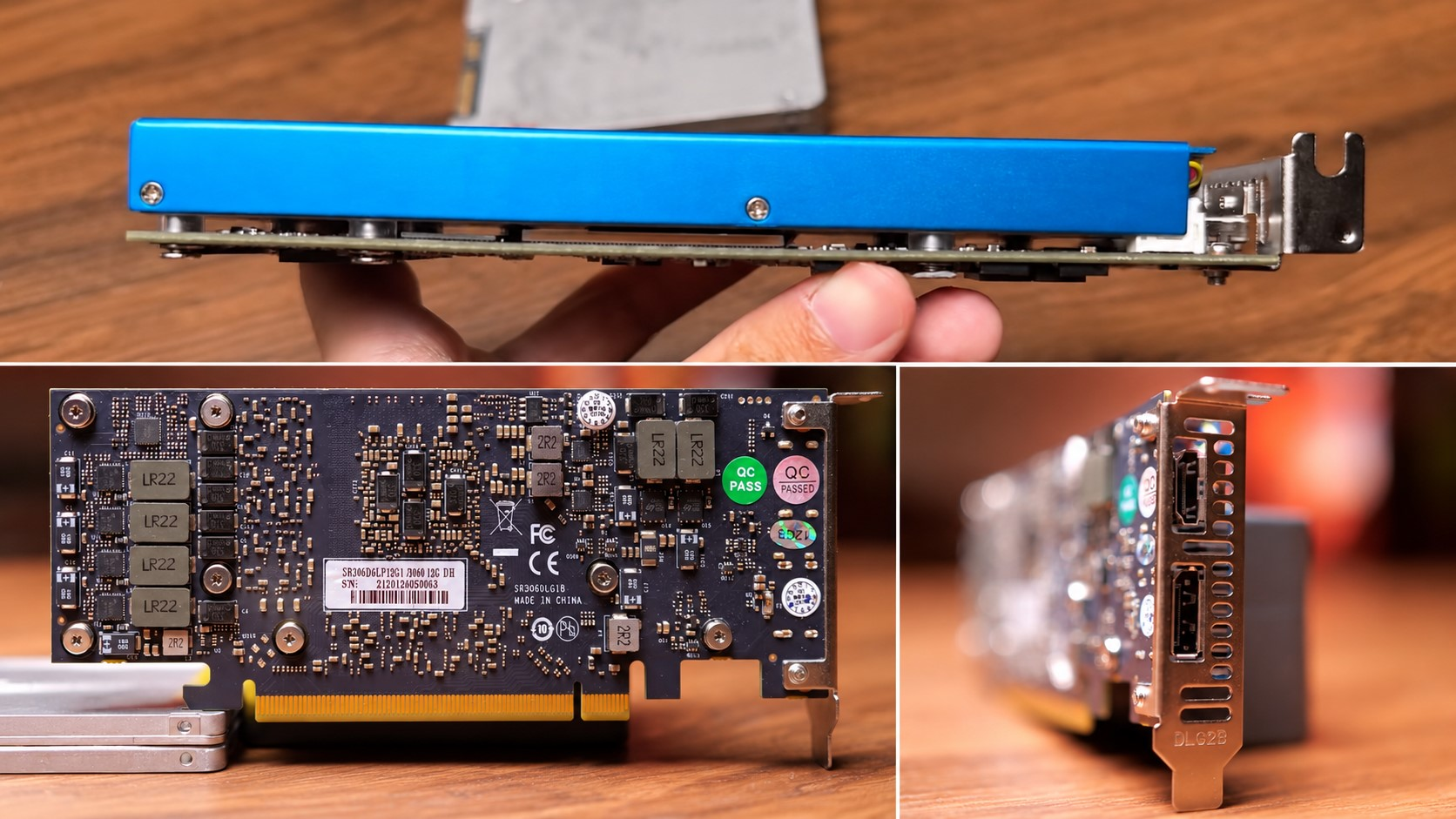
An unusually compact GeForce RTX 3060 12 GB has surfaced in China, combining a low profile single slot design with no external power connector. The unbranded graphics card is small enough to fit into systems where a conventional RTX 3060 would be impossible to install, but testing shows the extreme size reduction comes with major performance and thermal compromises.
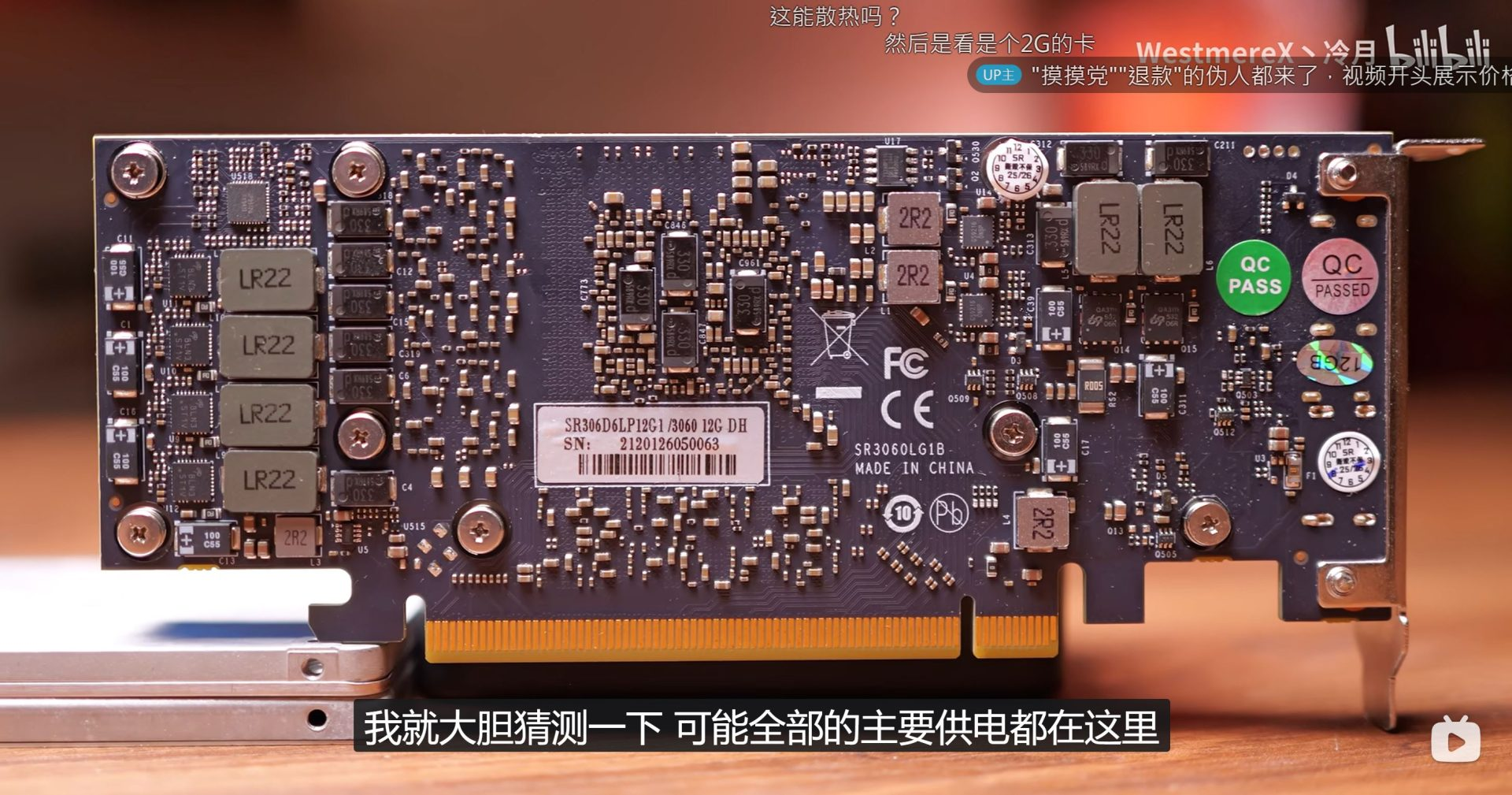
The card was examined by Bilibili creator WestmereX丶冷月 after being purchased for more than 2,400 yuan. Its compact PCB uses a small blower style fan and provides only 1 HDMI and 1 DisplayPort output. More importantly, there is no 6 pin or 8 pin auxiliary power connection, leaving the card dependent on power supplied through the PCIe slot.

That creates an immediate limitation. NVIDIA specifies the standard GeForce RTX 3060 at 170 W, while a conventional PCIe x16 slot can supply up to 75 W. The Bilibili testing suggests the unusual card may use modified power sensing circuitry to operate within that restricted budget. GPU Z consequently reports values of roughly 145 W for board power and 176 W for GPU power, but those readings are not considered representative of its actual consumption because the sensing behavior appears to have been altered.
Performance shows the cost of the modification. The GPU struggled to maintain clocks much above 900 MHz despite NVIDIA specifying boost frequencies around 1.78 GHz for a standard RTX 3060. In 3DMark Time Spy, the compact card produced a score of 4,821, while conventional RTX 3060 systems commonly reach around 9,000 points or higher. That leaves the tiny design delivering roughly half the benchmark performance expected from the same GPU class.

Cooling is another major weakness. The teardown shows a minimal heatsink arrangement without a conventional fin stack or backplate, while the memory does not appear to receive dedicated thermal pad coverage. During Time Spy testing, the GPU hotspot exceeded 90°C, indicating thermal throttling was adding another constraint on top of the already restricted power budget.
The design is still technically interesting because it demonstrates how far the Ampere GPU can be pushed toward a low power, space constrained configuration. It could theoretically fit into small office PCs, compact media systems, or other machines with limited expansion space and no available GPU power cable. However, the loss of performance and difficult thermal behavior make it a highly specialized solution rather than a practical alternative to a normal RTX 3060.
The experiment arrives shortly after renewed interest in the Ampere card itself. Palit recently returned the 12 GB GPU to its lineup with the Infinity 2 OC as manufacturers revisit older graphics architectures during challenging conditions in the budget GPU market.
The engineering concept is arguably more interesting than the actual product. Delivering an RTX 3060 in a low profile single slot card without auxiliary power could be valuable for systems that normally cannot accept a gaming GPU, but restricting a 170 W design to the power available from the PCIe slot changes its performance profile dramatically.
The larger issue is cooling. A low power RTX 3060 could still have a niche if it maintained acceptable clocks and temperatures, but exceeding 90°C while operating at heavily reduced frequencies shows that this particular implementation sacrifices too much for its size.
It is a fascinating piece of compact GPU engineering, but anyone buying an RTX 3060 primarily for gaming would be much better served by a conventional design.
Would you accept roughly half the RTX 3060 performance to get a single slot GPU that requires no external power connector?
