
MINISFORUM MS S1 MAX P495 Brings Ryzen AI MAX Plus PRO 495 and 192 GB Memory
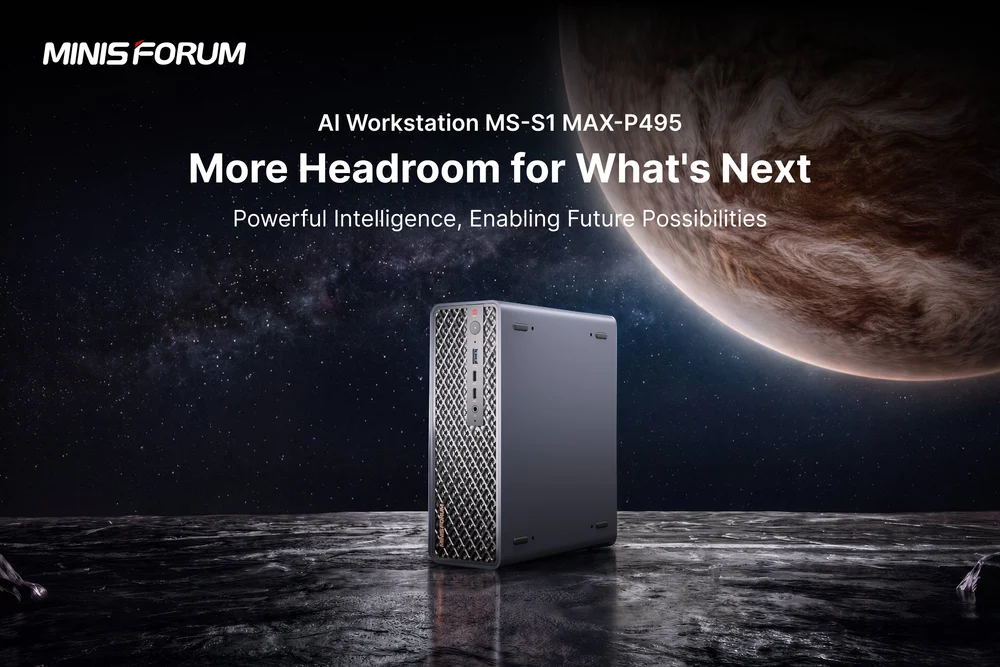
MINISFORUM has unveiled the MS S1 MAX P495 at IFA 2026, upgrading its compact AI workstation with AMD's new Ryzen AI MAX Plus PRO 495 processor, 192 GB of unified LPDDR5X memory, Radeon 8065S graphics, and up to 131 TOPS of combined AI compute.
The new workstation builds on the existing MS S1 MAX powered by the Ryzen AI MAX Plus 395, but the biggest upgrade is memory capacity. According to the MINISFORUM announcement, the P495 configuration increases unified memory from 128 GB to 192 GB while raising memory speed to 8533 MT/s. Up to 160 GB can be allocated to graphics workloads, giving local AI applications access to considerably more working memory than a conventional discrete GPU configuration.
At the center is AMD's Ryzen AI MAX Plus PRO 495, based on the Gorgon Halo platform. The processor combines 16 Zen 5 CPU cores and 32 threads with boost frequencies reaching 5.2 GHz, Radeon 8065S integrated graphics featuring 40 RDNA 3.5 Compute Units at up to 3.0 GHz, and an XDNA 2 NPU rated at up to 55 TOPS. Total platform AI performance reaches 131 TOPS.
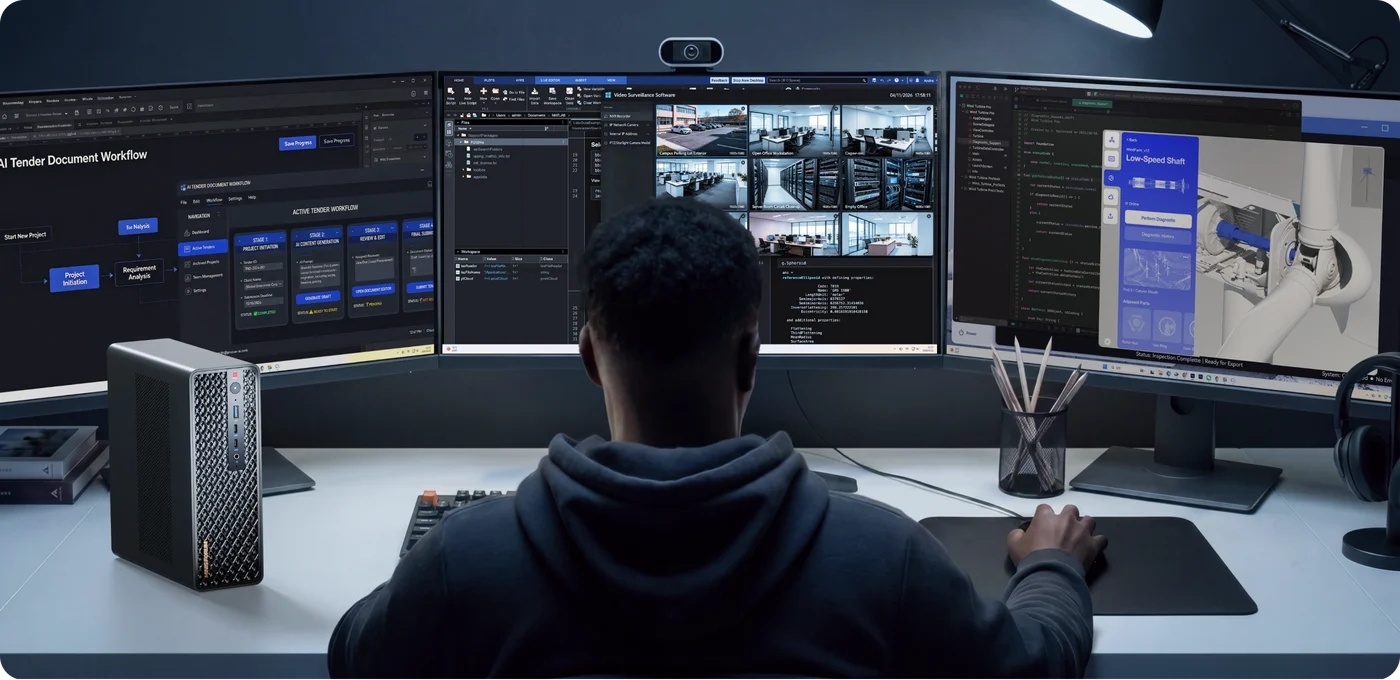
The 192 GB unified memory configuration is more significant than the relatively modest frequency increases over the Ryzen AI MAX Plus 395. CPU, GPU, and AI workloads can access the same memory pool without the fixed VRAM limits found on conventional graphics cards, making the system particularly relevant for large language models, multimodal AI, content creation, and data intensive professional workloads. The same memory advantage is also appearing across other Ryzen AI MAX Plus PRO 495 systems, including the recently covered ACEMAGIC F9A with 192 GB unified memory.
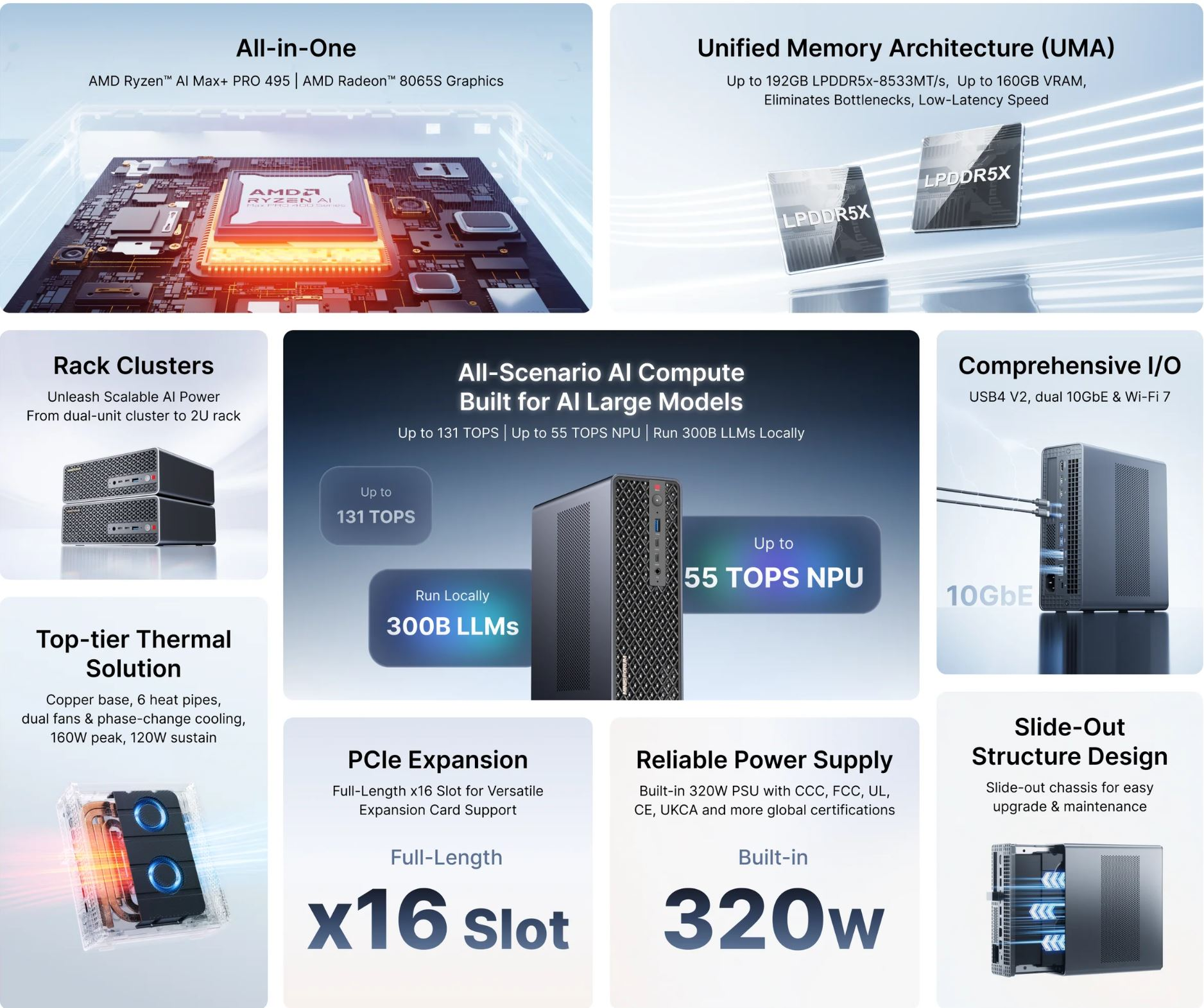
MINISFORUM gives the MS S1 MAX P495 3 operating profiles, with a 120 W sustained performance mode, 95 W balanced mode, and 60 W quiet mode. Cooling is handled by a 6 heatpipe assembly with phase change material and 2 turbine fans, while the complete system measures 222.1 × 206.3 × 77.1 mm and weighs 2.8 kg.
Expansion remains unusually strong for a system this compact. The workstation provides 2 M.2 NVMe slots supporting up to 16 TB combined storage with RAID 0 and RAID 1, plus an internal PCIe x16 slot operating electrically at PCIe 4.0 x4. Connectivity includes 2 10 GbE LAN ports, WiFi 7, Bluetooth 5.4, HDMI 2.1, 2 USB4 ports at 40 Gbps, and another 2 USB4 Version 2 ports capable of up to 80 Gbps.
MINISFORUM is also positioning the system for clustered AI deployments. Two 192 GB units can be linked as a 384 GB compute cluster, with the company demonstrating Qwen3.5 397B running locally at a claimed 16 tokens per second. The system can also be deployed in 2U rack configurations, extending the platform beyond an individual desktop workstation into small scale local AI infrastructure.
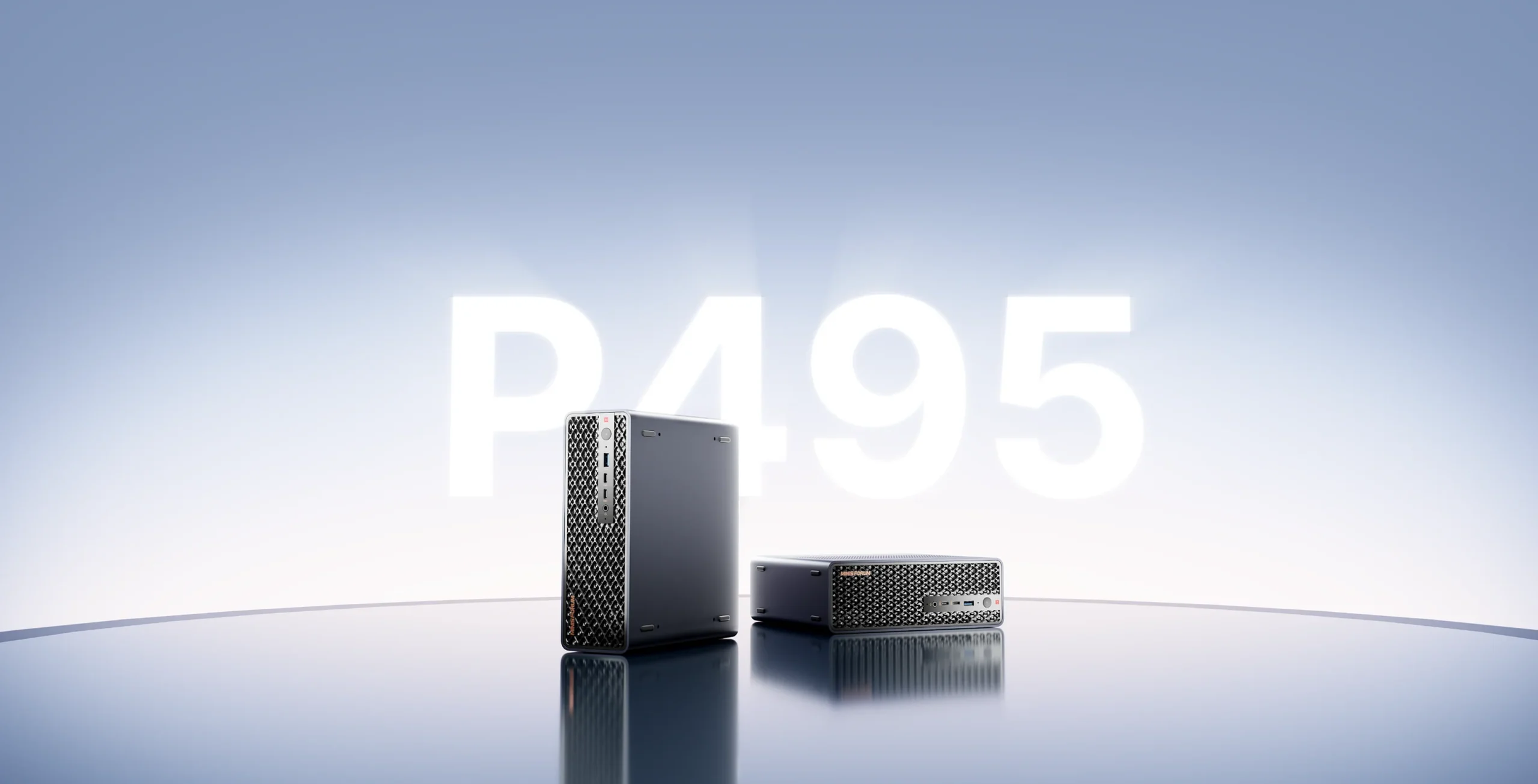
The MS S1 MAX P495 was introduced alongside the N5 MAX P495 AI Agent NAS at IFA 2026. MINISFORUM has opened regional product pages, although final retail pricing and a firm shipping date have not yet been publicly confirmed. The company's current store teaser points toward a premium price tier, reinforcing that this model is being positioned as a professional AI workstation rather than a conventional mini PC.
The MS S1 MAX P495 highlights why AMD's Ryzen AI MAX platform is becoming increasingly relevant for local AI systems. Moving from 128 GB to 192 GB matters far more for many AI workloads than a small increase in CPU or GPU frequency because memory capacity often determines whether a model can run locally at all.
Allocating as much as 160 GB to graphics workloads gives the Radeon 8065S access to memory capacities far beyond conventional consumer GPUs, although unified memory capacity should not be confused with equivalent discrete GPU performance. Bandwidth, compute throughput, software optimization, and model architecture still determine real world inference speed.
MINISFORUM's combination of 192 GB unified memory, dual 10 GbE, USB4 Version 2, PCIe expansion, and cluster support makes the P495 particularly interesting for developers and businesses that want substantial local AI capability without moving to a full size workstation or server.
Would you choose a compact 192 GB unified memory workstation for local AI, or would you still prefer a traditional desktop with dedicated GPUs?
