
ACEMAGIC F9A Upgrades to Ryzen AI MAX Plus PRO 495 With 192 GB Memory and 131 TOPS
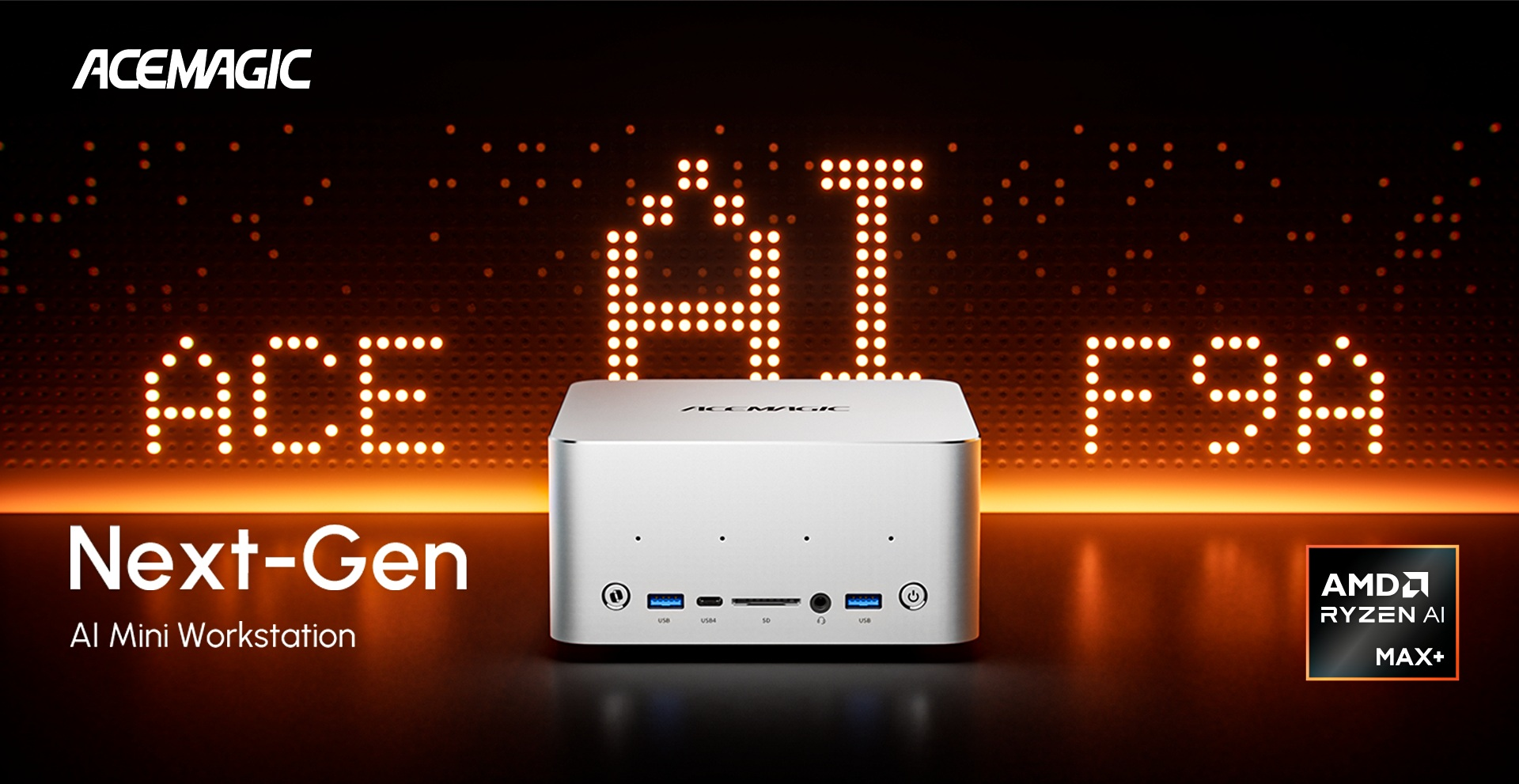
ACEMAGIC is significantly expanding the capabilities of its compact F9A AI workstation with a new configuration powered by AMD’s Ryzen AI MAX Plus PRO 495, bringing up to 192 GB of unified LPDDR5X memory, Radeon 8065S graphics, and 131 TOPS of total AI compute into the same compact 2 liter platform. The upgrade builds directly on the original ACEMAGIC F9A configuration previously introduced with the Ryzen AI MAX Plus 395 and up to 128 GB of unified memory.
According to the ACEMAGIC F9A specifications, the Ryzen AI MAX Plus PRO 495 retains the 16 Zen 5 CPU cores and 32 threads of the Ryzen AI MAX Plus 395, but introduces higher CPU and GPU frequencies, faster memory, increased NPU performance, and significantly greater unified memory capacity.
| Specification | Detail | F9A-395 AMD Ryzen AI MAX+ 395 |
F9A-PRO495 AMD Ryzen AI MAX+ PRO 495 |
Improvement Compared with 395 |
|---|---|---|---|---|
| CPU | Architecture & Core | Zen 5 / 16C-32T | Zen 5 / 16C-32T | Same |
| Base Clock | 3.0 GHz | 3.1 GHz | +0.1 GHz | |
| Boost Clock | Up to 5.1 GHz | Up to 5.2 GHz | +0.1 GHz | |
| L2 + L3 Cache | 16 MB + 64 MB | 16 MB + 64 MB | Same | |
| Memory | Maximum Memory Capacity | 128 GB | 192 GB | +64 GB |
| Memory Speed | LPDDR5x-8000 | LPDDR5x-8533 | +533 MT/s | |
| Maximum VRAM Allocation | 96 GB | 160 GB | +64 GB | |
| PCIe Interface | PCIe Version / Lanes | PCIe 4.0 ×16 | PCIe 4.0 ×16 | Same |
| NVMe RAID | RAID 0 / RAID 1 | RAID 0 / RAID 1 | RAID 0 / RAID 1 | Same |
| Integrated GPU | GPU Model / Architecture | Radeon 8060S RDNA 3.5 / 40 CU |
Radeon 8065S RDNA 3.5 / 40 CU |
Optimized Upgrade RTX 5060-Class Performance |
| GPU Frequency | 2900 MHz | 3000 MHz | +100 MHz | |
| AI Engine (NPU) | NPU Architecture | XDNA 2 | XDNA 2 | Same NPU |
| NPU Performance | 50 TOPS | 55 TOPS | +5 TOPS | |
| Total AI Performance | Total Platform Compute | 126 TOPS | 131 TOPS | +5 TOPS |
| Local LLM Support | AI Model Capability | 70B Q4 Model Up to 200B MoE Model |
120B Q4 Model Up to 300B MoE Model |
Supports Larger AI Models Up to 60% Improvement |
The largest improvement is clearly memory capacity. AMD officially supports up to 192 GB of LPDDR5X 8533 memory with the Ryzen AI MAX Plus PRO 495, compared with 128 GB of LPDDR5X 8000 on the Ryzen AI MAX Plus 395. Up to 160 GB can also be allocated to graphics workloads, compared with 96 GB on the previous platform.
That 64 GB increase in available graphics memory is particularly significant for local AI inference, where memory capacity can become a limitation before raw compute performance. The expanded memory pool reinforces AMD’s strategy with its Ryzen AI MAX 400 platform, targeting compact systems capable of handling increasingly large AI models without requiring discrete workstation GPUs with extremely large VRAM configurations.
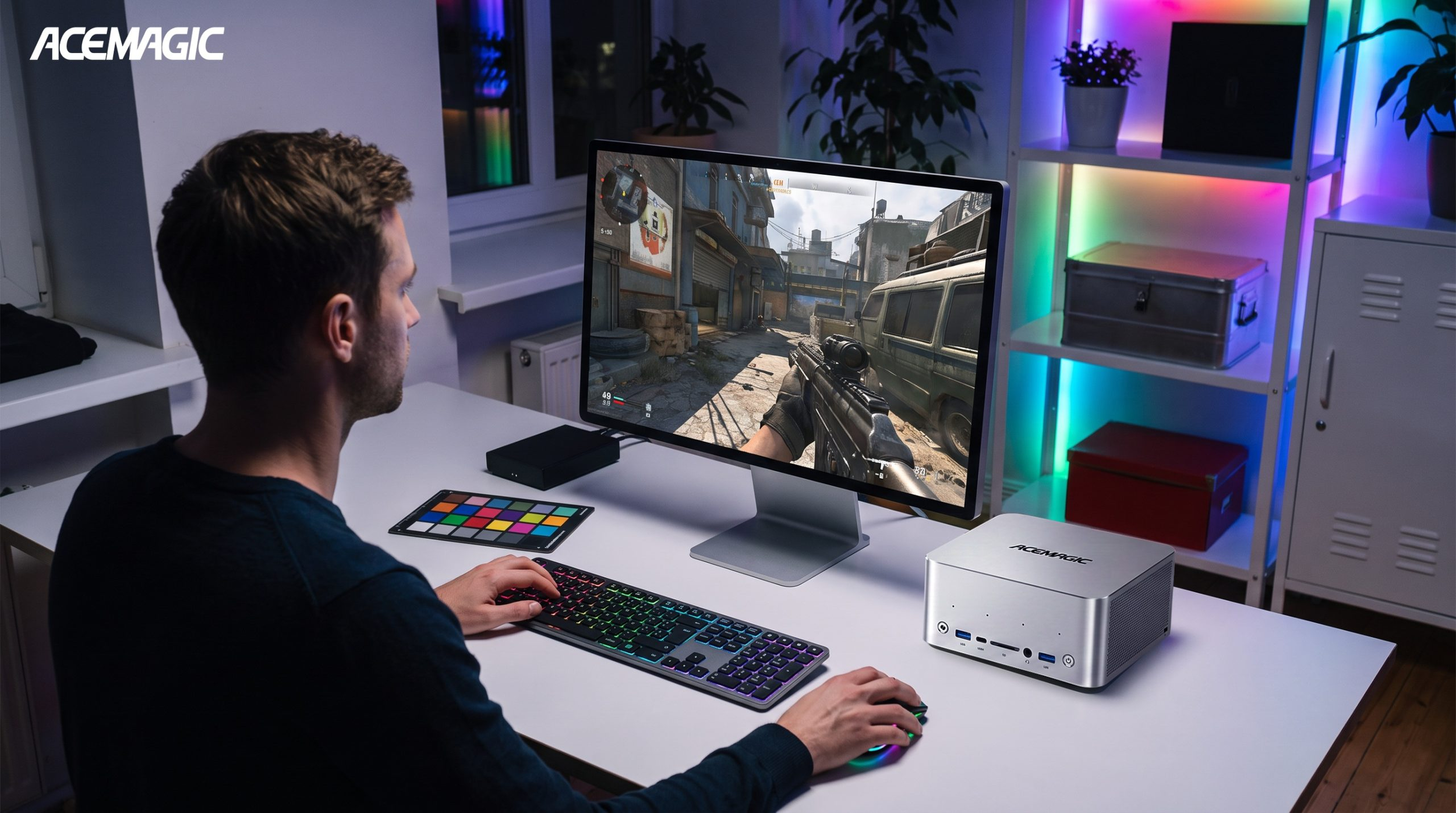
The XDNA 2 NPU has also increased from 50 TOPS to 55 TOPS, while combined platform AI performance rises from 126 TOPS to 131 TOPS. ACEMAGIC claims the Ryzen AI MAX Plus 395 configuration can handle 70B Q4 models and MoE models reaching 200B parameters, while the Ryzen AI MAX Plus PRO 495 configuration extends that target to 120B Q4 models and MoE workloads reaching 300B parameters. Actual performance will depend heavily on quantization, software implementation, available memory allocation, and model architecture.
The F9A maintains its compact workstation design with dual USB4 connectivity, dual 2.5 GbE networking, WiFi 7, Bluetooth 5.4, HDMI 2.1, DisplayPort 2.1, and OCuLink using PCIe 4.0 x4 for external graphics or accelerator expansion. That OCuLink connection also provides gamers and creators with an important upgrade path when the integrated Radeon 8065S is no longer sufficient for heavier rendering, compute, or gaming workloads.
ACEMAGIC has not yet confirmed final pricing or an official release date for the Ryzen AI MAX Plus PRO 495 configuration. The Ryzen AI MAX Plus 395 version is expected to begin presales on September 10, while the 495 configuration is positioned as the higher specification addition to the F9A family.
The transition from 128 GB to 192 GB is considerably more important than the relatively small CPU and GPU frequency increases. Ryzen AI MAX Plus PRO 495 gives compact systems such as the F9A access to a memory configuration that would normally require significantly larger workstation hardware. The ability to dedicate up to 160 GB to graphics workloads makes the platform particularly interesting for local AI models, while OCuLink gives gamers and creators additional flexibility to add a dedicated GPU when more rendering performance is required.
Would you choose a compact workstation with 192 GB of unified memory for local AI workloads, or would you still prefer a traditional desktop with dedicated graphics and upgradeable system memory?
