
Trump Administration Backs OpenAI in New York Times Copyright Fight Over AI Training
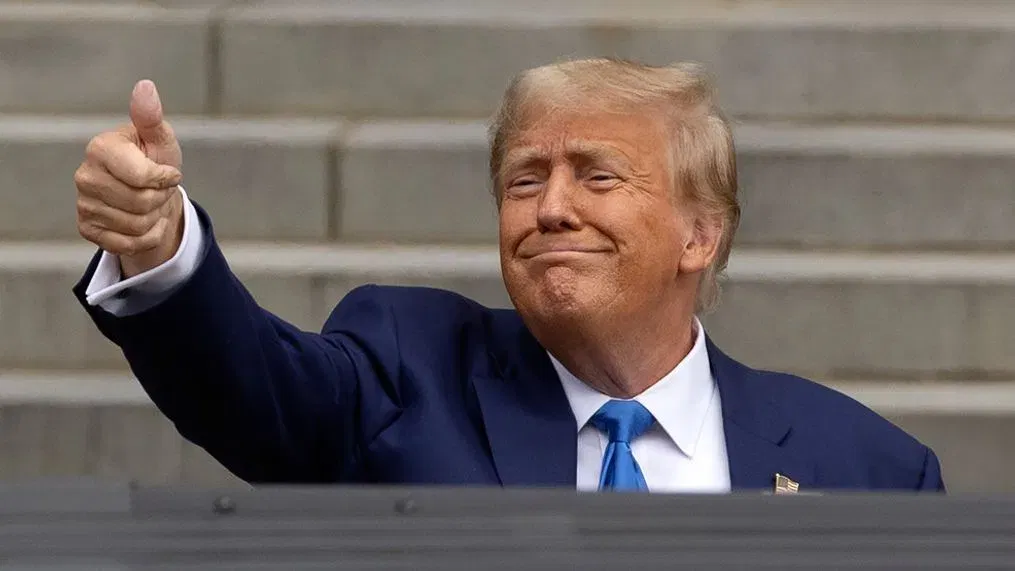
The Trump administration has formally backed OpenAI and Microsoft in their copyright dispute with The New York Times, arguing that training large language models on copyrighted text can qualify as fair use and warning that a broader interpretation of copyright liability could damage United States leadership in artificial intelligence.
In a statement of interest filed on September 1 with the United States District Court for the Southern District of New York, the Justice Department urged the court to reject arguments that training large language models on copyrighted text inherently violates copyright law. According to Reuters, this appears to be the first time the United States government has formally intervened in the growing wave of copyright lawsuits surrounding generative AI training.
"The United States has a strong interest in this Court rejecting any argument that training LLMs on copyrighted texts violates copyright law." Quote by: United States Department of Justice. The government argues that the creative, scientific and public benefits enabled by large language models outweigh potential competitive harm and says unnecessarily restricting their development could weaken American economic competitiveness and national security.
The New York Times originally sued OpenAI and Microsoft in December 2023, alleging that millions of copyrighted articles were used without permission to train models powering products including ChatGPT. The publisher argues that generative AI systems can reproduce or substitute for its journalism and threaten subscription, licensing and advertising markets. OpenAI maintains that model training is transformative and protected under fair use, a position it has continued to defend throughout the litigation.
Importantly, the Justice Department filing is not a court ruling and does not establish that every use of copyrighted material for AI training is automatically legal. The government itself acknowledges that fair use depends on the specific facts and uses involved. Its broader argument is that courts should not create a general rule requiring AI developers to obtain licenses for every copyrighted work used during model training.
That distinction follows important 2025 decisions involving Anthropic and Meta. In the Anthropic case, Judge William Alsup found that using legally acquired books to train large language models was highly transformative and qualified as fair use, while separately distinguishing copies obtained through unauthorized sources. These decisions have strengthened the AI industry's fair use argument without completely resolving the much broader question of how copyrighted training datasets should be assembled.
The dispute also reflects a wider conflict already affecting creative industries. Questions surrounding training data, ownership and disclosure have become increasingly prominent across gaming, publishing, music and entertainment, including the ongoing debate over AI generated content and disclosure requirements inside games. As generative systems become more capable, courts are increasingly being asked to determine where technological transformation ends and copyright infringement begins.
The Justice Department entering the case changes the strategic weight of the dispute, but it does not settle it. The administration is effectively arguing that access to large training datasets has become an economic and national security issue, meaning copyright rules should not unintentionally make frontier AI development possible only for companies capable of negotiating enormous licensing portfolios.
Publishers and creators have an equally important concern. If commercially valuable work can be incorporated into products without permission or compensation, the long term economic model supporting the creation of that material could weaken. The eventual legal framework will therefore need to distinguish between transformative machine learning, unauthorized copying and AI outputs that genuinely substitute for copyrighted works.
The outcome could influence far more than OpenAI. A definitive ruling on training and fair use would affect virtually every major generative AI developer operating in the United States.
Should training AI models on publicly accessible copyrighted material qualify as fair use, or should companies be required to license the content used to build commercial models?
