
70 W Single Slot RTX 3060 12 GB Lands on Newegg for 495.59$ Without a Power Connector
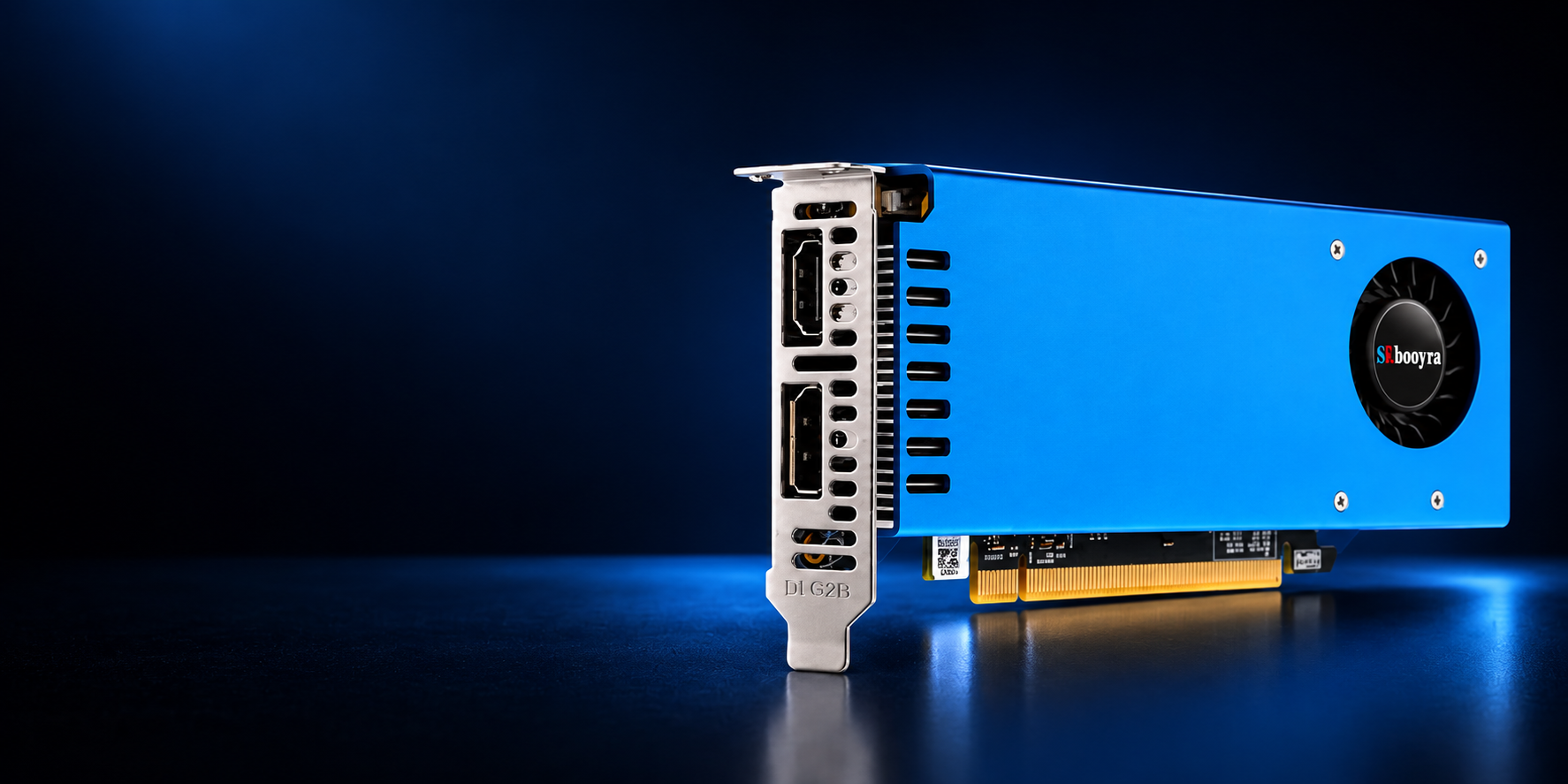
One of the strangest GeForce RTX 3060 designs has moved beyond the Chinese hardware scene and is now available to US buyers, with SRhonyra listing an extremely compact RTX 3060 12 GB on Newegg for 495.59$. The graphics card stands out through its single slot, low profile construction and complete absence of an auxiliary PCIe power connector, allowing the entire GPU to operate from power delivered through the motherboard PCIe slot.
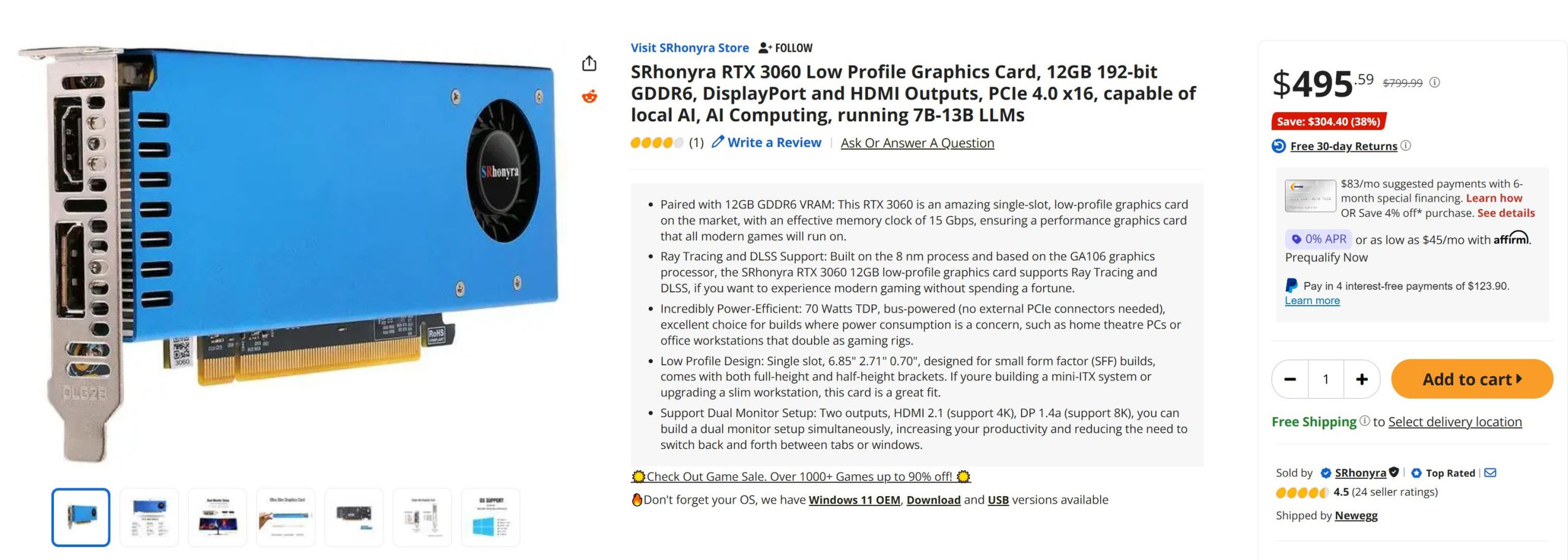
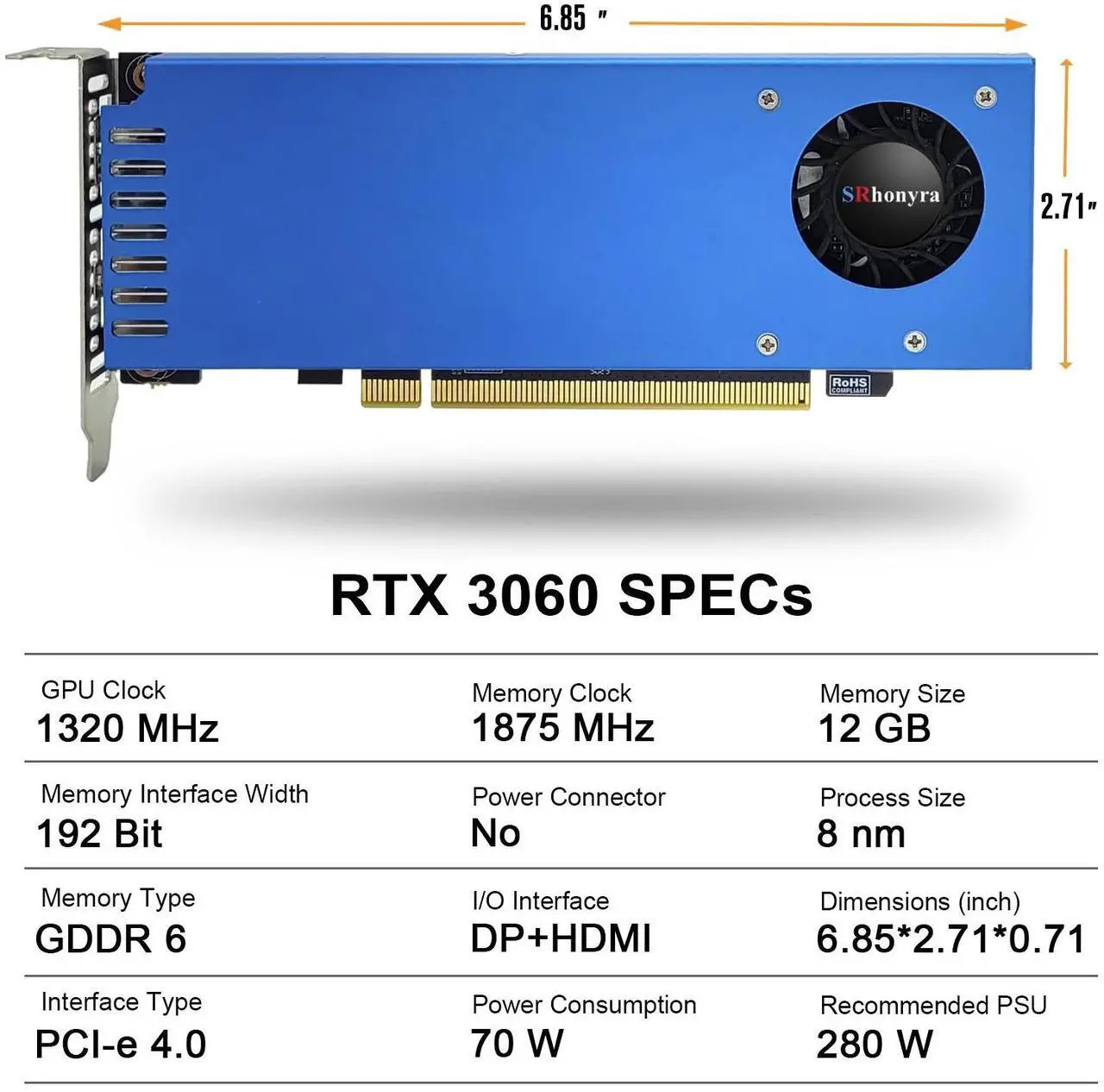
The SRhonyra card retains the GA106 based RTX 3060 configuration with 12 GB of GDDR6 memory connected through a 192 bit interface. Its memory operates at an effective 15 Gbps, while the listing specifies a 1320 MHz GPU clock. Display connectivity is limited to 1 HDMI 2.1 and 1 DisplayPort 1.4a output. At just 6.85 inches long, 2.71 inches tall, and approximately 0.70 inches thick, the card is specifically designed for compact workstations, office PCs, and small form factor systems that either cannot accommodate a conventional graphics card or lack spare PCIe power connections.
Power consumption is where the design becomes significantly more unusual. SRhonyra rates the card at only 70 W, allowing it to remain below the power available through a standard PCIe x16 slot. By comparison, NVIDIA specifies the conventional RTX 3060 at 170 W with 3584 CUDA cores and a boost clock of approximately 1.78 GHz. Cutting more than half of that normal power budget makes the SRhonyra design possible inside systems with restrictive power supplies, but it also has a major impact on sustained GPU frequency and gaming performance.
Earlier testing of the same unusual single slot RTX 3060 design demonstrated just how severe those compromises can become. The card struggled to maintain clocks above roughly 900 MHz and recorded only 4821 points in 3DMark Time Spy, compared with roughly 9000 points or more from conventional RTX 3060 systems. GPU hotspot temperatures also climbed beyond 90°C, with the minimal blower cooling solution and limited heatsink design creating additional thermal constraints. The result was performance approaching roughly half of what buyers would normally expect from an RTX 3060 despite retaining its full 12 GB memory capacity.
That makes the 495.59$ asking price difficult to justify as a conventional gaming purchase. The RTX 3060 itself has recently returned to the market through manufacturers such as Palit as the industry responds to unusual pricing and supply conditions, but newer RTX 3060 designs remain primarily focused on affordable 1080p gaming rather than extreme physical constraints. SRhonyra instead markets its model toward compact systems and local AI workloads, specifically advertising support for running 7B to 13B language models. The 12 GB memory capacity can certainly be useful for CUDA applications and smaller AI models, although the restricted power budget means compute performance will remain considerably below a conventional RTX 3060.
The card therefore occupies an unusually specific niche. Older business workstations from Dell, HP, Lenovo, and other manufacturers often provide low profile PCIe slots but lack the power supply capacity or dedicated GPU connectors required by modern graphics cards. A 70 W RTX 3060 with 12 GB of VRAM can potentially bring CUDA, ray tracing, DLSS, and significantly more graphics memory into those systems without replacing the power supply or chassis. For that particular use case, the engineering concept has genuine value even if its gaming performance and pricing are difficult to defend.
This RTX 3060 is much more interesting as an engineering solution than as a gaming GPU. Getting a 12 GB GA106 card into a single slot low profile form factor while eliminating external power entirely solves a problem that conventional graphics cards simply do not address. The issue is that 495.59$ pushes it into a price category where performance matters considerably more, and its severe power restrictions undermine the reason most gamers would buy an RTX 3060 in the first place.
For workstation upgrades and specialized AI systems, however, the equation changes. 12 GB of VRAM, CUDA compatibility, and a 70 W PCIe powered design could make sense inside machines that physically cannot use anything else. This is not the RTX 3060 to buy for maximum frames per dollar, but it may be one of the few RTX cards capable of fitting into certain legacy and ultra compact systems at all.
Would you pay 495.59$ for a 70 W RTX 3060 with 12 GB of VRAM if your PC could not support a conventional graphics card, or is the performance compromise simply too large?
