
TSMC Officially Sues Former Senior Vice President for Joining Intel, Citing Risk of Trade Secret Leakage

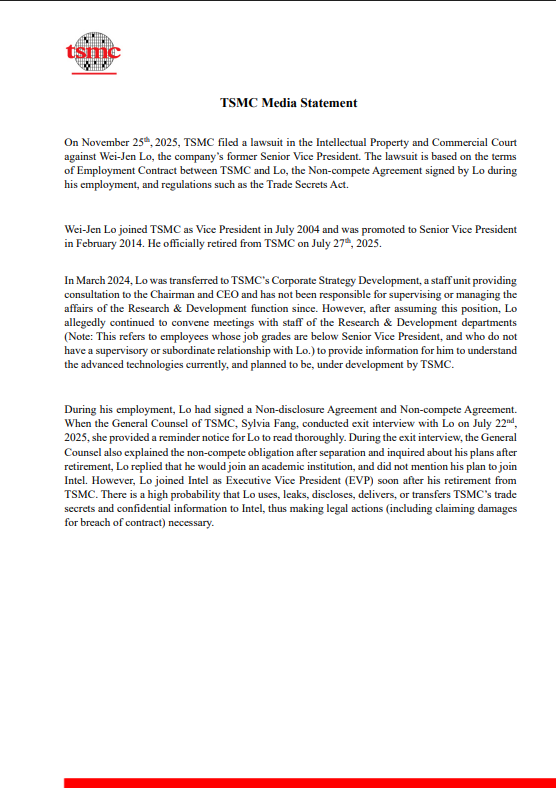
The escalating tension between TSMC and its former executive Dr. Wei Jen Lo has reached a critical turning point. After days of speculation and internal review, the Taiwan semiconductor giant has now officially filed a lawsuit against Lo for joining Intel, alleging a high risk of trade secret exposure and breach of contractual obligations.
According to the latest report, on November 25, 2025, TSMC submitted a formal filing to Taiwan’s Intellectual Property and Commercial Court. The lawsuit cites multiple legal grounds, including
The Employment Contract signed during Lo’s tenure
His Non Compete Agreement
Taiwan’s Trade Secrets Act
TSMC states that there is a high probability that Lo could “use, leak, disclose, deliver or transfer” sensitive information to Intel, particularly data relating to cutting edge 2 nm process technologies. Lo previously held a senior leadership position deeply involved in TSMC’s semiconductor operations, giving him access to proprietary R&D, manufacturing know how and competitive strategic plans.
The firm also noted that Lo did not inform TSMC of his intention to join Intel. Instead, he reportedly stated that his next move would involve academic work. This misdirection is cited by TSMC as part of the reason the lawsuit is necessary to protect domestic semiconductor interests.
Intel CEO Lip Bu Tan has already responded to earlier concerns raised by Taiwanese media, strongly denying any allegations of wrongdoing. He reiterated that Intel “respects IP” and does not engage in or tolerate illicit technology transfer.
The situation goes beyond a simple personnel move. Lo’s expertise in dealing with US based customers, process expectations and advanced packaging requirements could meaningfully strengthen Intel Foundry Services’ strategy, especially in Arizona, where Intel is positioning itself as a competitive foundry alternative. IFS is increasingly focused on packaging offerings like EMIB and Foveros, which have seen rising interest from major tech companies.
The lawsuit signals TSMC’s concern that Lo’s knowledge of next generation manufacturing and packaging could give Intel an unearned advantage, particularly as both companies battle for leadership in advanced nodes.
For now, the case remains under investigation. There is no confirmed evidence of misconduct, and Lo’s actual access to or use of proprietary data at Intel is yet to be determined by the courts. Still, the conflict has already triggered significant debate across the semiconductor industry, highlighting the intense rivalry between the world’s two most influential chipmaking forces.
Do you think this lawsuit will reshape how semiconductor companies handle senior leadership transitions? Share your thoughts below.
