
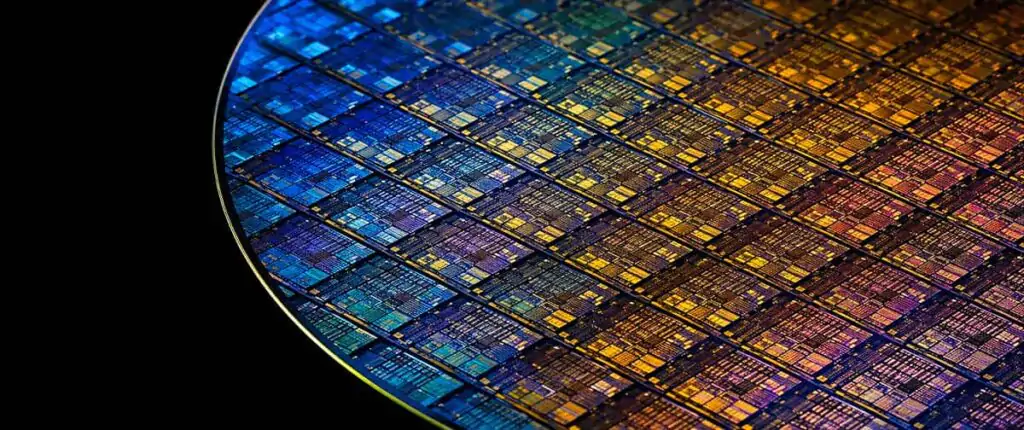
Taiwan is preparing to develop a major new semiconductor manufacturing site in Tainan that could eventually support TSMC's future 1nm process technology. During the IEEE Asian Solid State Circuits Conference on November 2, 2026, National Science and Technology Council Minister Cheng Wen Wu revealed that the government intends to establish a large science park within the Southern Taiwan Science Park ecosystem, with development procedures scheduled to begin in 2027. According to Taiwan's Central News Agency, the expansion is specifically intended to accommodate future semiconductor manufacturing facilities capable of producing 1nm class chips.
Wu explained that Taiwan currently operates 18 science parks under 3 regional administrations, with the proposed Tainan development becoming the 19th. Although the minister did not explicitly identify TSMC as the manufacturer behind the planned facility, the company's leadership in advanced semiconductor production makes it the most likely candidate. According to Taiwan's Economic Daily News, the announcement provides an early indication of where TSMC could establish its next generation manufacturing operations. Additional industry sources have identified the Shalun area near Tainan's High Speed Rail station as a possible location, although TSMC has not confirmed the site, investment requirements, or manufacturing schedule.
The development would represent another important step beyond TSMC's existing 2nm technology and upcoming A14 process. As previously reported in TSMC's A14 manufacturing roadmap, the company is preparing to begin volume production of its 1.4nm class technology in 2028. A14 introduces second generation nanosheet transistors and targets up to 15% higher performance or 30% lower power consumption compared with N2, alongside improvements in logic density. However, the proposed 1nm manufacturing facilities represent a separate and more advanced development stage, with no officially confirmed production timeline.
Wu emphasized that transitioning toward increasingly advanced semiconductor processes requires more than improvements in transistor technology. Manufacturing facilities must secure sufficient land, electricity, water resources, specialized equipment, and reliable supply chains. These requirements are becoming increasingly important as advanced chipmaking becomes more complex and demand for AI accelerators, processors, and high performance computing hardware continues growing.
Interestingly, the minister also discussed Taiwan's ambitions beyond semiconductor manufacturing, particularly robotics, silicon photonics, quantum computing, and next generation communications. Wu explained that Taiwan should use its semiconductor leadership to support other industries rather than concentrating technological investment exclusively within major chip manufacturers. Robotics could create new opportunities for traditional metal, plastics, and materials suppliers, allowing them to participate in higher value manufacturing. Meanwhile, silicon photonics could improve data transmission efficiency by expanding optical communications beyond individual AI server racks and reducing dependence on conventional electrical connections.
The Taiwanese government is also considering directing more tax revenue generated by advanced technology companies toward industrial modernization and broader access to AI computing resources. This strategy could help smaller manufacturers participate in emerging technologies while reducing the concentration of economic benefits among a limited number of major corporations.
For now, TSMC maintains that Taiwan remains its primary manufacturing base and that specific investment decisions will be announced through official channels. The proposed Tainan expansion therefore signals long term infrastructure preparation rather than confirmation that construction of a 1nm factory has already begun.
Taiwan's potential 1nm manufacturing expansion reinforces TSMC's position at the forefront of semiconductor technology, but it also highlights the enormous infrastructure requirements involved in advancing beyond existing process nodes. Building increasingly sophisticated factories demands substantial investment, reliable utilities, experienced engineers, and years of preparation before commercial production becomes viable.
What makes this development particularly interesting is Taiwan's broader strategy of extending semiconductor innovation into robotics, optical communications, and traditional manufacturing. Advanced technology should create opportunities throughout the economy rather than concentrating growth within a handful of major AI companies.
For gamers, PC builders, and independent developers, additional semiconductor capacity could eventually support more powerful and efficient processors and graphics cards. However, manufacturing expansion does not automatically guarantee affordable consumer hardware, particularly when major AI customers continue securing substantial production allocations.
Will TSMC's future 1nm technology make gaming CPUs and GPUs more powerful and efficient, or will most of the manufacturing capacity continue serving the growing demands of AI infrastructure?
