
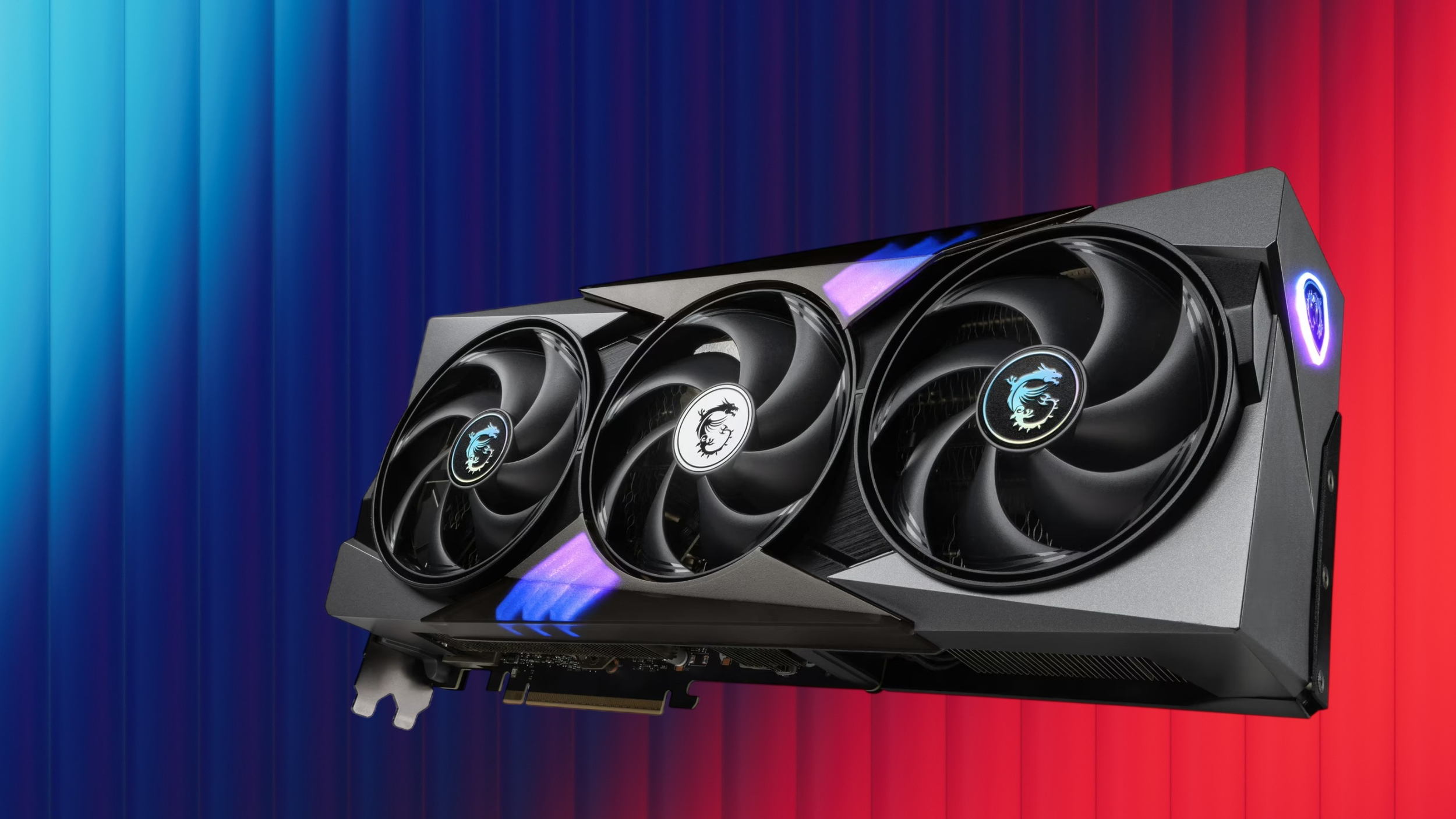
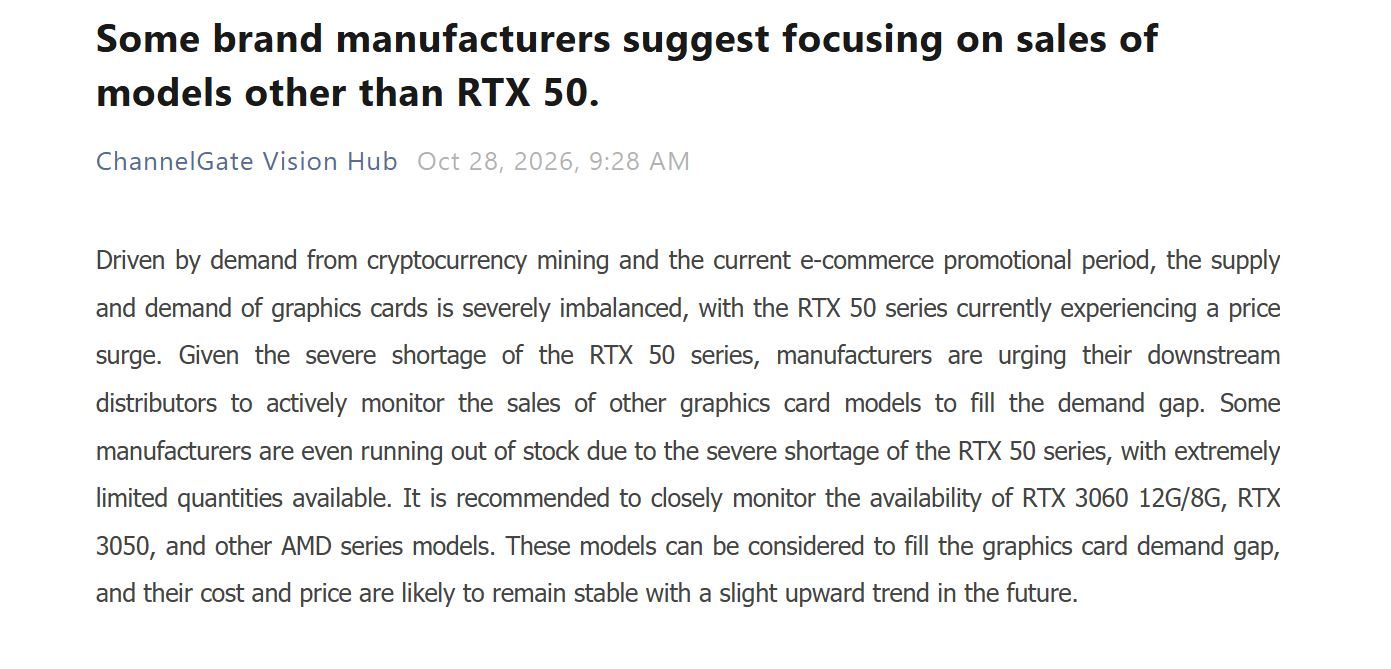
Graphics card manufacturers are reportedly advising distributors to prioritize older NVIDIA GeForce RTX 30 Series and AMD Radeon GPUs as shortages and rising prices make current generation graphics cards increasingly difficult to obtain. According to a Chinese supply chain report from Board Channels, several manufacturers are struggling to maintain sufficient RTX 50 Series inventory, prompting distributors to reconsider older models such as the RTX 3060 12GB, RTX 3060 8GB, and RTX 3050 to satisfy consumer demand.
The situation is particularly noticeable in China, where cryptocurrency mining demand and seasonal online shopping promotions have reportedly created additional pressure on graphics card availability. Rising GDDR6 and GDDR7 memory prices, combined with increasing component costs, have further complicated production planning. Some manufacturers reportedly have little remaining RTX 50 Series inventory, although NVIDIA has not officially confirmed a widespread supply disruption or announced changes to its global production strategy.
One of the most unusual developments is the renewed attention surrounding the GeForce RTX 3060, a graphics card originally released in February 2021. NVIDIA's board partners have already brought the Ampere GPU back into circulation, including Palit's RTX 3060 Infinity 2 OC, introduced in July 2026. The card retains 3,584 CUDA cores, 12GB of GDDR6 memory, and a 192 bit memory interface, offering an alternative for gamers who prioritize memory capacity over the architectural improvements available on newer graphics cards.
Older NVIDIA GPUs Returning to Distributor Focus
| GPU | Architecture | VRAM | Memory Interface |
|---|---|---|---|
| RTX 3060 12GB | Ampere | 12GB GDDR6 | 192 bit |
| RTX 3060 8GB | Ampere | 8GB GDDR6 | 128 bit |
| RTX 3050 8GB | Ampere | 8GB GDDR6 | 128 bit |
| RTX 3050 6GB | Ampere | 6GB GDDR6 | 96 bit |
The continued popularity of older hardware is also reflected in Valve's October 2026 Steam Hardware Survey, where the RTX 3060 returned to the top of the GPU rankings with a 3.78% share, matching the RTX 5070. However, the survey measures hardware used by participating Steam users rather than new GPU purchases, meaning it does not establish that consumers are actively choosing older graphics cards because of current shortages.
While the RTX 3060 12GB remains capable of mainstream 1080p gaming and selected 1440p workloads, it lacks newer architectural improvements and advanced frame generation technologies available with Blackwell GPUs. Its larger memory capacity can benefit certain games and local AI applications, but buyers must also consider performance, power efficiency, and pricing before choosing older hardware.
The situation could become more challenging as AMD reportedly prepares another Radeon price adjustment in November, adding further pressure to an already expensive graphics card market. Board Channels expects prices for older GPUs to remain stable or potentially increase as demand shifts toward available inventory. The report primarily concerns Chinese distribution channels, with no confirmation that similar recommendations are being issued globally.
The fact that graphics card manufacturers are reportedly recommending 5 year old GPUs in 2026 highlights how difficult the consumer hardware market has become. The RTX 3060 remains a capable graphics card, particularly with 12GB of VRAM, but bringing older technology back to market should not become a substitute for delivering modern GPUs at reasonable prices.
PC gaming and hardware ownership must remain accessible. Consumers should not be forced to choose between paying excessive prices for current generation hardware or purchasing outdated products simply because newer components are being affected by supply constraints.
The growing concentration of semiconductor and memory production around AI infrastructure makes this situation even more concerning. The industry needs balanced manufacturing investment and fair component availability that supports gamers, developers, creators, and smaller system builders alongside enterprise customers.
Extending the useful life of older hardware is positive, but making consumers pay premium prices for aging technology is not progress.
Would you consider buying an RTX 3060 or older Radeon GPU in 2026, or should NVIDIA and AMD do more to maintain affordable supplies of their latest graphics cards?
