
TSMC Reportedly Plans 20% CoWoS Price Hike as AI GPU and ASIC Demand Overwhelms Capacity
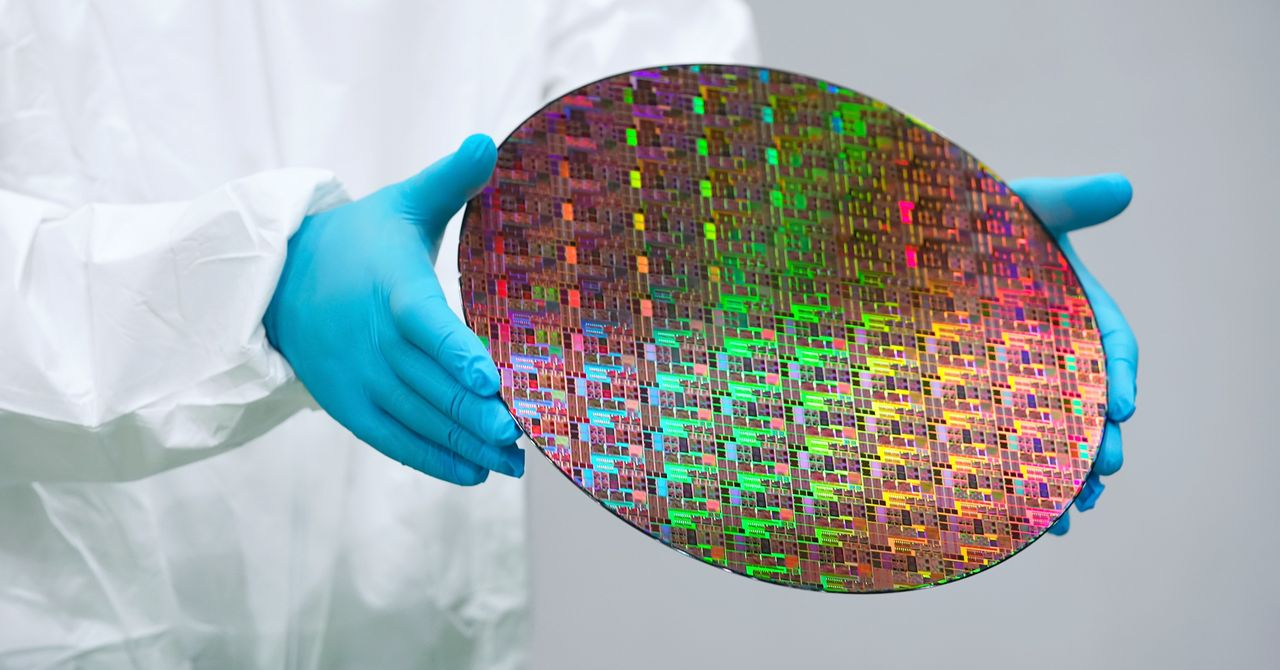
TSMC is reportedly preparing to increase prices for its advanced Chip on Wafer on Substrate (CoWoS) packaging technology by as much as 20%, as soaring demand for AI accelerators, server processors and custom ASICs continues to strain manufacturing capacity. According to Taiwan's Commercial Times, semiconductor manufacturers and outsourced assembly providers are considering price increases ranging from 10% to 20%, while equipment delivery schedules continue extending as suppliers struggle to keep pace with orders.
The potential adjustment reflects the increasing complexity of modern AI processors, which combine multiple computing dies with High Bandwidth Memory (HBM) stacks inside increasingly large packages. Technologies such as NVIDIA's Blackwell accelerators and AMD's Instinct processors depend on advanced packaging to provide the high density interconnections necessary for demanding AI workloads. As package dimensions increase, manufacturing equipment processes fewer units per hour, while additional testing requirements further reduce available production capacity.
Equipment suppliers report that delivery lead times have increased from approximately 3 to 6 months to 6 to 8 months. Interestingly, TSMC has reportedly stopped negotiating discounts during its annual equipment procurement process, instead prioritizing delivery commitments to accelerate capacity expansion. The company previously requested lower prices or additional equipment capabilities at no extra cost, making the reported change another indication of supply chain pressure.
Despite its ongoing expansion, TSMC continues facing significant challenges in scaling advanced packaging production. New facilities reportedly require approximately 3 years from construction to full utilization of their critical manufacturing equipment, with lithography, bonding and other specialized processes determining overall throughput. The situation reinforces previous industry projections that TSMC could more than double its CoWoS capacity by 2028.
| Category | Reported Figures |
|---|---|
| Potential CoWoS Price Increase | 10% to 20% |
| Previous Equipment Lead Time | 3 to 6 months |
| Current Equipment Lead Time | 6 to 8 months |
| Estimated 2026 Monthly Capacity | Over 130,000 wafers |
| Targeted 2027 Monthly Capacity | 200,000 wafers |
| New Factory Ramp to Full Capacity | Approximately 3 years |
| Advanced Packaging Expansion | 9X and 14X reticle solutions |
During its October earnings conference, TSMC CEO C.C. Wei confirmed that packaging solutions supporting 5X reticle dimensions are already in volume production with strong yields, while larger 9X and 14X configurations remain under development. The company is also advancing Chip on Panel on Substrate (CoPoS) technology to accommodate larger processors while potentially reducing manufacturing costs.
The pressure extends beyond advanced packaging itself. ABF substrate materials are also facing substantial pricing increases, creating additional cost challenges across the semiconductor manufacturing ecosystem.
Although the reported CoWoS price increase has not been formally announced, sustained demand from NVIDIA, AMD and custom AI chip designers suggests that advanced packaging capacity will remain a critical industry constraint throughout 2027. Higher packaging costs could eventually influence the pricing of AI accelerators and data center infrastructure, although a 20% increase in packaging fees would not translate directly into a 20% increase in finished GPU prices.
TSMC's potential CoWoS price increase demonstrates how AI computing is transforming the economics of semiconductor manufacturing. Advanced lithography is no longer the only major production constraint. Packaging technologies capable of connecting increasingly large chiplet designs and HBM stacks have become equally important.
For NVIDIA, AMD and other AI chip designers, securing sufficient packaging capacity may be more valuable than negotiating lower manufacturing costs. However, continued price increases could encourage customers to explore alternative technologies, including Intel's EMIB and emerging panel based packaging solutions.
For consumers, the immediate impact on gaming hardware should not be overstated, since conventional gaming GPUs generally use different packaging technologies. Nevertheless, competition for semiconductor manufacturing resources and sustained AI investment could create broader pricing pressure across the hardware industry.
Do you think TSMC's increasing CoWoS prices will push NVIDIA and AMD toward alternative packaging technologies, or will demand for AI accelerators keep TSMC in a dominant position?
