
Tesla Hires Intel 18A Veteran Gary Jiang as Terafab Director
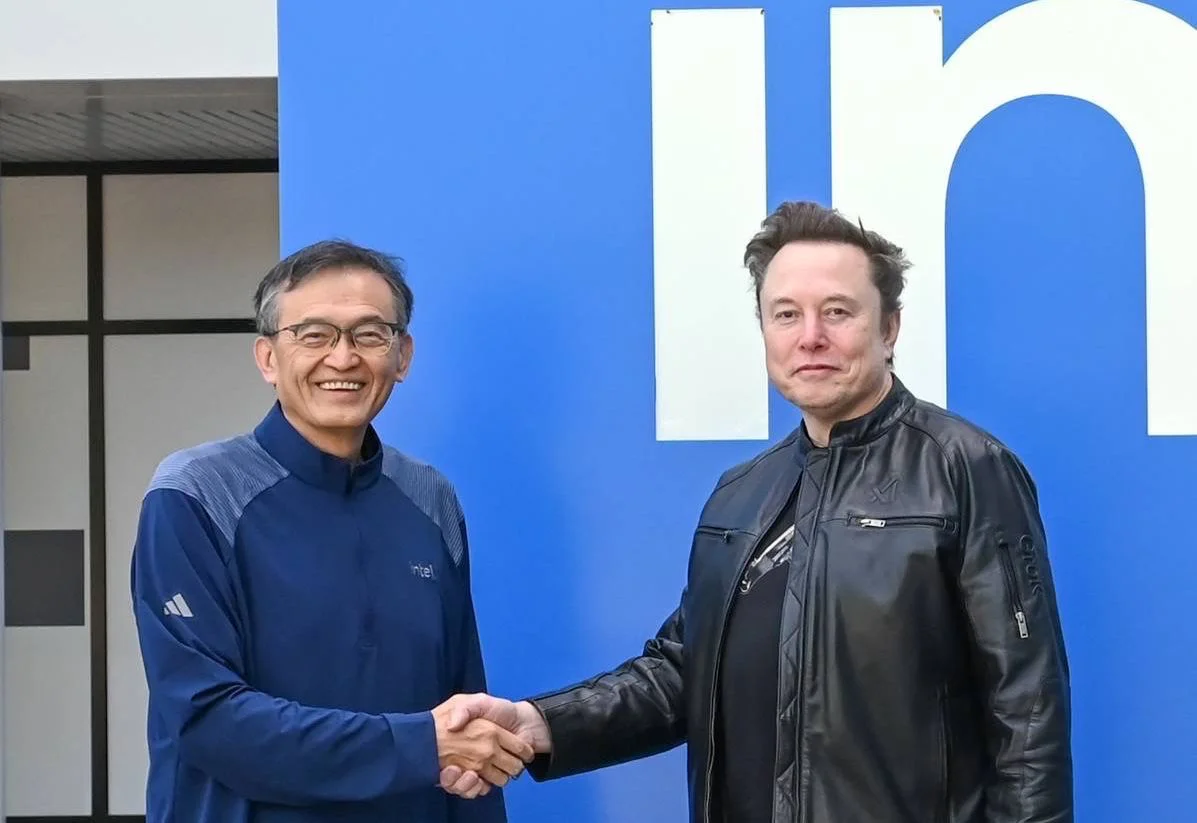
Tesla has recruited Gary Jiang, a semiconductor manufacturing executive with nearly 18 years of experience at Intel, as Director of Tera Fab. The appointment represents the first publicly identified senior manufacturing hire connected to Elon Musk’s ambitious plan to build vertically integrated semiconductor facilities for Tesla, SpaceX, and xAI.
Jiang lists the new position on his LinkedIn profile, confirming that he joined Tesla in June 2026 and is working onsite in Austin, Texas. He spent approximately 17 years and 9 months at Intel before accepting the role, most recently serving as a factory manager at the company’s semiconductor operations in Arizona.
His latest responsibilities at Intel included preparing manufacturing infrastructure for Intel 18A, covering technology transfer, construction, equipment installation, factory startup, product certification, and the creation of high volume manufacturing capacity. Earlier positions placed him inside Intel facilities producing chips through the company’s 22 nm and 14 nm processes.
That experience gives Tesla access to a leader familiar with the difficult transition between process development and stable commercial production. Building a leading edge semiconductor factory requires far more than purchasing lithography equipment. Terafab will need experienced teams covering process integration, contamination control, yield improvement, utilities, chemical delivery, equipment maintenance, mask operations, packaging, and continuous production management.
The official Terafab website describes the initiative as a collaboration between Tesla, SpaceX, and xAI that will combine logic manufacturing, memory production, and advanced packaging under one strategy. The long term objective is to produce processors for Tesla vehicles, Optimus robots, artificial intelligence infrastructure, and future SpaceX computing systems.
Current public plans focus on Texas rather than California. Tesla is expected to operate a smaller research and rapid development facility around its Austin campus, while SpaceX is leading the proposed larger manufacturing site near Gibbons Creek Reservoir in Grimes County. Reuters previously reported that the Austin research fab could cost around $3 billion and process several thousand wafers each month while testing new manufacturing ideas.
The financial scale of the wider project increased substantially through a formal Grimes County public notice. The document identifies Space Exploration Technologies Corp. as the property owner and applicant for a semiconductor manufacturing and advanced computing facility. Initial phases are estimated at $55 billion, while the complete project could reach $119 billion should every additional phase proceed.
These formal figures should not be confused with the earlier $20 billion estimate associated with the original Austin announcement. The Terafab concept has developed into multiple facilities with different research, production, and computing responsibilities, making the Grimes County plan significantly larger than the initial prototype proposal.
Intel is already participating in Terafab. In its official Q1 2026 earnings comments, Chief Executive Officer Lip Bu Tan confirmed that Intel was working with SpaceX, xAI, and Tesla to explore new approaches to semiconductor manufacturing efficiency.
“We are excited to explore innovative ways to refactor silicon process technology.”
— Lip Bu Tan
Elon Musk has also said Terafab intends to use Intel’s future 14A manufacturing technology once the process reaches sufficient maturity. Intel confirmed the broader partnership, although it has not publicly disclosed the final licensing structure, manufacturing responsibilities, capacity commitments, or commercial terms associated with 14A.
Intel 14A is particularly important because Terafab plans to manufacture chips internally rather than relying exclusively on conventional external foundry orders. Jiang’s experience with Intel 18A could improve communication between the companies and help Tesla understand the equipment, process control, yield, and production discipline required to adopt an advanced manufacturing platform. Tan recently said he and Musk share the view that semiconductor infrastructure is not expanding quickly enough to meet demand from artificial intelligence.
Hiring Gary Jiang is a meaningful step because Terafab currently needs manufacturing knowledge more urgently than another ambitious production target. Jiang has direct experience preparing factories, installing tools, transferring new process technology, and moving advanced nodes toward volume manufacturing.
Tesla has just made its first big hire for its Terafab!
— Sawyer Merritt (@SawyerMerritt) June 30, 2026
Tesla has hired Gary Jiang, a semiconductor manufacturing veteran of nearly 18 years at Intel, to serve as director of its Terafab chip-fab project in Austin.
Jiang lists his current role as “Director, Tera Fab” at Tesla.… pic.twitter.com/yfdvyO9i4z
However, one experienced director cannot reproduce Intel’s complete manufacturing organization. Modern semiconductor production depends on thousands of engineers, technicians, chemical specialists, equipment suppliers, construction teams, and process experts working through several years of qualification and yield development.
The $55 billion initial investment estimate also demonstrates that Terafab has moved far beyond the scale of a conventional private chip project. Should the entire $119 billion plan proceed, it would become one of the largest semiconductor manufacturing investments ever proposed in the United States.
The partnership could offer substantial value to Intel. Terafab may provide an important customer and development environment for 14A, while Intel can supply decades of manufacturing knowledge that Tesla, SpaceX, and xAI do not currently possess internally. The opportunity is significant, but execution, process maturity, equipment availability, and financing will determine whether the project can move from an ambitious concept into a competitive manufacturing operation.
Can Tesla, SpaceX, Intel, and xAI successfully build a vertically integrated semiconductor operation, or is Terafab attempting to scale too quickly?
