
Samsung Electronics has warned that the global memory shortage could become more severe in 2027, with supply constraints expected to persist through 2028 as artificial intelligence infrastructure continues consuming an increasing share of semiconductor production. During its Q3 2026 earnings conference, the company confirmed that its entire planned High Bandwidth Memory (HBM) supply for 2027 is already sold out, while growing demand for server DDR5, enterprise SSDs, and next generation AI accelerators continues placing pressure on manufacturing capacity.
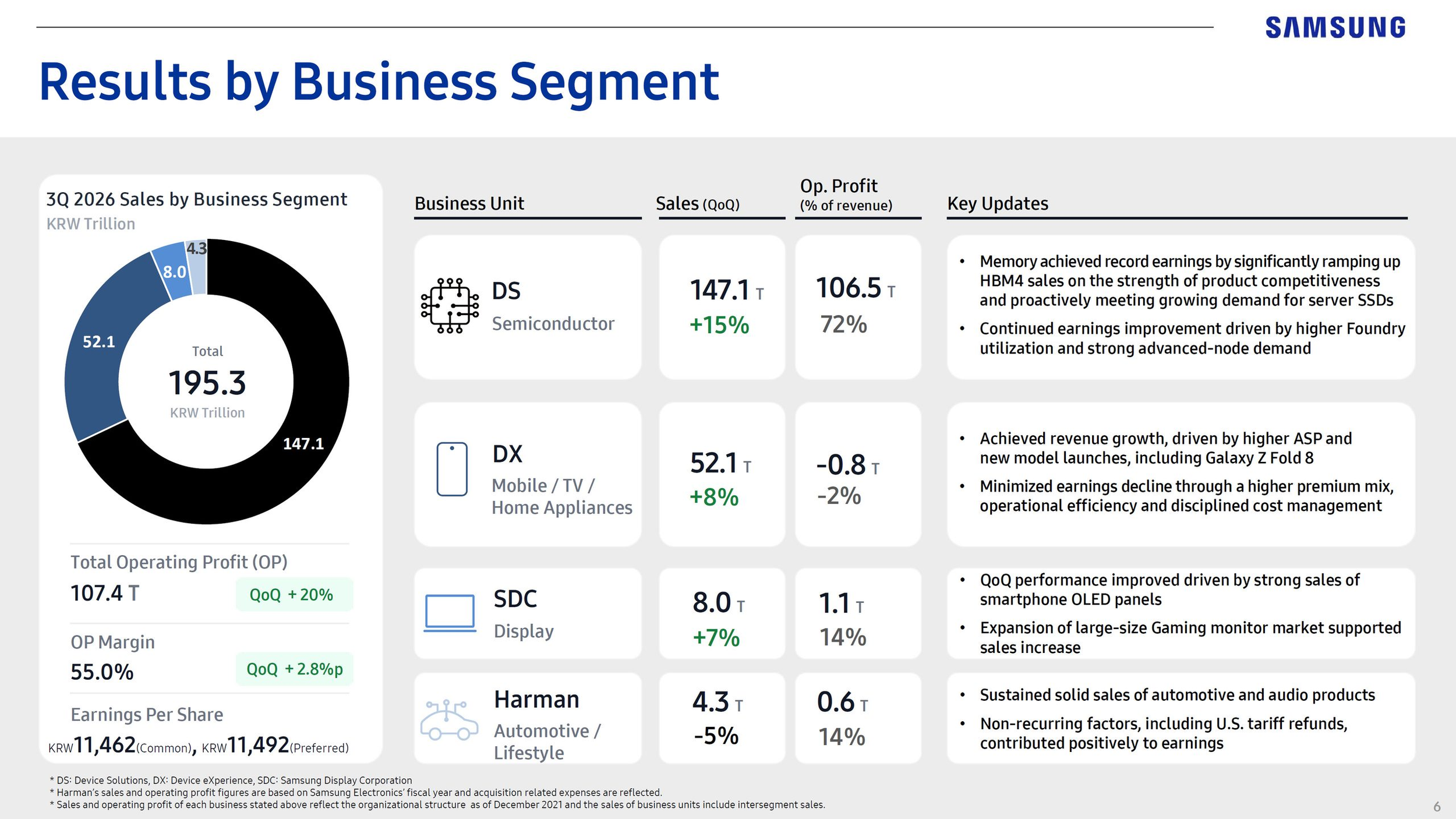
According to Samsung's official financial results, the company recorded 195.3 trillion won in quarterly revenue and 107.4 trillion won in operating profit, representing increases of 14% and 20%, respectively, compared with the previous quarter. Its semiconductor division benefited significantly from AI related memory demand, particularly HBM4, which experienced substantial shipment growth. Samsung also confirmed plans to begin mass production of HBM4E during the first half of 2027, with production volumes increasing throughout the second half. The company is simultaneously expanding its portfolio of high performance server DDR5 products operating at 8000 MT/s and above, alongside PCIe 6.0 enterprise SSDs and high capacity QLC storage solutions.
However, expanding production capacity is becoming increasingly complicated. Samsung explained that next generation HBM4E and HBM5 require larger silicon dies and additional manufacturing layers, reducing the amount of usable memory produced from available wafer capacity. Furthermore, converting manufacturing resources toward HBM reduces production flexibility for conventional DRAM products, including DDR5 used in gaming PCs, workstations, and servers. Even with higher capital expenditure planned for 2027, Samsung believes construction schedules, semiconductor equipment availability, and manufacturing complexity will limit meaningful production growth during 2028.

Long term supply agreements are introducing another challenge for smaller customers. Samsung confirmed that it has already signed multiyear contracts with 10 major customers and is negotiating with another 10. The company aims to secure approximately 60% to 70% of its medium and long term production capacity through these agreements, although this remains a target rather than capacity already fully contracted. Demand for guaranteed supply is also expanding beyond hyperscalers into automotive, mobile, and networking industries, potentially reducing flexibility for manufacturers purchasing memory through shorter procurement cycles.

Samsung's outlook closely aligns with SK hynix's recent warning that memory shortages could continue through 2030. Both manufacturers expect AI infrastructure investment to remain a major driver of DRAM demand, while new fabrication facilities require several years before contributing meaningful production volumes. For consumers, the implications could include continued pricing pressure on DDR5 memory, high capacity workstation modules, graphics cards, and SSDs, although future retail prices will also depend on demand, product availability, and competition.
Duck IT Take: The memory industry is entering a period where production allocation may become more important than manufacturing capacity alone. With Samsung's 2027 HBM supply already committed and major customers securing multiyear agreements, smaller memory manufacturers and PC hardware brands could face increasing challenges obtaining consistent DRAM allocations. The biggest concern for gamers and PC builders is that even when new factories begin operating, additional capacity may already be reserved for AI infrastructure and enterprise customers. Higher production investment does not necessarily translate into immediate consumer price relief, making supply diversification and long term procurement strategies increasingly important.
What do you think? Will the AI industry's growing demand keep DDR5 and SSD prices elevated through 2028, or could additional production capacity eventually bring relief to PC gamers and hardware manufacturers?
