
PlayStation 6 May Use AI Frame Generation to Target 4K at 120 FPS Without Extreme Hardware Costs
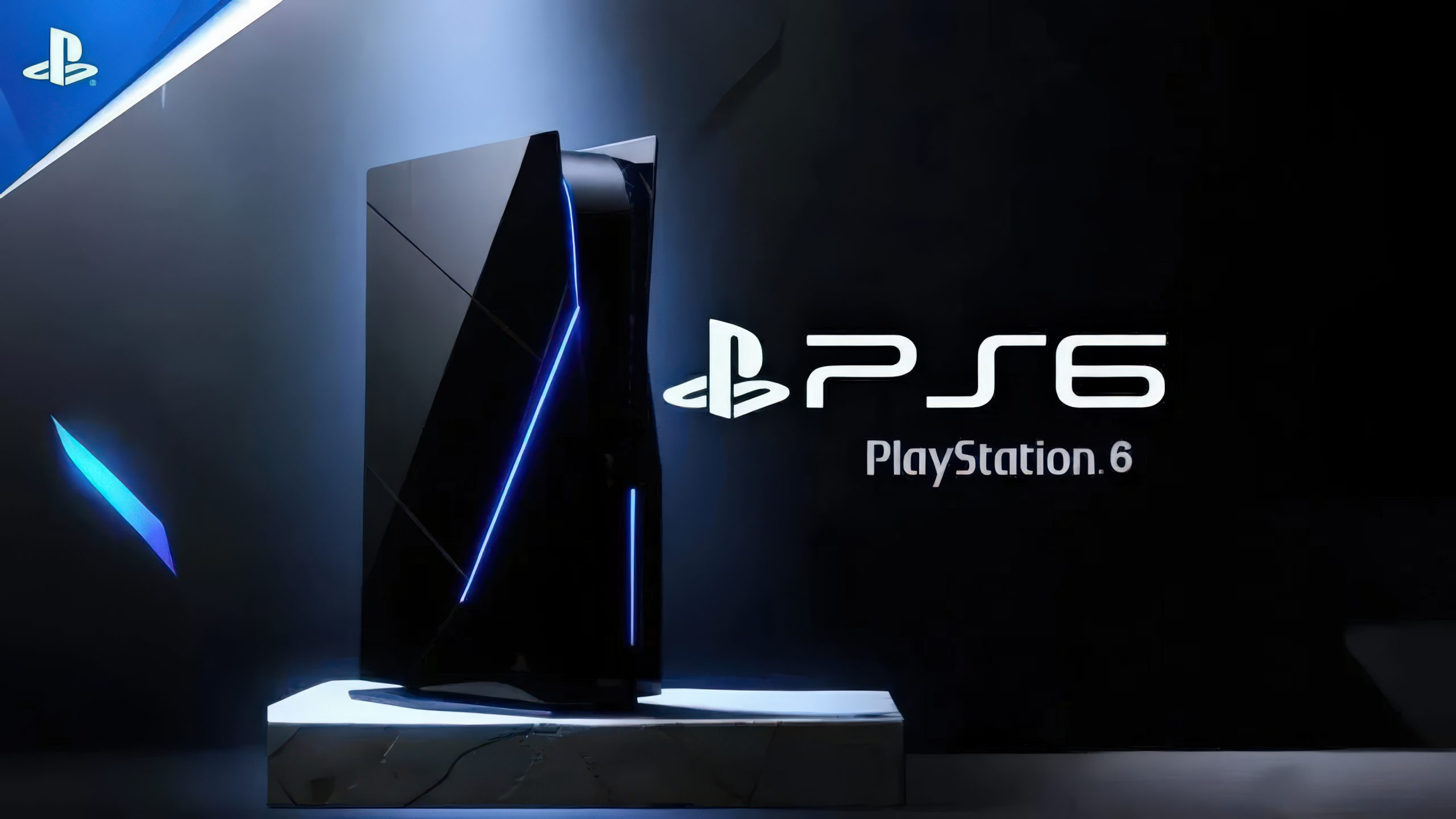
Sony is reportedly researching machine learning based frame generation as a central part of its future PlayStation hardware strategy, potentially allowing the PlayStation 6 to deliver visuals that feel closer to 4K at 120 FPS without requiring an excessively large or expensive graphics processor. The information comes from Moore’s Law Is Dead during the latest Broken Silicon podcast, where the host discussed material allegedly connected to an internal Sony hardware meeting. According to the report, the major themes included the cost limitations surrounding consoles, the need for machine learning Super Resolution and Virtual Frame Interpolation on console and lower cost discrete graphics hardware, and a stronger focus on power efficiency. Sony has not confirmed that the material is authentic, and no final PlayStation 6 specifications have been announced.
The reported cost strategy arrives during an increasingly difficult period for gaming hardware. Sony recently raised the recommended US price of the standard PlayStation 5 to $649.99 and the PlayStation 5 Pro to $899.99, while Valve’s new Steam Machine is launching from $1,049 after memory, storage, and other component costs increased significantly. Steam Deck OLED pricing climbed sharply because of memory and storage costs, creating a warning for every manufacturer preparing a new gaming system. Unlike Valve, Sony can partially support hardware pricing through software sales, PlayStation Store revenue, subscriptions, accessories, and licensing, but the company will still need to balance manufacturing costs against the performance increase expected from a full console generation.
"When I see things like AI, ray tracing, PSSR, keeping costs in control, whatever they are going to do, they are going to try to make it feel like 4K 120 and cut costs after that."
— Moore’s Law Is Dead
The most important detail is the phrase feel like 4K at 120 rather than render every game natively at 4K and 120 FPS. Machine learning Super Resolution could allow games to render internally at a lower resolution before reconstructing a sharper 4K image, while Virtual Frame Interpolation could generate additional frames between traditionally rendered frames to increase perceived smoothness. This would allow Sony to invest in a more balanced processor rather than attempting to achieve every visual target through raw graphics performance alone. Frame generation would not eliminate the need for a stable base frame rate, since generated frames do not improve core game simulation or controller response in the same way as traditionally rendered frames. A game producing 60 real frames and generating intermediate images could appear much smoother on a 120 Hz display, but it would not provide the same responsiveness as a game running natively at 120 FPS.
Sony has already established the technical foundation for this strategy through PlayStation Spectral Super Resolution. In its official upgraded PSSR announcement, Sony confirmed that the latest algorithm and neural network were developed through Project Amethyst, its long term collaboration with AMD. PlayStation architect Mark Cerny has also confirmed that an equivalent machine learning frame generation library should eventually appear on PlayStation platforms, although he did not specify whether it will arrive on PlayStation 5 Pro, PlayStation 6, or both.
A future PlayStation system could combine this reconstruction technology with stronger ray tracing hardware, improved denoising, higher memory bandwidth, and more efficient graphics processing. Although final results would still depend on developer optimization, internal rendering resolution, scene complexity, and the performance of Sony’s machine learning tools. The most realistic objective may not be native 4K at 120 FPS in every major game, but a consistent 4K output with 60 FPS base performance, generated frames for 120 Hz displays, and stronger ray tracing than current consoles can deliver.
The Broken Silicon discussion also explored the possibility that Sony could use local artificial intelligence and advanced voice recognition to improve the PlayStation interface, potentially allowing players to search games, change settings, navigate menus, manage parties, or access support through conversational commands. This was speculation from the podcast rather than information shown in the alleged internal material. A sufficiently powerful PlayStation 6 could process some voice functions locally, but cloud processing or PlayStation Plus integration would also be possible. Sony has been working to increase engagement with PlayStation Plus Extra and Premium, so advanced platform features could eventually become part of its subscription strategy, although there is currently no evidence confirming that approach.
The PlayStation 6 release schedule also remains uncertain. Reports continue to point toward late 2027 as a possible target, while other analysts believe rising memory costs and market conditions could push the system into 2028 or 2029. Sony has not announced the console, its launch date, its price, or its final hardware design. What is becoming clearer is that machine learning will likely play a larger role in the next PlayStation generation, allowing Sony to improve image quality, frame rate, and ray tracing without depending entirely on a costly increase in raw silicon.
Sony’s reported strategy reflects the reality facing every future console manufacturer. The traditional approach of delivering a major generational leap through a much larger processor is becoming increasingly difficult as advanced manufacturing, memory, cooling, and storage costs continue rising. Machine learning reconstruction and frame generation offer a way to deliver a visible improvement while controlling the size, power consumption, and manufacturing cost of the system.
The success of this approach will depend on transparency and execution. Players will quickly reject unstable image reconstruction, visible artifacts, weak base frame rates, or marketing that presents generated performance as native rendering. However, if Sony can combine a stable 60 FPS foundation with convincing 4K reconstruction, low latency frame generation, and stronger ray tracing, PlayStation 6 could provide a meaningful upgrade without entering the extreme pricing territory now affecting premium gaming PCs and Valve’s Steam Machine.
Would convincing 4K output at 120 FPS through AI frame generation be enough to justify upgrading to PlayStation 6, or would you prefer Sony to prioritize higher native performance?
