
PlayStation 6 Path Tracing Ambitions Could Be Real, But Handheld Parity May Become The Bigger Next Gen Constraint
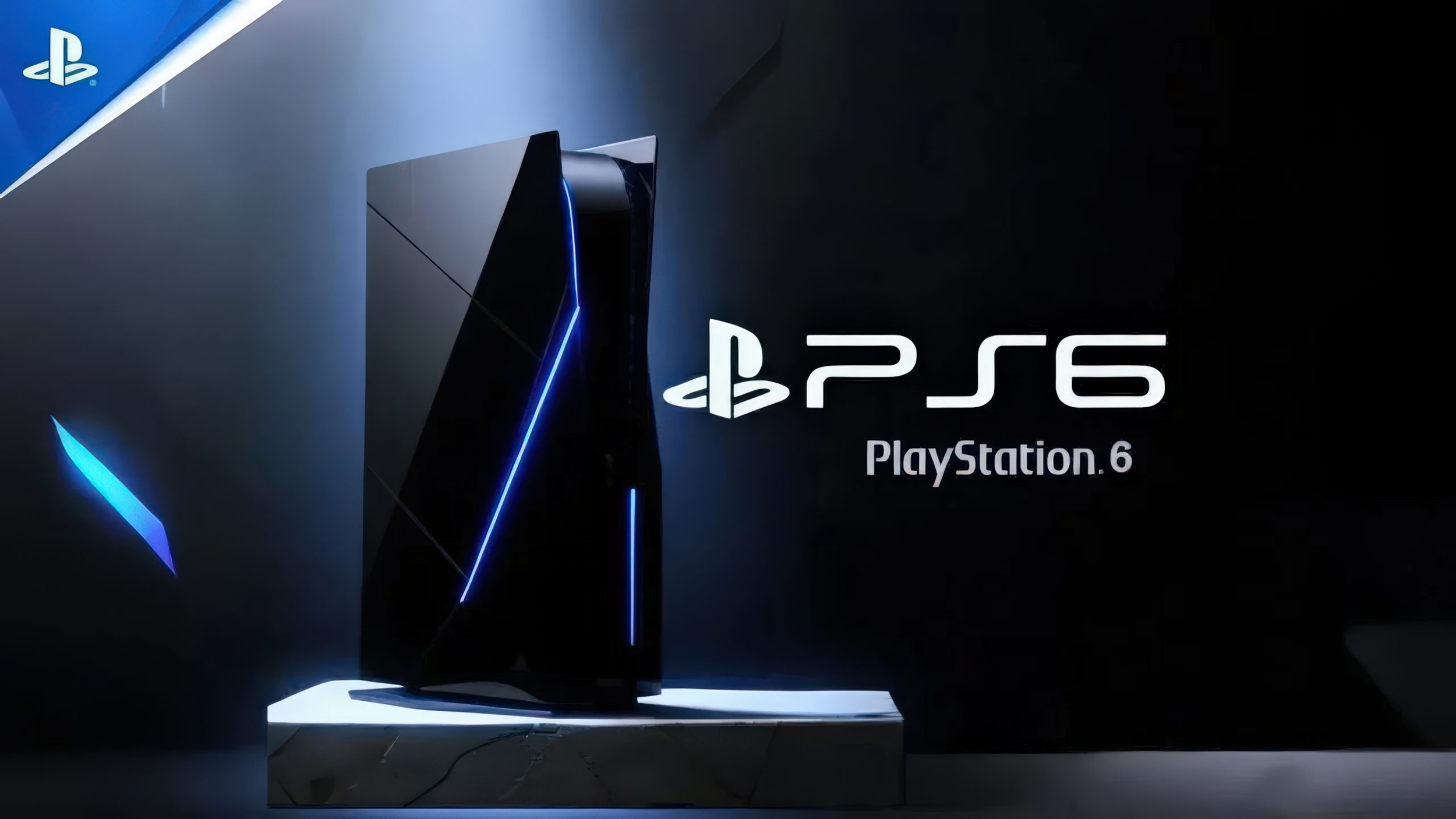
PlayStation 6 speculation is starting to focus on a much more ambitious visual target: path tracing at playable console frame rates. The latest discussion comes from a recent Digital Foundry video, where the team examined Codemasters’ GDC 2026 presentation on F1 25 path tracing and the surprising implications of a PlayStation 5 Pro demo that reportedly showed a path traced scene running at 30 FPS with some headroom still available. Reporting summarizing that discussion says the PS5 Pro demo used a daylight track rendered internally at 1080p and upscaled to 4K, with EA SEED’s ORCA optimization work reducing path tracing cost from roughly 42.32 milliseconds to 23.36 milliseconds.
That matters because if PlayStation 5 Pro can already demonstrate a path traced scene at 30 FPS under heavily optimized conditions, then the idea of PlayStation 6 pushing much further starts to sound less like fantasy and more like a plausible long term target. The same summary of the Digital Foundry discussion says the expected hardware jump could deliver around 10 times the ray tracing performance of the base PlayStation 5, though real world game gains in titles that do not heavily lean on ray tracing would be closer to 3 times. That is still a very substantial generational uplift for lighting, reflections, and global illumination workloads.
The bigger reason this conversation is gaining traction is AMD’s next graphics direction. Sony and AMD have already publicly discussed future graphics technologies tied to Project Amethyst, including “Radiance Cores” for stronger ray tracing and path tracing, along with machine learning focused image reconstruction and denoising work intended for future PlayStation hardware. Those comments do not confirm a final PlayStation 6 specification sheet, but they do support the broader idea that Sony and AMD are actively building next generation console graphics around more advanced ray traced rendering.
That makes the core claim here easier to understand: if the PlayStation 5 Pro can already show a proof of concept for path tracing at 30 FPS, then a much stronger PlayStation 6 GPU could realistically target 30 FPS more comfortably and potentially even 60 FPS in select scenarios, depending on image reconstruction, denoising quality, scene complexity, and how developers choose to balance fidelity against responsiveness. That is still a projection, not a confirmed PlayStation 6 feature list, but it is a projection grounded in the technical direction Sony and AMD have publicly outlined.
The caveat is that graphics may not be the only thing defining the next PlayStation generation. A separate discussion on NeoGAF, attributed to known AMD leaker KeplerL2, suggests that a rumored PlayStation handheld could become a limiting factor if support for that device ends up being mandatory across the software lineup. In that post, KeplerL2 argued that the GPU side is not necessarily the main concern because resolution scaling can absorb a large part of the difference, but that the CPU could become the true bottleneck for next generation gameplay systems such as physics, crowd density, and other simulation heavy features if handheld compatibility is required.
That distinction is important. Resolution and image quality can often scale down for weaker hardware far more easily than simulation systems can. If Sony builds a dual device ecosystem where a home console and a handheld must share the same games, developers may be able to reduce resolution, ray tracing quality, and effects density for the portable machine. But CPU constrained systems such as world simulation, destructibility, traffic, NPC behavior, and large scale crowds do not always scale as neatly. If handheld support is truly mandatory, that could end up shaping what next gen PlayStation games aim for on the design side, even if the home console itself has far more GPU headroom. That is an inference from the rumored handheld discussion, not something Sony has officially confirmed.
So the picture that is starting to emerge is a mixed one. On one side, PlayStation 6 could become a major showcase for advanced ray tracing and even path tracing, especially if Sony’s AMD partnership delivers the kind of denoising, upscaling, and ray traversal gains that have already been hinted at publicly. On the other side, a cross compatible handheld strategy could create a very different ceiling for game design if the CPU profile of the portable device ends up setting the baseline for simulation heavy titles.
For players, that could lead to a very specific kind of next generation transition. The visual leap might be real and very impressive, especially in lighting and image quality, but the broader gameplay leap may depend on how much freedom studios have to build separately for the home console instead of always targeting a shared portable baseline. In other words, PlayStation 6 may have the hardware to become a path tracing monster, but whether games fully capitalize on that may depend just as much on platform strategy as on silicon.
Engagement question: Would you rather see PlayStation 6 push full path traced visuals at 30 to 60 FPS, or prioritize bigger leaps in simulation, physics, and world density even if visuals are less dramatic?
