
AMD Says AI PCs Are Becoming The New Enterprise Standard As IDC Research Shows 81% Of Organizations Are Already Moving In
AMD is making a much stronger push around the enterprise AI PC conversation, arguing that AI capable client systems are no longer an early adopter category but are quickly becoming a standard part of enterprise planning. That messaging comes alongside an IDC white paper sponsored by AMD, which says 81% of organizations are now planning, piloting, or deploying AI PCs, based on a survey of more than 500 IT decision makers and business leaders across multiple regions.
The numbers AMD is highlighting show that enterprise adoption has moved well beyond curiosity. According to the IDC findings published by AMD, 61% of organizations are integrating AI directly into workflows, 59% say high performance NPUs are critical for next generation AI experiences, 70% report faster performance and lower latency with AI PCs, 66% report increased employee productivity, and 58% cite improved data security as a key advantage of on device AI processing.
That is the bigger strategic shift AMD is trying to capture. The company’s position is that while cloud AI remains important, enterprise AI will not scale efficiently unless more workloads run locally on the device. AMD says this matters even more as agentic AI becomes more practical, because businesses want AI systems that are responsive, context aware, and able to operate closer to the user rather than relying entirely on the cloud. This framing is directly stated in AMD’s latest enterprise AI PC messaging.
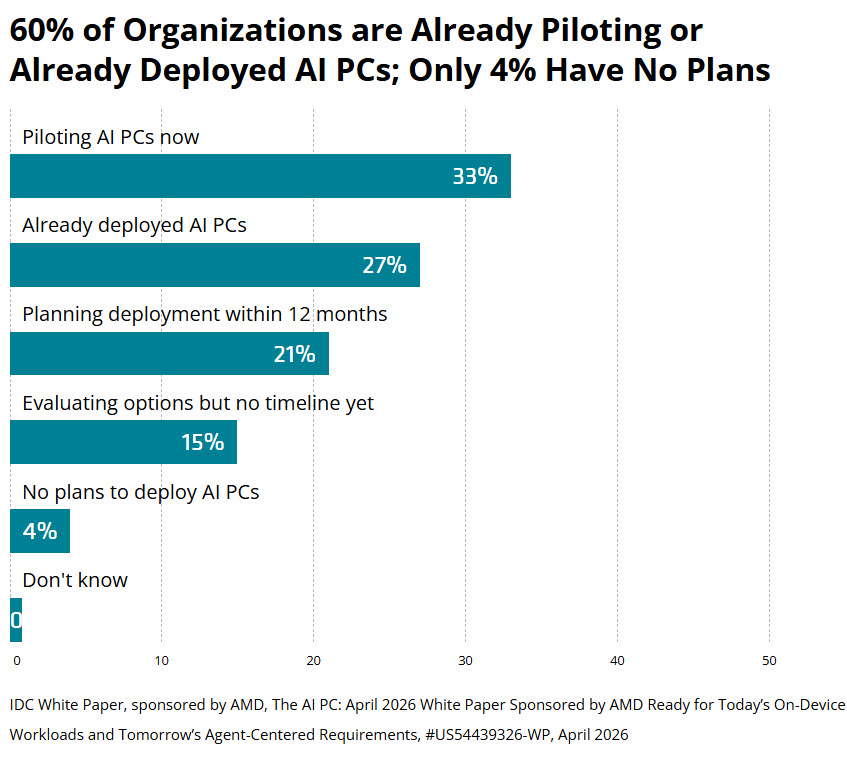
AMD is also using the IDC data to suggest that AI PCs are moving from a pilot stage into a deployment phase. Separate coverage of the same study says 60% of enterprises are already actively piloting or deploying AI PCs, while only a very small minority say they are not planning any AI PC rollout at all. That reinforces the argument that the market is no longer asking whether AI PCs matter, but how quickly businesses can integrate them into their fleet strategies.
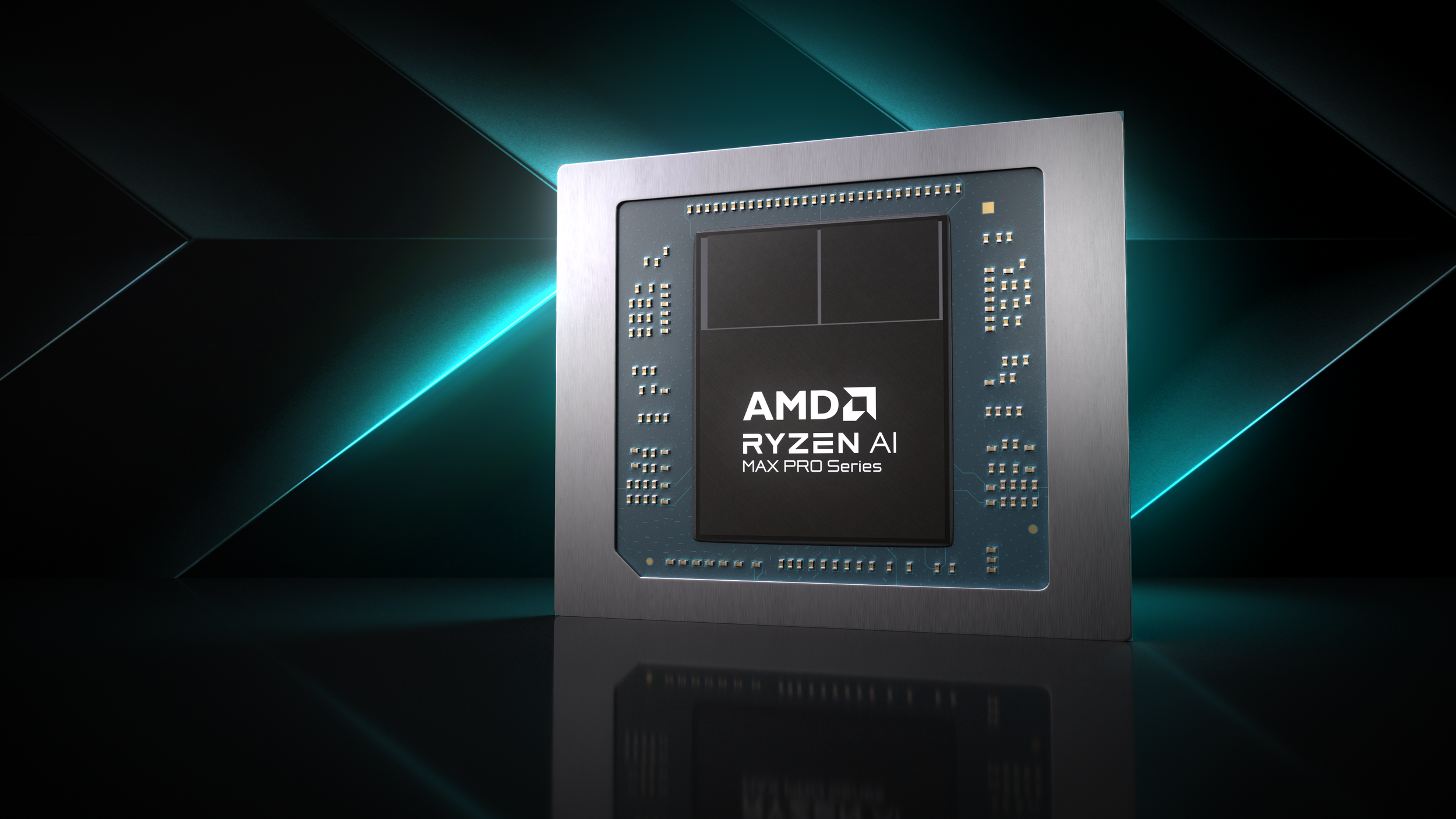
A major part of AMD’s pitch is hardware readiness. The company says its Ryzen AI PRO portfolio is designed to support enterprise AI adoption from the endpoint to the data center, and it is leaning heavily on NPU performance as a differentiator. AMD’s current business platform materials say Ryzen AI PRO systems deliver 50 plus TOPS of NPU performance, while the newer Ryzen AI PRO 400 Series announcement says some models can reach up to 60 TOPS and meet Microsoft Copilot Plus PC requirements.
From an enterprise perspective, AMD is not only talking about raw performance. It is also tying AI PCs to lower latency, stronger privacy controls, and reduced cloud dependence. The IDC material AMD published specifically points to on device AI as a way to improve security and control, which is especially relevant for organizations that do not want sensitive inference workloads constantly moving off device. That argument is likely to resonate more as agentic AI tools begin handling more workflow automation and contextual decision support inside enterprise environments. This last point is an inference based on the reported benefits and AMD’s framing of agentic AI.
The other interesting angle is how quickly enterprise sentiment appears to be shifting. ITPro’s coverage of the study says AI PC adoption is being driven not only by productivity gains, but also by preparation for future AI use cases, with businesses increasingly treating these systems as a practical foundation for the next wave of workplace computing. Channel Insider’s reporting on the same data also notes that 67% of organizations are expanding AI across their business, which further suggests that AI PC demand is being tied to broader operational rollout rather than isolated experimentation.
For AMD, this is an important moment. The company has already established a stronger position in enterprise CPUs and workstation platforms, and now it is trying to turn AI PCs into another area where it can compete aggressively on performance, efficiency, and deployment flexibility. If the IDC numbers hold true across the market, AI PCs may indeed become a new enterprise baseline faster than many expected, especially as organizations try to balance cloud costs, user responsiveness, and data governance.
What stands out most is that AMD is not presenting AI PCs as a niche premium upgrade. It is presenting them as the next standard client platform for enterprise computing. Given the combination of rising agentic AI interest, stronger on device inference hardware, and the growing need for lower latency AI workflows, that argument now looks a lot more credible than it did even a year ago.
Do you think AI PCs will become a default enterprise requirement within the next 2 years, or will most businesses still rely mainly on cloud AI for everyday work?
