
ACEMAGIC Positions F5A Mini PC As A Compact AI And Gaming Hub With Ryzen AI 9 HX 470 And OCuLink Expansion
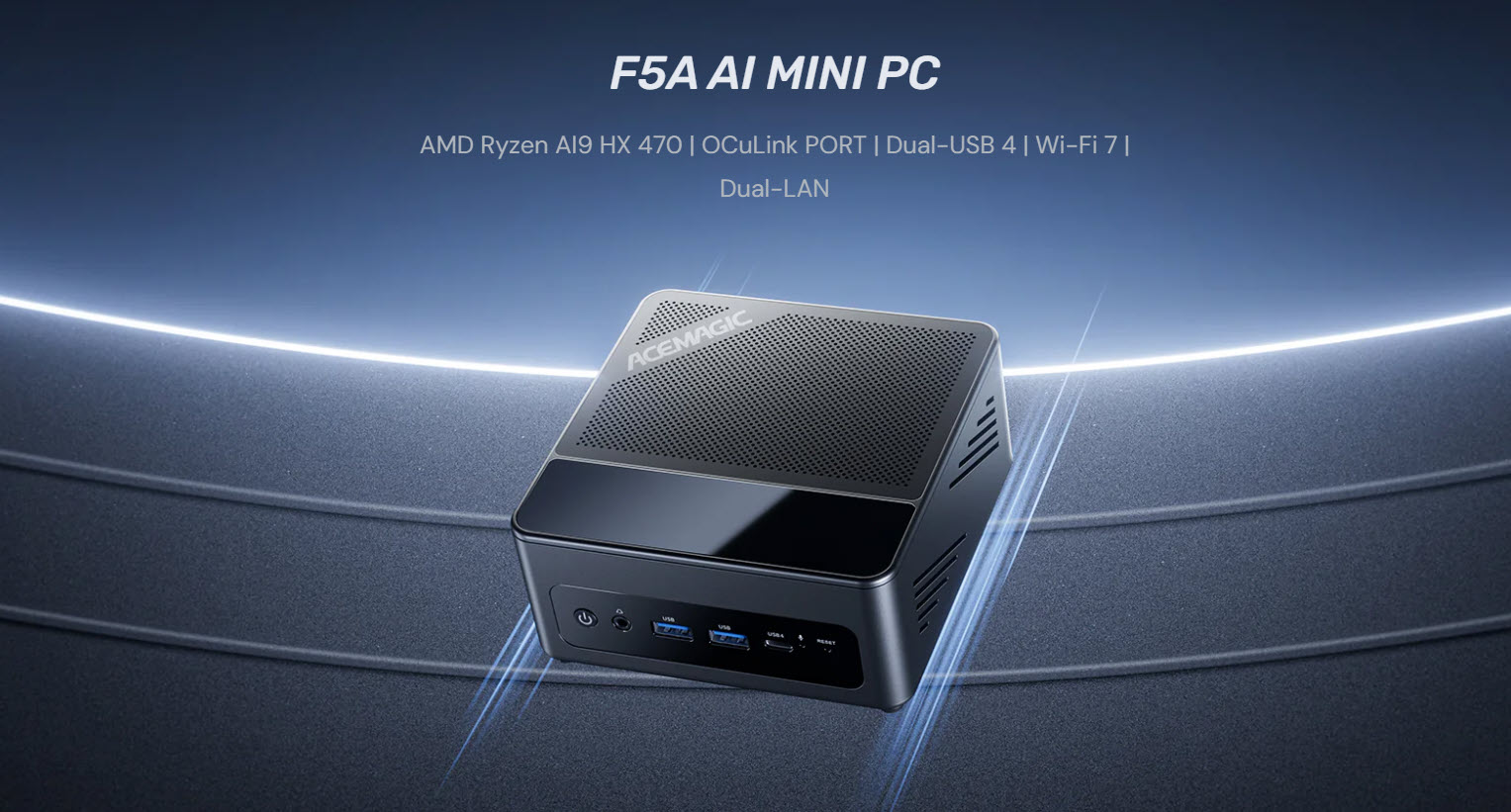
ACEMAGIC is pushing deeper into the compact AI PC space with its new F5A Mini PC, a small form factor system built around AMD’s Ryzen AI 9 HX 470. The company is clearly positioning the F5A as a multi use machine that can handle local AI workflows, productivity, media, and light gaming while keeping desk footprint to a minimum. The product page lists the system at 130 × 132 × 62 mm and highlights a presale shipping target of May 30 for current orders.
At the center of the system is the Ryzen AI 9 HX 470, an AMD processor based on the Gorgon Point family. AMD lists the chip with 12 CPU cores, split into 4 Zen 5 cores and 8 Zen 5c cores, up to 5.2 GHz boost clock, Radeon 890M graphics with 16 compute units at up to 3.1 GHz, and up to 55 TOPS of NPU performance. AMD also identifies the processor as a Ryzen AI 400 Series part with support for DDR5 or LPDDR5X memory and native USB4 connectivity.
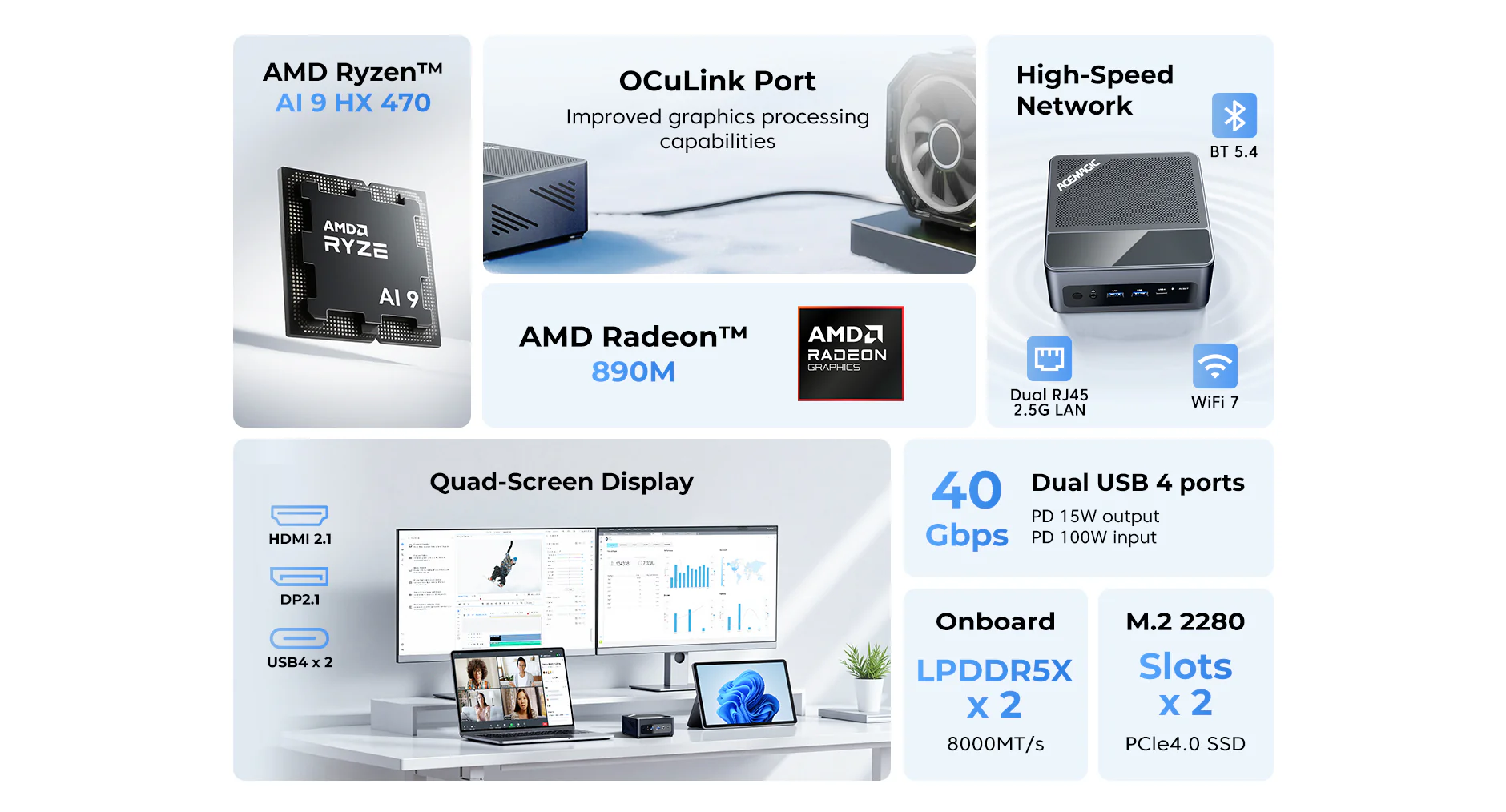
ACEMAGIC’s own product specifications align with that platform direction and present the F5A as a small AI ready desktop rather than just another basic office mini PC. The company says the system offers up to 86 total AI TOPS across CPU, GPU, and NPU resources, which places it in the current wave of machines designed for local inference, AI assistants, and next generation Windows AI workloads. That does not automatically make it a high end workstation replacement, but it does give the F5A a stronger value proposition than traditional mini PCs built only around low power office silicon. This final point is an inference based on the published processor and system specifications.
Graphics are handled by the integrated Radeon 890M, which is one of AMD’s stronger current integrated GPU designs. ACEMAGIC lists the iGPU as an RDNA 3.5 solution with 16 compute units up to 3.1 GHz, which should make the machine viable for lighter gaming, media acceleration, and GPU assisted creative workloads inside a very compact chassis. For buyers who want more graphics headroom, the F5A also includes OCuLink, which ACEMAGIC says can be used to attach an external GPU for gaming, creative work, and other heavier use cases.
Memory and storage are where the configuration story becomes more interesting. ACEMAGIC’s product listing confirms that the 32 GB version uses onboard LPDDR5X 8000 memory and is non upgradable, while the barebone model is listed separately as a SO DIMM configuration with no RAM, SSD, or OS included. The same specification page says the system supports up to 12 TB total storage through 3 M.2 2280 NVMe slots, made up of 1 PCIe 4.0 x4 slot and 2 PCIe 4.0 x2 slots, with up to 4 TB per slot. That means the storage side is actually more flexible than the original memory impression might suggest.
-
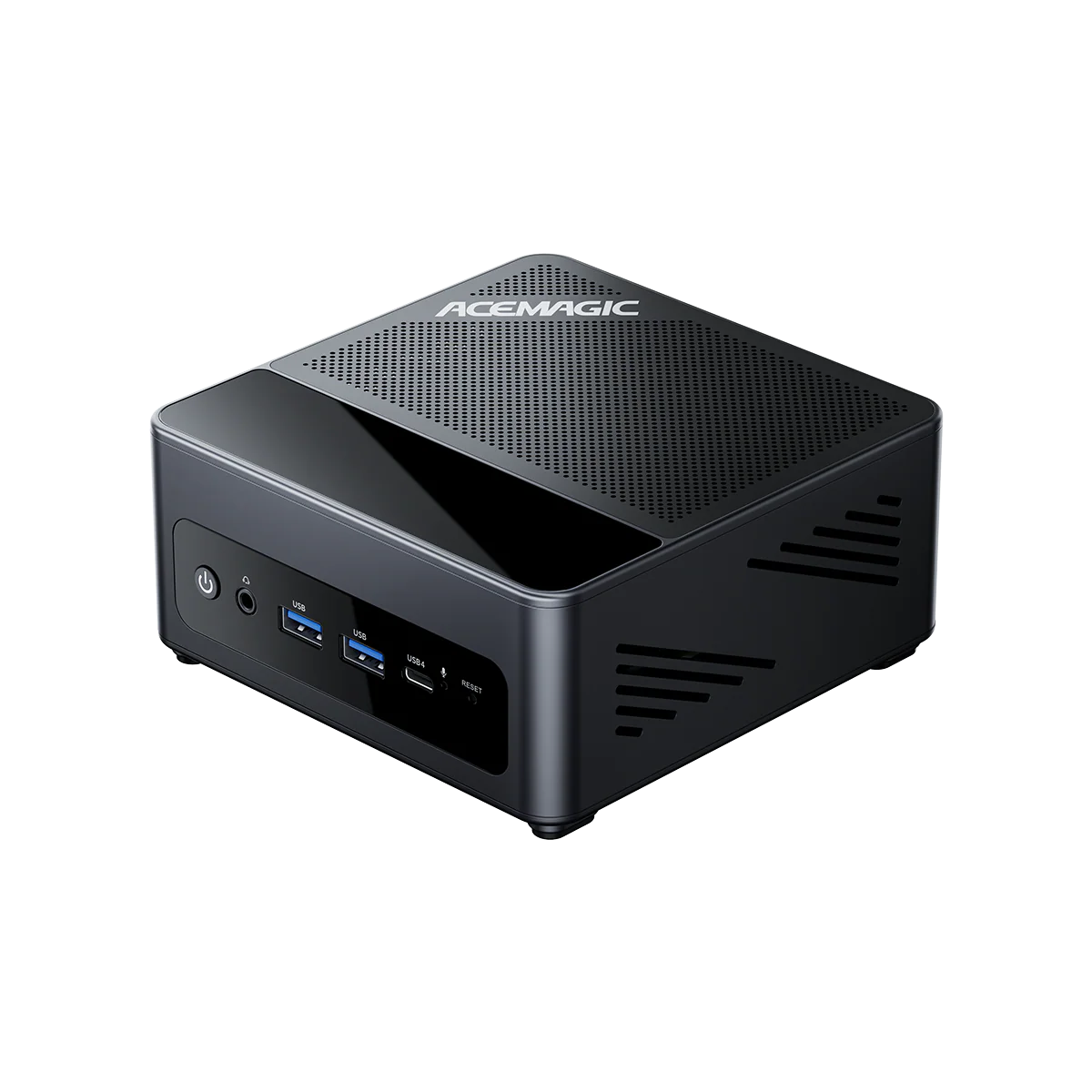
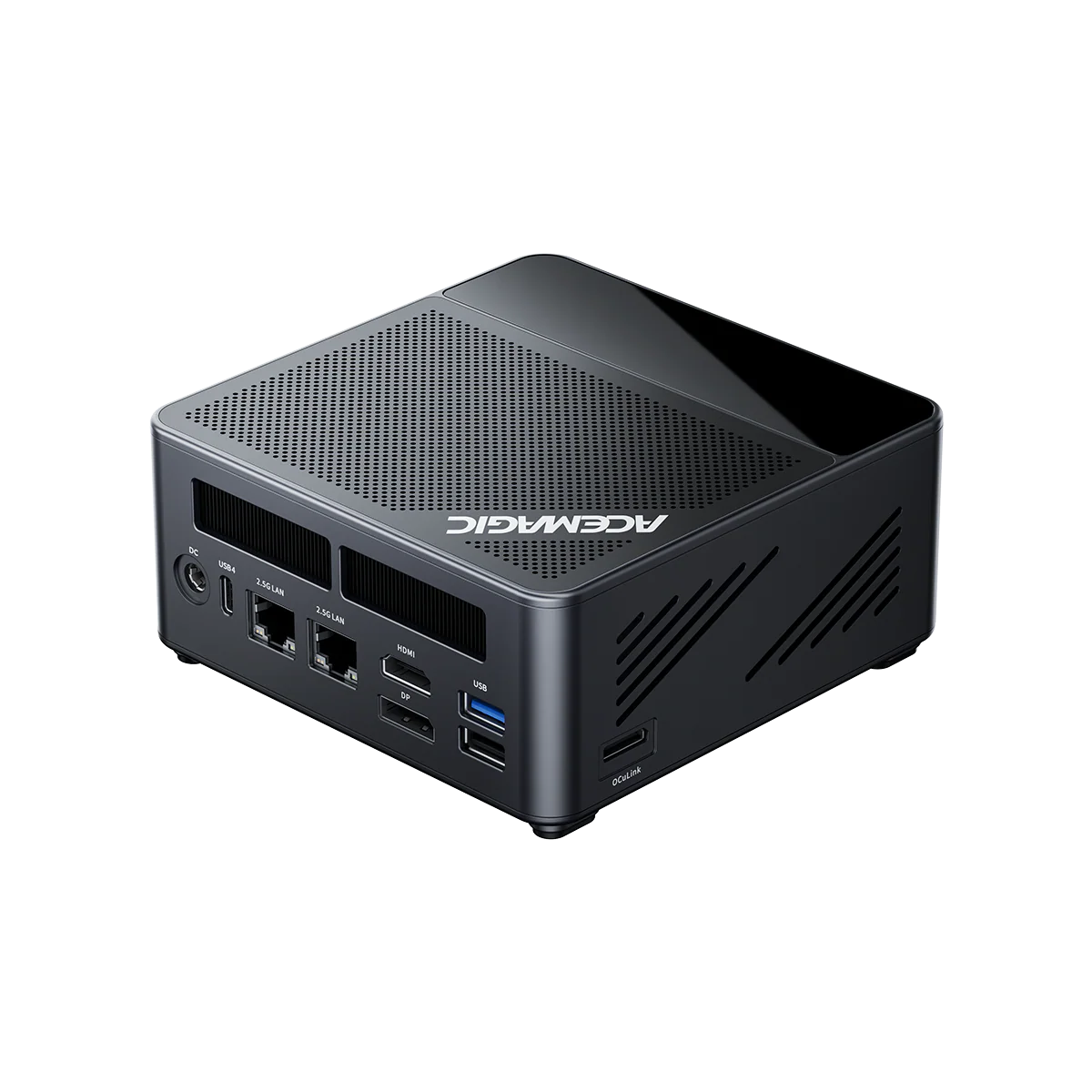
2 × 2.5 Gbps auto negotiating RJ45 Ethernet ports
2 × USB 3.2 Gen 2 Type A at 10 Gbps
1 × USB 3.2 Gen 2 Type A at 10 Gbps
1 × USB 2.0 Type A
2 × USB4 Type C with DisplayPort 1.4, up to 40 Gbps, 100 W PD input, and 15 W PD output
1 × DC in
1 × HDMI 2.1
1 × DP 2.1
1 × 3.5 mm audio jack
1 × power button
1 × OCuLink port
Wireless connectivity is also up to date, with Wi Fi 7 and Bluetooth 5.4 listed on the official specification page. On displays, ACEMAGIC says the F5A supports HDMI 2.1, DP 2.1, and dual USB4 display output, and markets the system as capable of 4 screen output with up to 8K at 60 Hz support across supported connections. That gives the machine a broader productivity and signage angle in addition to its AI and gaming messaging.
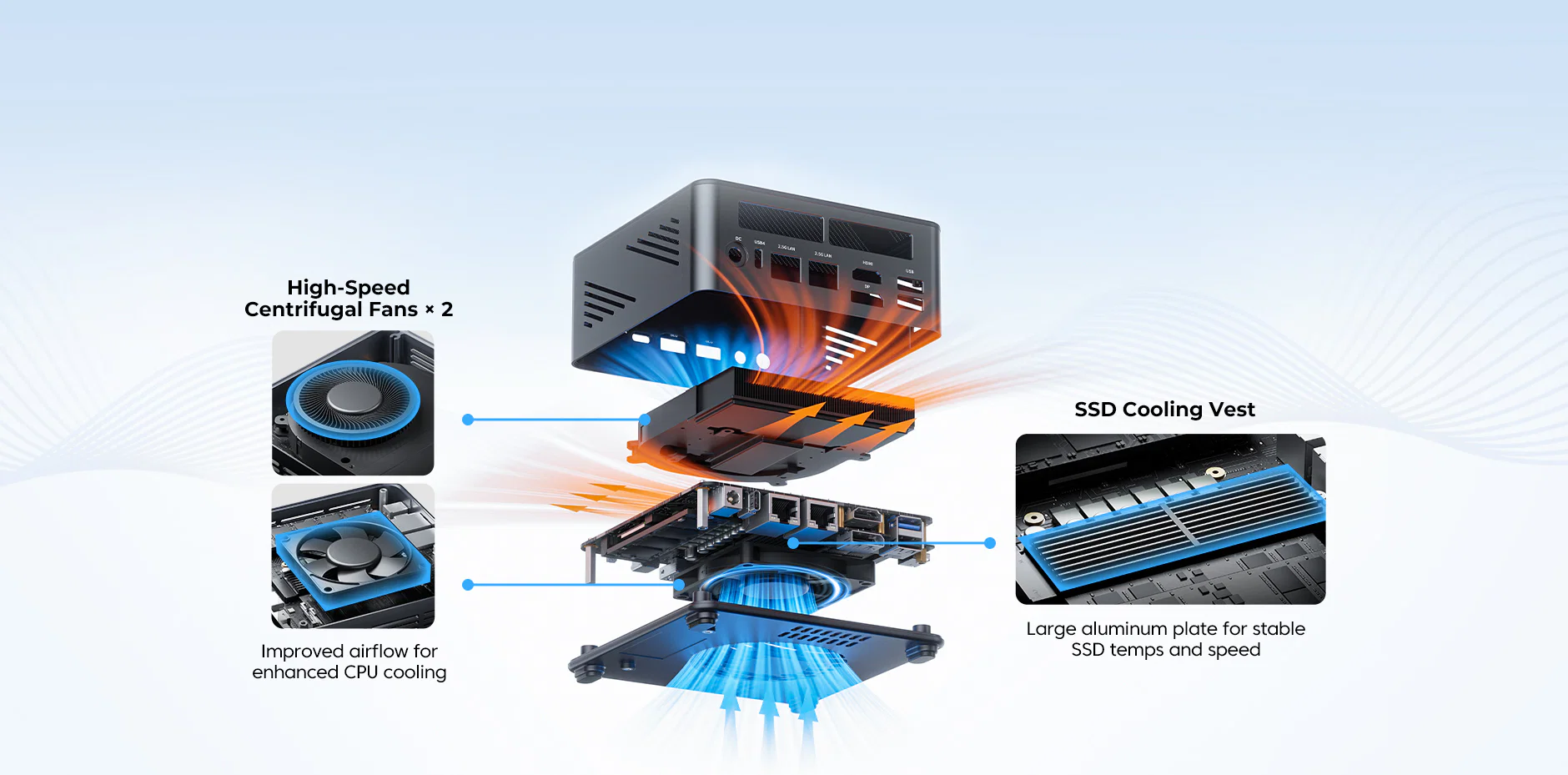
Cooling is handled through a dual fan design plus a VC heat spreader, with ACEMAGIC claiming up to 65 W of performance delivery. For a mini PC in this size class, thermal control is going to be one of the most important real world variables, especially if buyers expect the Ryzen AI 9 HX 470 to sustain strong clocks across AI, GPU, and CPU heavy tasks. ACEMAGIC’s use of a dual fan layout and vapor chamber style thermal spreader shows the company understands that cooling will be central to the F5A’s credibility. The expectation around sustained performance is an inference, while the cooling design itself is listed on the official product page.
As for pricing, the barebone configuration is listed at 759 dollars, while the 32 GB and 1 TB version is listed at 1299 dollars and currently marked sold out. Both listings also show higher crossed out reference pricing, suggesting ACEMAGIC is treating the current pricing as an early promotional offer during the presale period.
Overall, the F5A looks like a serious attempt to turn AMD’s high end mobile AI silicon into a versatile mini desktop platform. The strongest parts of the package are the Ryzen AI 9 HX 470, modern connectivity, OCuLink expansion, and high total storage ceiling. The main point buyers will need to watch is configuration choice, because the onboard LPDDR5X version and the barebone SO DIMM version imply different upgrade paths and potentially different buyer priorities. If ACEMAGIC executes thermals and firmware well, the F5A could end up being one of the more flexible compact AI PCs in its category. That final conclusion is an inference based on the listed hardware and expansion features.
Would you buy a compact AI mini PC like the F5A for local AI work and daily productivity, or would you still rather go with a full size desktop for better upgrade flexibility?
