
Memory Prices May Not Fall Even as Supply Pressure Eases, Korean Research Note Warns Hyperscalers Are Locking In for the Long Haul
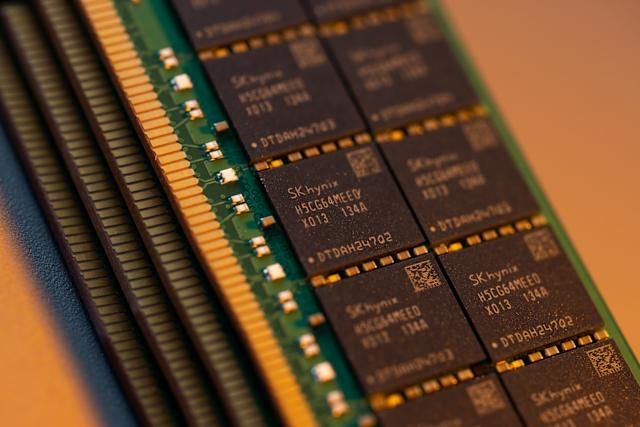
A new Korea Investment & Securities note argues that memory pricing may remain structurally elevated even if the current shortage begins to ease, because memory is no longer being valued as a simple commodity component. In the AI era, it is increasingly being treated as a direct lever for system productivity. The note, highlighted by Jukan05 on X, says hyperscalers are securing long term capacity because more memory can materially improve GPU utilization and reduce the effective cost per token, making higher memory spending easier to justify at the platform level.
KIS, which I consider one of the top three Korean sell-side firms, published a memory report, and there’s a comment from it that I wanted to share with you all:
— Jukan (@jukan05) April 30, 2026
Memory is the critical variable that determines GPU utilization. In particular, when HBM and DRAM capacity is…
That argument fits the direction the market is already taking. Samsung told investors that its supply still falls far short of customer demand and said the supply to demand gap for 2027 is expected to widen further than in 2026. Reuters also reported that Samsung has signed multi year binding contracts with customers seeking to lock in future supply, which reinforces the idea that hyperscalers are no longer buying memory on a short cycle alone and are instead treating supply access as a strategic necessity.
The reason is straightforward. In large AI systems, memory capacity does not just improve a single component specification. It can raise overall accelerator efficiency by keeping more data closer to the GPU, which helps improve utilization and supports more productive inference and training throughput. That is why the KIS thesis is important. It suggests the market may be underestimating how much value hyperscalers now assign to memory itself, especially when that memory improves full system economics rather than just chip level benchmarks.
There is already public evidence supporting that broader pricing resilience. Reuters reported that SK Hynix said customer requests for HBM supplies over the next 3 years already far exceed its production capacity, while Samsung said AI driven demand is expected to remain strong through 2027. MarketWatch separately noted that some analysts do not expect memory pricing to correct sharply until 2027, with memory contributing an unusually large share of hyperscaler capital spending growth. Taken together, that points to a market where tightness may soften at the margin before pricing truly resets, because the strategic value of memory remains unusually high.
That is also why the conversation should not stop at HBM. The KIS note’s view that strong HBM and DRAM demand can spill over into NAND also makes sense in the current environment. As AI infrastructure scales, operators are building broader memory and storage hierarchies, not simply chasing one premium memory product. MarketWatch reported that NAND prices also surged sharply in early 2026, showing that this is not a story limited to one slice of the memory stack. If DRAM remains constrained and still economically justified, adjacent demand for NAND can remain stronger than many traditional cycle models would expect.
The bigger takeaway is that the old memory playbook may be weakening. Historically, prices would fall quickly once shortages eased and buyers stepped back. In the current AI buildout, hyperscalers appear willing to keep paying because memory is tied more directly to throughput, efficiency, and return on infrastructure spend than in previous cycles. That does not mean prices will rise forever, but it does suggest that a softer supply picture alone may not be enough to bring memory back down in the way the market once assumed.
Do you think the market is still treating memory too much like a commodity, or has AI permanently changed the pricing logic for DRAM, HBM, and NAND?
