
OpenDLSS NR Rebuilds DLSS 5 Neural Rendering in Vulkan and Runs on RTX 40 GPUs
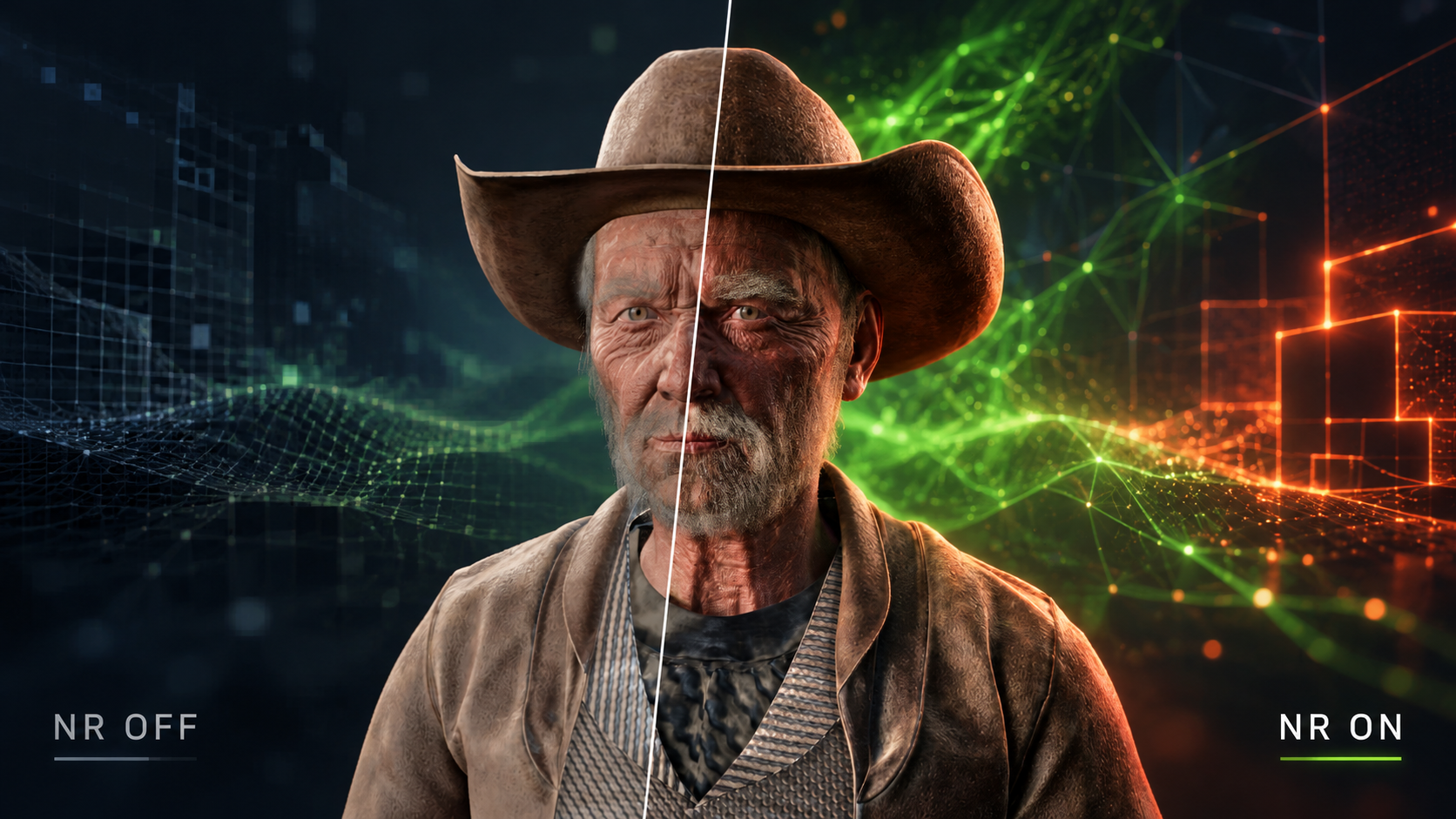
A key part of NVIDIA DLSS 5 has now been independently recreated in Vulkan, but this is not an open source replacement for the complete DLSS 5 stack. Developer MAAN has released OpenDLSS NR, an open source implementation of the 71 block Neural Rendering network found in DLSS NR build 310.8.0. The project can execute that network on a GeForce RTX 4070 SUPER in as little as 7.8 ms at 1920 × 1080 and also includes a separate WebGPU version that runs inside a browser. NVIDIA's proprietary model weights are not included, and the project does not recreate DLSS Super Resolution, Frame Generation, or NVIDIA's wider integration framework.

According to the OpenDLSS NR repository and the developer's technical demonstration, the implementation recreates the architecture and execution behavior of the DLSS 5 Neural Rendering network and is intended to reproduce NVIDIA reference output when supplied with the appropriate weights. The project uses approximately 141 MiB of model weights and includes tools for comparing intermediate results throughout the network. Those accuracy claims come from the project's own testing rather than independent NVIDIA certification. NVIDIA describes DLSS 5 Neural Rendering as a 3D guided generative rendering stage that processes an already rendered frame together with motion vectors, temporal information, and artistic controls to generate the final displayed image. Unlike DLSS Super Resolution, its primary purpose is not increasing resolution.
I reverse engineered and reimplemented DLSS 5's neural rendering in Vulkan, from the architecture down to the last rounding.
— MAAN (@maanalaolaqy) September 21, 2026
same input, same output as Nvidia's DLSS5, 7.8ms per 1080P on RTX 4070 super
code and docs : https://t.co/4IF4S7hv29
The native Vulkan version combines GLSL compute shaders with optimized PTX code capable of using NVIDIA Tensor Cores. In practical terms, these optimized GPU kernels handle the heavy matrix and attention workloads more efficiently than a generic implementation, which is why the native NVIDIA path delivers significantly lower execution times than the browser version.
| Resolution | RTX 4070 SUPER Network Time |
|---|---|
| 768 × 768 | 2.8 ms |
| 1920 × 1080 | 7.8 ms |
| 2560 × 1440 | 12.6 ms |
| 3840 × 2160 | 29.3 ms |
These measurements represent execution of the Neural Rendering network and are the minimum times recorded across 40 frames, not complete game frame times. They therefore should not be converted directly into expected gaming FPS. The result is still notable because NVIDIA currently limits official DLSS 5 support to GeForce RTX 50 Series hardware, although the company has already confirmed that official RTX 40 Series support is planned. The community had previously forced NVIDIA's leaked Neural Rendering runtime onto Ada Lovelace by replacing incompatible components, while OpenDLSS NR instead recreates the network execution path itself.
The WebGPU version demonstrates the same network through a more portable route. It operates without Tensor Cores, native FP8 support, or NVIDIA specific execution libraries and can run inside a compatible browser. MAAN reports approximately 72 ms for a 512 × 512 pass, compared with around 2.7 ms through the optimized native implementation at a similar workload. The browser version is therefore primarily a portability demonstration rather than a performance competitor. We have already seen a related experiment with DLSS 5 Neural Rendering reconstructed for Intel Arc 140V, where the network was mapped onto Intel XMX hardware through Vulkan instead of CUDA.
There are important limitations. OpenDLSS NR does not distribute NVIDIA's proprietary weights, so users must provide them separately, and the current project is a standalone implementation rather than a drop in mod for existing games. It includes a Filament based demonstration renderer with motion vectors and temporal feedback, but it does not reproduce the complete developer integration NVIDIA provides around masking, artistic controls, Super Resolution, or other DLSS features. The leaked DLSS 5 runtime was already spreading across games and RTX 40 Series GPUs, but OpenDLSS NR is technically different because it rebuilds the Neural Rendering network rather than wrapping NVIDIA's original runtime.
OpenDLSS NR is more interesting as a portability experiment than as an immediate gaming mod. The project shows that the DLSS 5 Neural Rendering network can be implemented independently from NVIDIA's original runtime while still targeting equivalent output when supplied with the same model data.
That does not make DLSS 5 an open technology. NVIDIA still controls the weights, official integration, optimization, and supported ecosystem. What OpenDLSS NR demonstrates is that the Neural Rendering workload itself can be mapped onto different compute environments, from optimized RTX hardware to Vulkan and even WebGPU.
If DLSS 5 style Neural Rendering can eventually run efficiently through Vulkan and WebGPU, should neural graphics models become more hardware independent?
