

OpenAI has demonstrated that artificial intelligence can significantly improve semiconductor development, revealing up to 14% gains in power, performance, and area (PPA) optimization across AMD's flagship GPU intellectual property. According to OpenAI's official technical report, published on November 18, 2026, its AI models achieved improvements beyond designs already extensively optimized by AMD engineers. Some of these changes have already been incorporated into a semiconductor design submitted for manufacturing, while others have entered AMD's production design files for future hardware generations.
The collaboration focuses on optimizing the underlying circuitry of modern processors rather than simply increasing clock speeds or adding more computing units. OpenAI's models analyze and rewrite SystemVerilog RTL, the hardware description code used to define how integrated circuits perform calculations, manage control operations, and transfer data. By identifying more efficient circuit arrangements, the models can reduce transistor logic requirements, improve timing, and potentially lower electricity consumption without changing the intended functionality. The company claims these optimizations represent approximately 1 year of conventional engineering progress completed in less than 5 months, with Synopsys electronic design automation tools used to verify circuit behavior and evaluate improvements.
The reported 14% PPA improvement applies to selected GPU design blocks rather than the performance of an entire graphics card. This distinction is important because improvements in circuit efficiency do not necessarily translate into equivalent gaming frame rate increases or overall GPU performance. Nevertheless, even relatively small improvements in power consumption, chip area, or operating frequency can become valuable when applied across complex semiconductor architectures. OpenAI also confirmed that AMD independently verified single digit percentage PPA improvements across important blocks of its upcoming flagship CPU architecture, demonstrating that the technology could benefit both graphics processors and conventional CPUs. However, AMD has not identified the exact commercial products receiving these optimizations.
OpenAI has also demonstrated similar improvements through its proprietary Jalapeño AI inference processor, where model generated optimizations reduced standard cell area by approximately 13% in the vector processing unit and 10% in the matrix unit. Individual arithmetic circuit modifications achieved approximately 15% area reductions, with some also improving processing latency. Unlike purely simulated results, OpenAI confirmed that the broader improvements were validated during physical silicon testing, providing stronger evidence that AI assisted semiconductor design can deliver practical manufacturing benefits.
The development also strengthens the existing relationship between AMD and OpenAI. Both companies previously announced a 6 GW AI infrastructure agreement involving multiple generations of AMD Instinct accelerators, beginning with the MI450 series. AMD has already been expanding its MI450 GPU deployments and Helios platform development, making improved semiconductor efficiency increasingly important as computing clusters grow in size and power requirements. Although the latest research concerns AMD's next generation GPU and CPU designs, OpenAI has not confirmed whether the optimizations are being incorporated specifically into MI450, future Instinct accelerators, or consumer Radeon products.
The companies are also extending AI assisted chip development through GPT Synopsys, a specialized model designed to work directly with professional semiconductor development tools. This collaboration aims to automate portions of circuit optimization, verification, and design analysis while maintaining human engineering oversight. The approach could accelerate processor development cycles and allow semiconductor manufacturers to explore more complex architectures without relying exclusively on traditional manual optimization methods.
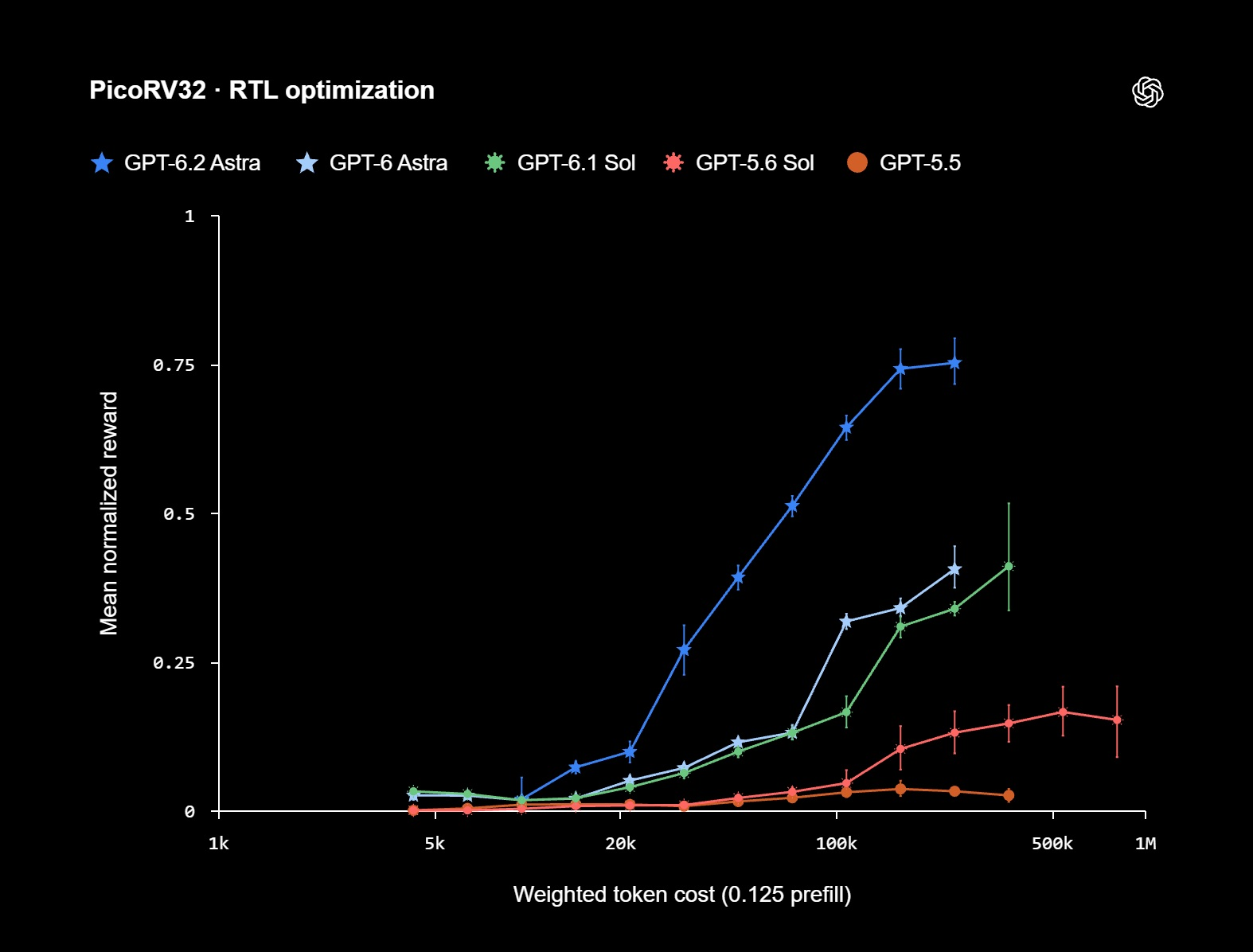
OpenAI's collaboration with AMD represents one of the more practical applications of artificial intelligence in hardware engineering. Rather than using AI exclusively to generate content or process information, the technology is now contributing directly to the development of more efficient processors. Achieving measurable improvements on circuits already optimized by experienced semiconductor engineers demonstrates considerable potential, particularly when those improvements can be integrated into actual manufacturing designs.
However, a 14% improvement in selected GPU circuitry should not be confused with a 14% increase in gaming performance. The actual benefits will depend on how AMD integrates these changes into complete processors, their manufacturing characteristics, and their resulting performance under real workloads.
For PC gamers and hardware enthusiasts, the biggest opportunity lies in improving performance per watt, reducing manufacturing complexity, and potentially lowering production costs. AI assisted engineering could help AMD develop more efficient Radeon graphics cards and Ryzen processors, although no consumer product improvements have been confirmed.
The challenge will be ensuring that these technological advances ultimately benefit consumers rather than remaining concentrated in expensive enterprise AI accelerators. More efficient manufacturing and processor designs should translate into better hardware availability, competitive pricing, and longer lasting products that users can fully own and control.
Do you think AI assisted semiconductor engineering will help AMD deliver more affordable and efficient gaming hardware, or will these improvements primarily benefit expensive enterprise AI accelerators?
