
NVIDIA RTX Spark PCs Launch This Fall With ASUS and MSI in First Wave

NVIDIA has confirmed that the first RTX Spark laptops and compact desktop computers will arrive during fall 2026, marking the company’s most significant expansion into the Windows PC processor market. ASUS and MSI will participate in the initial launch wave alongside Dell, HP, Lenovo, and Microsoft Surface, while Acer and Gigabyte systems are scheduled to follow later.
RTX Spark combines a Blackwell RTX GPU containing 6,144 CUDA cores with a 20 core NVIDIA Grace CPU connected through NVLink C2C. MediaTek collaborated with NVIDIA on the custom Arm CPU design, focusing on power efficiency, performance, and connectivity for slim Windows laptops and compact desktop computers. The platform provides up to 1 petaflop of AI performance and as much as 128 GB of unified memory shared between CPU and GPU resources.
NVIDIA is positioning RTX Spark as a premium platform for personal AI agents, local model execution, content creation, software development, and gaming. The company claims supported systems can run large language models containing as many as 120 billion parameters, process 90 GB 3D scenes, edit 12K video, generate 4K AI video, and play modern games at 1440p resolution above 100 frames per second using RTX technologies. Actual performance will depend on each manufacturer’s cooling design, power configuration, memory capacity, and software support.
ASUS has introduced RTX Spark versions of its ProArt P14 and ProArt P16 laptops alongside a compact ProArt Mini PC. The laptops feature ASUS Lumina Pro OLED displays, with the P16 offering a 4K 120 Hz panel and the P14 reaching 3K resolution. The Mini PC is designed for local generative AI and large model workloads, using up to 128 GB of unified memory with dynamic allocation between system and graphics resources.
The RTX Spark lineup is looking good. 😎
— NVIDIA RTX Spark (@NVIDIARTXSpark) July 22, 2026
Catch an early look at some incredible RTX Spark powered OEM laptops and desktops at SIGGRAPH this week.
📍 Stop by Booth 813 and say hello! pic.twitter.com/f85RtFjH8R
MSI will enter the market with the Prestige N16 Flip AI Plus, a premium convertible laptop featuring a 16 inch UHD Plus Tandem OLED display, a 99.9 Wh battery, touch support, and compatibility with the MSI Nano Pen. MSI is targeting creators, developers, and gamers who require local AI acceleration without moving to a traditional mobile workstation.
Microsoft is also developing the Surface Laptop Ultra and Surface RTX Spark Dev Box, while NVIDIA’s product page lists additional systems from Dell, HP, and Lenovo. Compact desktop models are planned across ASUS, Acer, Dell, Gigabyte, HP, Lenovo, and MSI, giving RTX Spark a considerably broader hardware ecosystem than a launch limited to only 2 manufacturers.
NVIDIA has already released an RTX Spark developer preview, allowing developers to begin preparing native Arm64 applications and testing software compatibility before retail hardware becomes available. Developers can begin this process using an existing Windows on Arm system without requiring RTX Spark hardware. Microsoft’s Prism translation layer will also help run existing 32 bit and 64 bit x86 applications, although native software will remain important for achieving the platform’s maximum performance and efficiency.
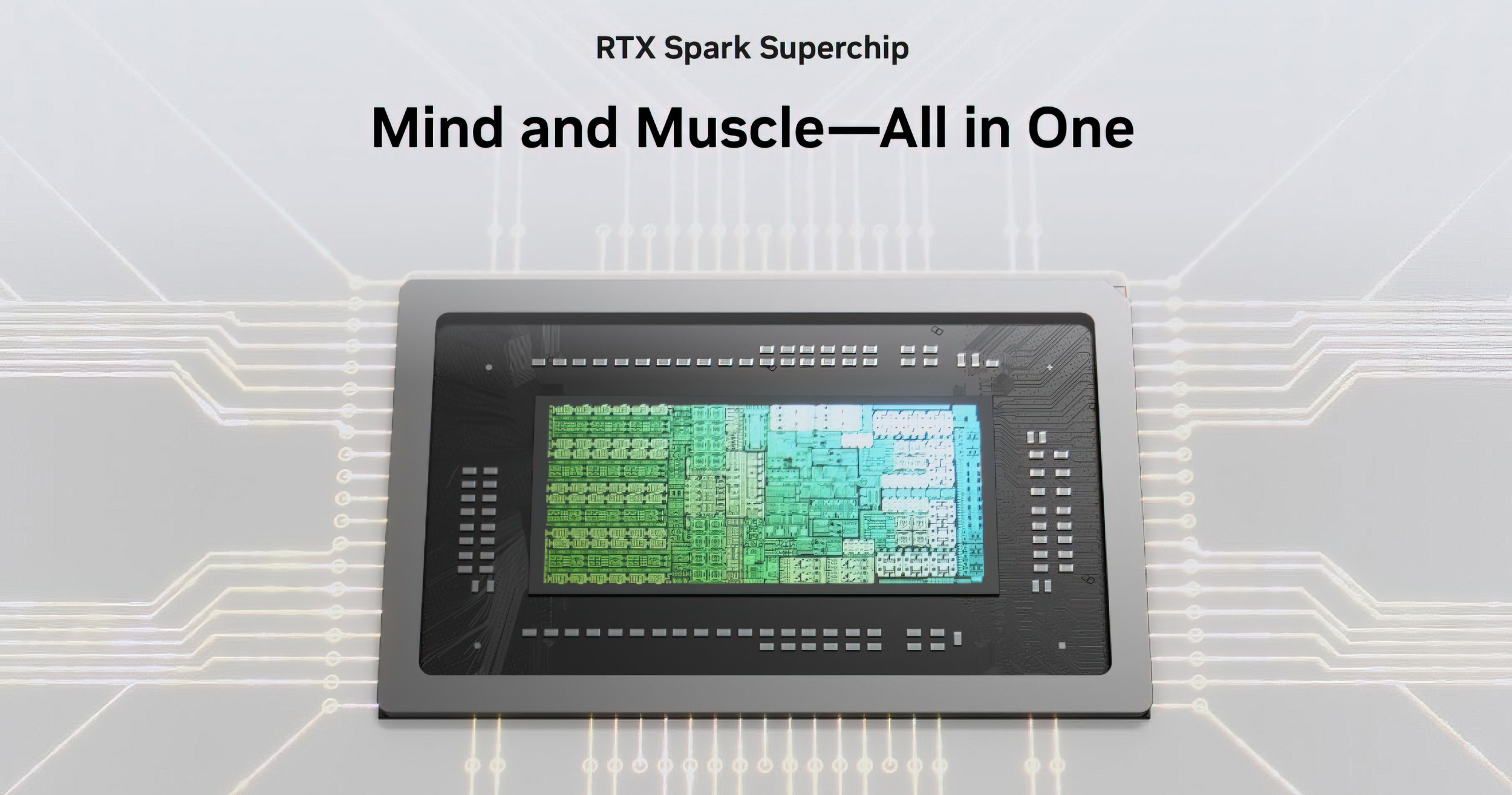
A Commercial Times Taiwan report expects the RTX Spark rollout to create additional business for Taiwanese cooling, power supply, and high speed connectivity manufacturers. More powerful local AI systems require substantial thermal management and memory capacity, potentially benefiting companies throughout the wider PC supply chain.
RTX Spark is not simply another mobile processor. NVIDIA is attempting to bring CUDA, Blackwell graphics, unified memory, local AI agents, and Windows gaming into a single Arm based platform that competes directly with premium processors from AMD, Intel, and Qualcomm.
The 128 GB unified memory architecture may become its most important advantage. Large local models are frequently limited by available graphics memory rather than raw processing performance, making a shared high capacity memory pool valuable for developers and creators. RTX Spark CPU design combines MediaTek influences to support sustained PC workloads.
The deciding factor will be software compatibility. NVIDIA already has a powerful developer ecosystem through CUDA and RTX, but Windows on Arm must deliver reliable drivers, native creative applications, strong gaming compatibility, and competitive battery life before RTX Spark can seriously challenge established x86 systems.
Would you consider buying an RTX Spark PC for local AI and gaming, or would Windows on Arm compatibility remain a concern?
