
NVIDIA Blackwell Next Support Appears in Linux 7.2 Kernel Work
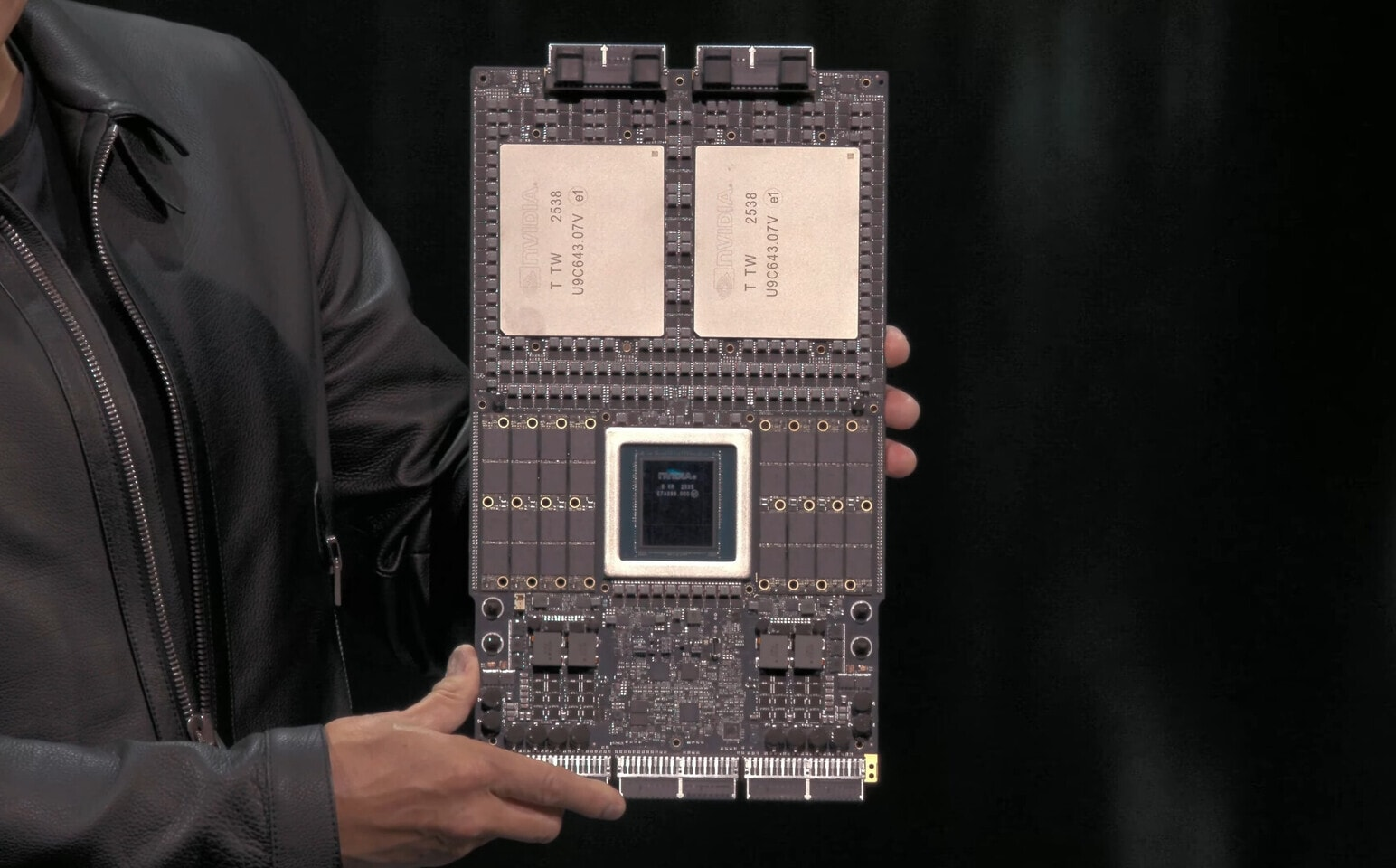
NVIDIA engineers are preparing Linux support for future data center GPU hardware, with the name Blackwell Next appearing inside updates submitted for the Linux 7.2 kernel cycle. The work does not reveal a new GeForce product or confirm a separate GPU architecture, but it shows NVIDIA preparing system level support before the hardware reaches public availability.
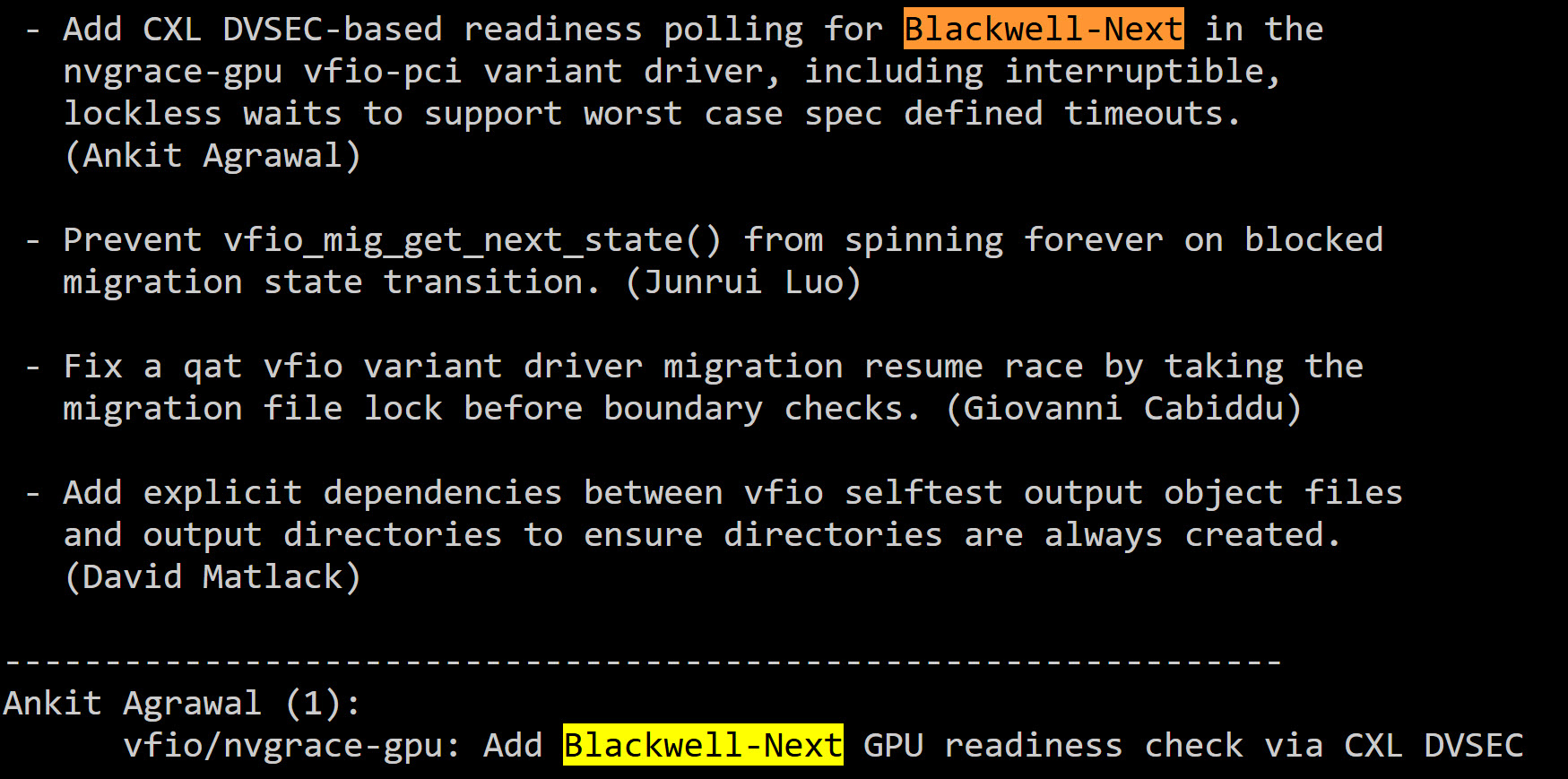
The reference was identified by Phoronix inside the VFIO subsystem updates for Linux 7.2. The patch modifies the nvgrace gpu VFIO PCI variant driver and adds a new readiness check based on the Compute Express Link Designated Vendor Specific Extended Capability, commonly shortened to CXL DVSEC.
The change allows the driver to determine when a future NVIDIA GPU is ready following initialization or reset. Existing Grace Blackwell systems use a readiness process tied to the GPU memory interface, while the hardware identified as Blackwell Next uses the CXL capability structure instead.
"Add CXL DVSEC based readiness polling for Blackwell Next in the nvgrace gpu vfio pci variant driver, including interruptible, lockless waits to support worst case specification defined timeouts."
— Linux VFIO pull request.
Readiness polling is a low level function, but it is important for reliability. A driver must confirm that GPU memory and related resources are available before allowing a virtual machine or application to access them. Attempting to use the device too early could cause failed initialization, memory access errors, or problems during virtualization and device assignment.
The patch also introduces interruptible waiting and support for unusually long hardware initialization periods. Discussion within the Linux kernel mailing list referenced a worst case CXL timeout of up to 256 seconds, compared with the shorter timeout used by the existing path. The final implementation was revised to make the waiting process more responsive and avoid locking the system while the device becomes ready.
VFIO is commonly used to give virtual machines direct access to PCI devices. This is especially valuable in cloud and AI environments where expensive GPUs are assigned to separate workloads, customers, or operating systems while maintaining isolation. Early VFIO support therefore suggests NVIDIA is preparing the new hardware for real data center deployment rather than only basic development testing.
The name Blackwell Next creates some uncertainty. NVIDIA currently sells Blackwell systems and has introduced Blackwell Ultra as a higher performance evolution. The company has also started full production of Rubin, which officially succeeds the Blackwell generation and will appear in systems during the second half of 2026.
However, the kernel patch does not confirm that Blackwell Next means Rubin. The code remains inside the nvgrace gpu driver associated with NVIDIA Grace CPU and Blackwell GPU systems. Rubin platforms instead introduce the Vera CPU, making it possible that Blackwell Next is an engineering name for another Grace compatible data center GPU or a broader internal hardware category.
The patch should therefore not be treated as evidence of an unannounced consumer graphics card. It contains no GeForce identifiers, gaming features, display support, or graphics architecture details. It is focused on CXL readiness, virtualization, and enterprise GPU initialization.
The timing still demonstrates how early Linux enablement now begins. Data center customers expect new NVIDIA hardware to work with virtualization platforms, cloud operating systems, security tools, and orchestration software immediately. Preparing kernel support before launch reduces the delay between receiving new systems and placing them into production.

NVIDIA is already moving quickly through its official AI roadmap with each rack combining 72 Rubin GPUs, 36 Vera CPUs, NVLink 6, BlueField 4, and next generation networking. Beyond Rubin, NVIDIA officially identified Feynman as its next major architecture during GTC 2026. The platform will include the Rosa CPU, BlueField 5, CX10 connectivity, and the Kyber scale up network.
The most important point is not the Blackwell Next name itself. The patch shows NVIDIA preparing virtualization and CXL behavior before deployment, reflecting how modern AI hardware requires coordinated support across silicon, firmware, operating systems, drivers, cloud platforms, and management software.
Linux 7.2 will not reveal the full specifications of NVIDIA’s future GPUs, but it provides another sign that development is progressing far ahead of public launches. Until NVIDIA explains the name, Blackwell Next should be viewed as an internal data center hardware reference rather than confirmation of Rubin, Feynman, or a future GeForce generation.
Do you think Blackwell Next refers to Blackwell Ultra, Rubin compatibility, or a separate NVIDIA data center product that has not yet been announced?
