
CoreWeave And Oracle Begin NVIDIA Vera Rubin NVL72 Validation As Agentic AI Enters Its Next Hardware Era
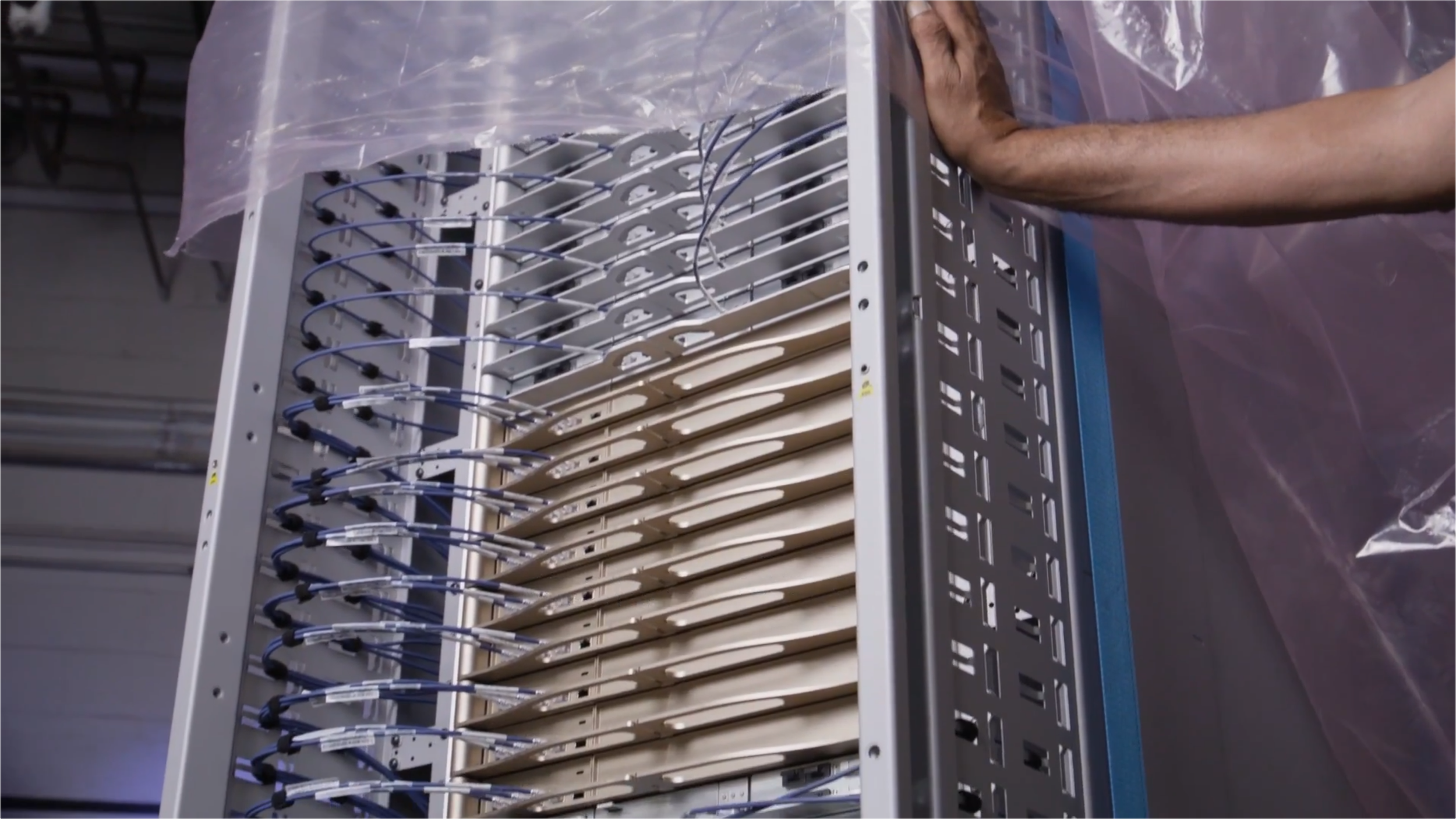
NVIDIA’s Vera Rubin platform is moving from roadmap promise into real cloud validation, with CoreWeave and Oracle among the first major AI cloud providers bringing up Vera Rubin NVL72 systems for next generation agentic AI infrastructure. CoreWeave confirmed through its official announcement that it has completed the industry first bring up and validation of NVIDIA Vera Rubin NVL72 on CoreWeave Cloud, while Oracle Cloud Infrastructure executive Mahesh Thiagarajan said through his official post that OCI is among the first cloud providers bringing up a Vera Rubin NVL72 rack for validation testing with NVIDIA.
The milestone matters because Vera Rubin is not simply NVIDIA’s next GPU generation. It is a full rack scale AI system designed around the workloads now defining the agentic AI era, where models do not only answer single prompts but reason across long sessions, call tools, retrieve information, manage context, and generate many more tokens per task. NVIDIA’s official Vera Rubin NVL72 platform page describes the system as a rack scale AI supercomputer built from 72 Rubin GPUs, 36 Vera CPUs, ConnectX 9 SuperNICs, BlueField 4 DPUs, NVLink 6, Quantum X800 InfiniBand, and Spectrum X Ethernet. This is not a server upgrade. It is a complete infrastructure stack.
CoreWeave’s validation is especially important because AI cloud providers are where these platforms become real products. The company says Vera Rubin NVL72 completed rigorous system level validation for the full rack scale architecture, with CoreWeave building new support layers around liquid cooling, unified rack control, tenant isolation, and cloud management. Its custom systems include Valvey, a software defined liquid cooling control layer, and Racky, a unified rack control appliance that turns power, cooling, and environmental telemetry into a standardized management surface. That matters because Vera Rubin class systems cannot be operated like traditional servers. They need rack level orchestration from day 1.
We are the first cloud provider to bring up and validate @nvidia Vera Rubin NVL72.
— CoreWeave (@CoreWeave) June 17, 2026
Not just the hardware. The full stack: software-defined liquid cooling (Valvey), unified rack control (Racky), CoreWeave Mission Control across the fleet.
Read the blog: https://t.co/hf7RJhV7oG pic.twitter.com/sEcmDQyN35
Each Vera Rubin NVL72 rack is designed for massive efficiency gains over Blackwell. NVIDIA says the platform can train mixture of experts models with 1 quarter the number of GPUs compared with GB200 NVL72 and deliver inference at 1 tenth the cost per million tokens for highly interactive reasoning workloads. It also targets up to 10 times more tokens per megawatt than GB200 NVL72, making power efficiency one of the biggest parts of the story. As AI agents become more expensive to run, the winning metric is no longer only peak FLOPS. It is how many useful agents, tool calls, reasoning steps, and tokens can be delivered inside a fixed power and cost envelope.
Oracle’s involvement shows that Vera Rubin is not limited to one early adopter. OCI has already been one of NVIDIA’s major cloud partners, and validating Vera Rubin NVL72 gives Oracle a path toward the next generation of AI superclusters as demand rises from enterprise customers, model labs, and cloud native AI developers. This also connects directly with
OCI continues to push the frontier of AI infrastructure. We are among the first cloud providers to bring up an @nvidia Vera Rubin NVL72 rack for validation testing, working closely with NVIDIA to deliver next-generation accelerated computing to customers at cloud scale.
— Mahesh Thiagarajan (@MThiagarajan_) June 10, 2026
Pic 1:… pic.twitter.com/sMc7m5RS2f
The timing also lines up with NVIDIA’s broader production ramp. NVIDIA announced that Vera Rubin is ramping into full production, with Taiwan’s top server makers and global supply chain partners manufacturing Vera Rubin based systems at scale. The company named major partners across servers, storage, networking, and infrastructure, including Dell, HPE, Lenovo, Supermicro, ASUS, Foxconn, GIGABYTE, Inventec, Pegatron, QCT, Wistron, and Wiwynn.
The system level story is also becoming more important than the chip level story. NVIDIA describes AI infrastructure as a full stack, and Vera Rubin makes that clearer than ever. The GPU is only one part of the AI factory. The Vera CPU handles data movement and host compute. NVLink 6 provides high speed scale up communication. BlueField 4 handles infrastructure services and tenant isolation. ConnectX 9, Quantum X800, and Spectrum X handle scale out networking. Co packaged optics and photonics reduce networking power. Liquid cooling and rack telemetry keep the platform operational at extreme density. CUDA X, NVIDIA AI Enterprise, NIM, and the software layer make the hardware usable at scale.
This is why Vera Rubin validation at CoreWeave and Oracle is a major moment for agentic AI. It shows that NVIDIA’s next platform is no longer only a keynote slide or a partner roadmap. Cloud providers are now physically bringing up the racks, testing the systems, validating the cooling, checking the networking, and preparing the operational model required to sell Vera Rubin capacity to AI customers. For model labs and enterprise AI teams, the real question will be how quickly these racks become available as cloud instances and how pricing compares with current Blackwell Ultra offerings.
For CoreWeave, early validation strengthens its reputation as one of NVIDIA’s most aggressive deployment partners. The company has already built much of its market identity around rapid access to the newest NVIDIA platforms, and being first to validate Vera Rubin NVL72 reinforces that position. For Oracle, early validation supports OCI’s push into extreme scale AI infrastructure and gives it another proof point as hyperscalers compete for frontier model customers. For NVIDIA, having both specialist AI cloud and enterprise cloud partners involved early helps prove that Vera Rubin is not limited to lab demonstrations. It is being prepared for real commercial environments.
The biggest takeaway is that the AI hardware race has moved beyond single GPU comparisons. Vera Rubin NVL72 is about rack scale economics, power per token, agents per megawatt, memory movement, liquid cooling, optical networking, and full stack orchestration. NVIDIA’s advantage is not only Rubin GPU performance. It is the way the company has wrapped CPUs, DPUs, networking, software, cooling, and cloud partnerships into one coordinated deployment model.
The next phase will be availability. Validation is the beginning, not the finish line. Customers will want to know when Vera Rubin capacity becomes generally available, how fast CoreWeave, Oracle, and other providers can scale deployments, what pricing looks like for agentic inference and training, and whether real world workloads match NVIDIA’s claimed efficiency gains. If the early validation phase transitions smoothly into production cloud capacity, Vera Rubin could become the hardware platform that defines the first major commercial wave of agentic AI infrastructure.
Do you think Vera Rubin NVL72 will make agentic AI economically scalable, or will power, cooling, and networking remain the real bottlenecks?
