
Mistbound Turns Guild Wars Into a Tactical Card Game Where Every Unit Can Move
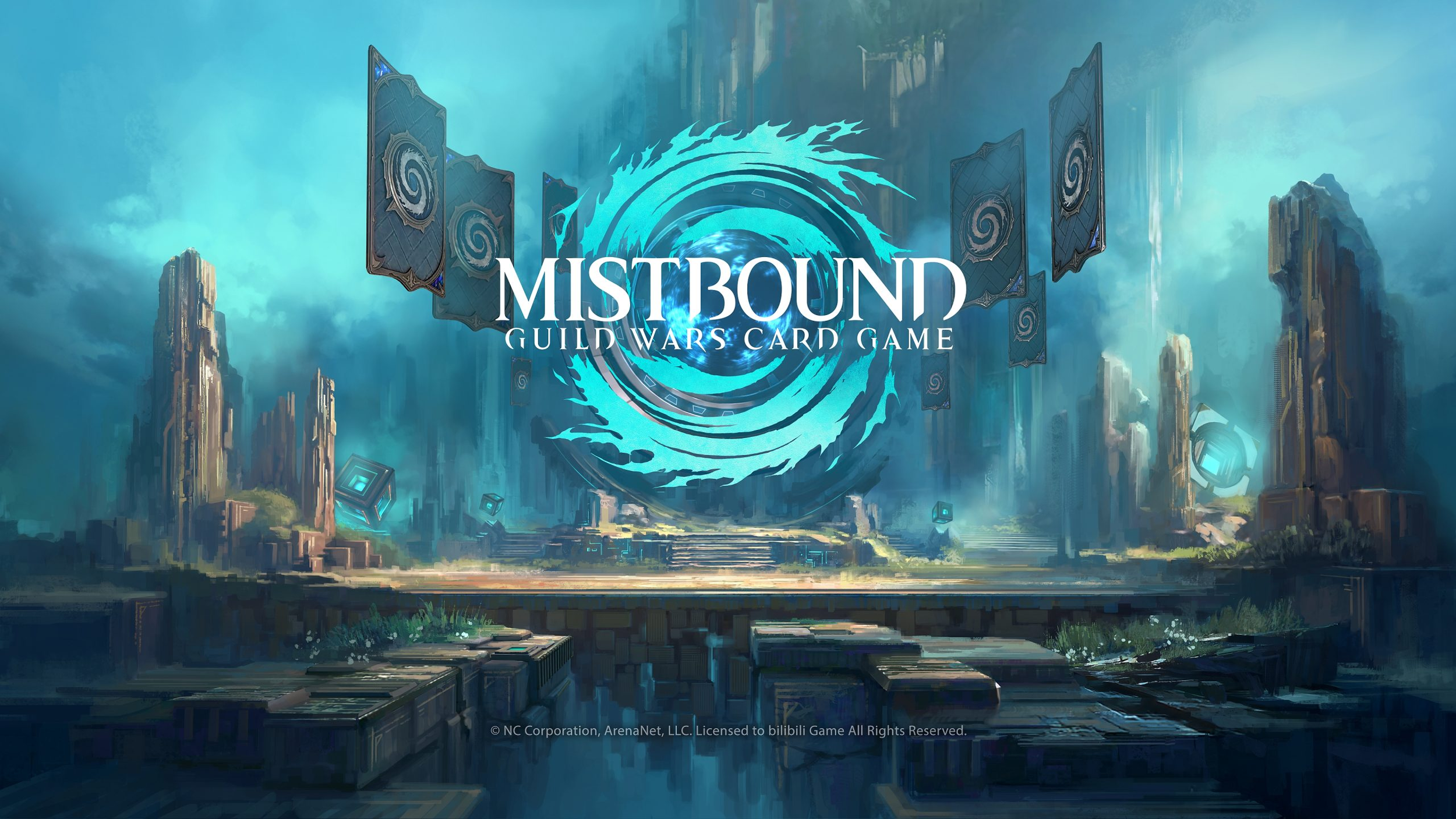
NC, ArenaNet, and bilibili have announced Mistbound, the first official collectible card game set within the Guild Wars universe. Developed by an NC team in Korea with consultation from ArenaNet, the new game transforms the characters, professions, creatures, and locations of Tyria into a competitive card battler built around a dynamic 5 x 3 tactical grid.
Unlike traditional card games where units remain fixed after entering the battlefield, Mistbound allows players to reposition cards during each turn. The system, called Dynamic Movement Gameplay, introduces spatial decisions normally associated with tactical strategy games. Units and commanders can move across the board, respond to enemy positioning, create flanking opportunities, and disrupt formations through pulls and knockbacks.
The official Mistbound website presents the project as a tactical card battler that combines deck construction and card collection with direct battlefield movement. The announcement trailer also shows familiar Guild Wars characters entering battles where positioning appears just as important as the cards selected before a match.
ArenaNet Studio Head Colin Johanson said the project draws inspiration from the card based foundations that helped shape the original Guild Wars skill system.
"We felt it was time to give Guild Wars fans a new way to play together, inspired by the card game roots of the franchise, where they could compete in a competitive PvP arena in a CCG game space. Having all those experiences they love of the characters and creatures and the sounds of the world of Tyria brought to life in CCG."
— Colin Johanson.
The comparison fits the history of the series. Although Guild Wars became known as an online role playing franchise, its original combat design asked players to build a limited skill bar from a much larger collection of abilities. Selecting and combining those skills shared some of the strategic thinking associated with deck construction, making a card game adaptation more natural than it may initially appear.
Mistbound Producer Hwang Sunwoo said the development team wanted to create depth through the battlefield rather than filling every card with increasingly complicated descriptions and conditional effects.
"One challenge with pursuing deep strategic combinations in card games is that the cards themselves can easily become overly complex. Rather than placing that complexity on individual cards, we wanted to express it through the battlefield. Our goal is to create a CCG that, over time, continues to offer more choices and gameplay possibilities, and one that players can enjoy for the long term."
— Hwang Sunwoo.
This approach could help Mistbound distinguish itself within a crowded digital card game market. Many established games create strategic depth through card interactions, keywords, resource systems, and long chains of effects. Mistbound instead places more emphasis on movement, spacing, attack directions, and control of the board.
Every card can reportedly move in multiple directions during a turn. This means a unit that appears safe in one position may become vulnerable after an enemy repositioning move, while commanders can move forward and take an active role in combat rather than remaining as passive support characters outside the battlefield.
Baek Hakjun, the Mistbound game designer better known as former professional Hearthstone competitor Kranich, described the system as accessible during the first matches but increasingly demanding as players learn to understand the entire board.
"At first, the game is approachable. Placing units on a battlefield and engaging in combat is intuitive, allowing new players to learn quickly. But as you continue playing, you begin focusing on the significance of every turn and every decision. Eventually, you discover the satisfaction of reading and controlling the entire board."
— Baek Hakjun.
Commanders will include recognizable characters from across the Guild Wars timeline. The current roster highlighted through the official website includes Marshal Trahearne, Countess Anise, and Knut Whitebear from Guild Wars 2, alongside Nika from Guild Wars Factions. Each commander will have distinct abilities, traits, and tactical strengths that can influence how a deck controls the battlefield.
Mistbound also takes inspiration from the 9 professions of Guild Wars 2. Players can combine commanders with different professions to create new tactical identities rather than locking every character into one fixed strategy. This could allow the same commander to support several deck styles depending on the selected profession, cards, and desired approach to movement.
The movement system introduces knockbacks, pulls, flanking, and shifting offensive and defensive positions. These mechanics could make board control more active than in conventional card battlers, where summoned units often remain in place until they attack or are removed. A pull could expose an important unit, a knockback could break a defensive formation, and a flanking move could create an opening for direct pressure.
The project will include both single player and multiplayer content, alongside community focused systems designed to support an evolving competitive environment. Original Guild Wars music contributors and returning character performances are also involved, helping Mistbound preserve the atmosphere and identity of Tyria despite moving into a completely different genre.
There is an important distinction surrounding development and availability. ArenaNet confirmed through its official Guild Wars 2 community announcement that selected developers served as consultants to help the NC team remain faithful to the world, lore, and visual identity of Guild Wars. ArenaNet did not develop Mistbound and will not publish it.
Mistbound will enter beta on PC in China later in 2026, with bilibili handling publishing. ArenaNet says the game will initially launch only in China, while a possible release in other territories will be considered after the team has gathered feedback and improved the experience. Promotional material also identifies PC and mobile as target platforms, but a global release date and complete platform schedule have not been announced.
This more limited initial rollout is different from presenting Mistbound as an immediately global release. The China beta will effectively serve as the first major test of whether the movement driven design can attract both Guild Wars players and established collectible card game audiences.
The announcement arrives during a much larger expansion of the Guild Wars franchise. ArenaNet recently revealed Guild Wars 3 during Summer Game Fest 2026, describing it as an attempt to address long standing problems within the modern MMO genre. ArenaNet has also confirmed that development will continue across Guild Wars 2 and Guild Wars Reforged. The studio outlined this commitment through its future of the Guild Wars franchise update, making it clear that Guild Wars 3 will not immediately replace the existing games.
Mistbound is more interesting than a simple franchise card game because movement could give it a genuine mechanical identity. The 5 x 3 battlefield, active commanders, profession combinations, pulls, knockbacks, and flanking systems create room for tactical decisions that go beyond playing the strongest available card.
The challenge will be proving that these systems remain readable and balanced as the card collection expands. Digital card games need a steady content pipeline, sustainable progression, careful monetization, and frequent balance updates. Mistbound may have a strong intellectual property and an experienced competitive designer, but entering a genre dominated by established games will still be difficult.
Its first China beta should reveal whether the battlefield movement system creates meaningful strategy or simply adds more complexity to a familiar card game structure. Should the game succeed, a wider release could give Guild Wars fans another way to visit Tyria while ArenaNet continues work on Guild Wars 2, Guild Wars Reforged, and Guild Wars 3.
Does Mistbound’s movement focused battlefield make it stand out from other card games, or would you rather see ArenaNet focus entirely on its MMO projects?
