

Microsoft is testing a new shader compiler for Xbox Series X and Series S that could improve graphics performance by up to 16% without requiring hardware upgrades. The experimental technology, known as AMD Compiler (ACO), brings optimizations originally developed for Linux gaming to Microsoft's consoles, potentially improving shader compilation efficiency and GPU performance.
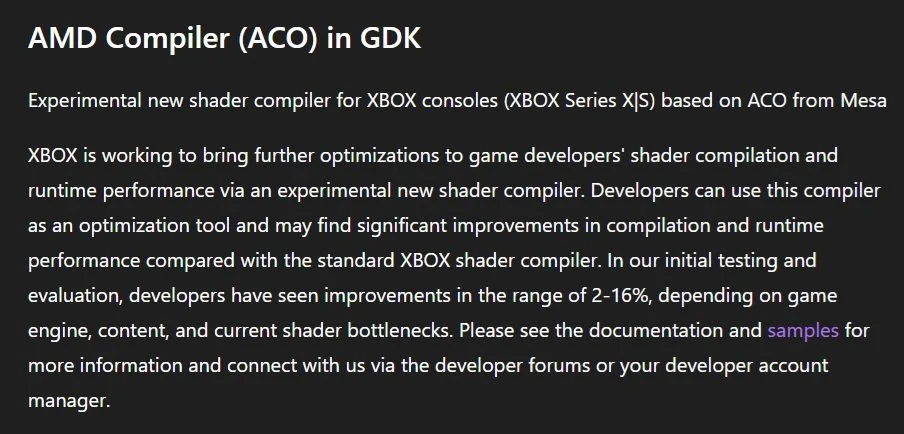
According to Microsoft's official Game Development Kit documentation, ACO was introduced in the October 2026 GDK as an experimental alternative to the standard Xbox shader compiler. Initial testing demonstrated performance improvements ranging from 2% to 16%, depending on the game engine, rendering workload, and existing shader bottlenecks.
Originally developed with support from Valve, ACO is an open source shader compiler integrated into the Mesa graphics stack and used by the RADV Vulkan driver on Linux, including the Steam Deck. Unlike traditional LLVM based compilers, ACO is specifically optimized for AMD's GCN and RDNA graphics architectures, making it particularly suitable for the RDNA 2 GPUs powering Xbox Series X and Series S.
The compiler converts shader instructions into optimized machine code, improving register allocation, instruction scheduling, and execution efficiency. These optimizations can reduce GPU overhead when processing lighting, shadows, reflections, and other demanding visual effects, potentially delivering smoother gameplay without additional computing resources.

However, the reported 16% improvement does not represent a guaranteed frame rate increase. Microsoft's early results cover shader compilation and runtime performance, with actual benefits depending on how individual games utilize GPU resources. Developers must also implement and evaluate the compiler within their projects, meaning existing Xbox games will not automatically receive these improvements through a system update.
The October GDK also introduces AMD FSR 4.1.2 support for Xbox Series X and Series S, bringing machine learning based upscaling to both consoles. Microsoft and AMD have optimized Full INT8 and Lite INT8 models for RDNA 2 hardware, with the lighter version requiring less than half the model storage and offering lower processing overhead.
Combined, ACO and FSR 4.1.2 could help developers extract additional performance from existing Xbox hardware while improving image quality and rendering efficiency. The developments also complement Microsoft's broader graphics strategy for Xbox Project Helix, which will emphasize neural rendering and advanced GPU optimization.
For now, ACO remains an experimental developer tool. Microsoft has not announced which commercial games will adopt the compiler or when players might begin experiencing improvements.Microsoft's decision to adopt ACO demonstrates how open source technology and software optimization can extend the capabilities of existing gaming hardware. Valve's contributions to Linux gaming continue influencing the broader industry, with technologies originally developed for PC gaming now benefiting console platforms.
More importantly, these improvements highlight why developers should prioritize efficient software rather than continuously increasing hardware requirements. A potential 16% performance improvement through compiler optimization is significant, particularly for Xbox Series S, where GPU resources are more limited.
With hardware prices increasing and new consoles becoming more expensive, extending the useful lifespan of existing systems should remain a priority. Gamers benefit more from better optimization and continued software support than from being pressured into unnecessary hardware upgrades.
Would you prefer Microsoft to continue optimizing Xbox Series X and Series S for better performance, or should the company focus its resources on the upcoming Project Helix console?
