
AMD FSR 4.1 Expands to Radeon RX 6000, Ryzen APUs and Xbox Series X/S With Vulkan Support Coming
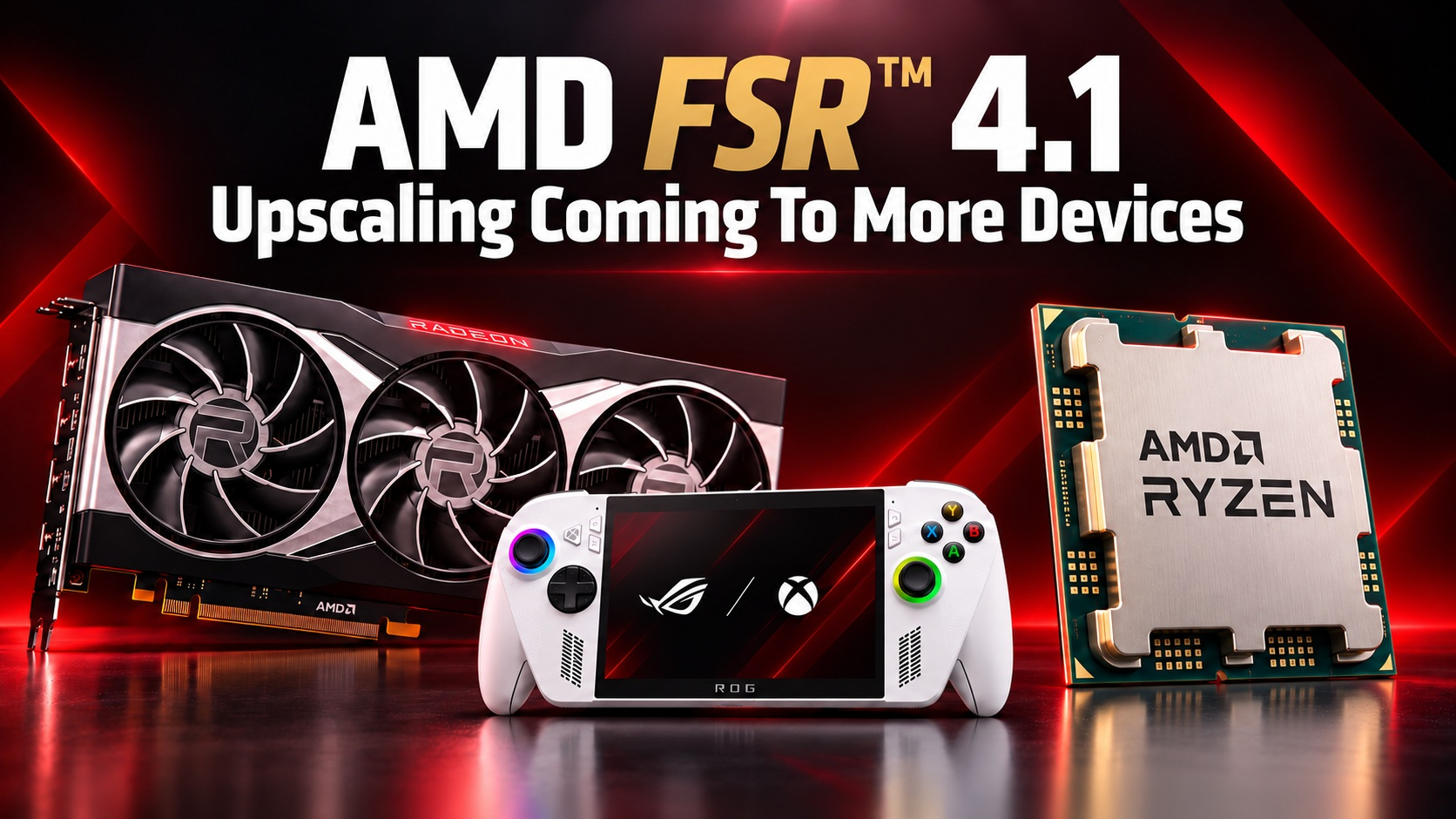
AMD has announced a major expansion of its FSR 4.1 upscaling technology, bringing machine learning image reconstruction to Radeon RX 6000 graphics cards, Ryzen APUs, gaming handhelds and Xbox Series X/S consoles. The update significantly expands hardware compatibility, allowing older RDNA 2 GPUs to benefit from improved image quality while giving Microsoft a new graphics solution to compete with Sony's PlayStation Spectral Super Resolution (PSSR) and Quick Spectral Super Resolution (QSSR) technologies.
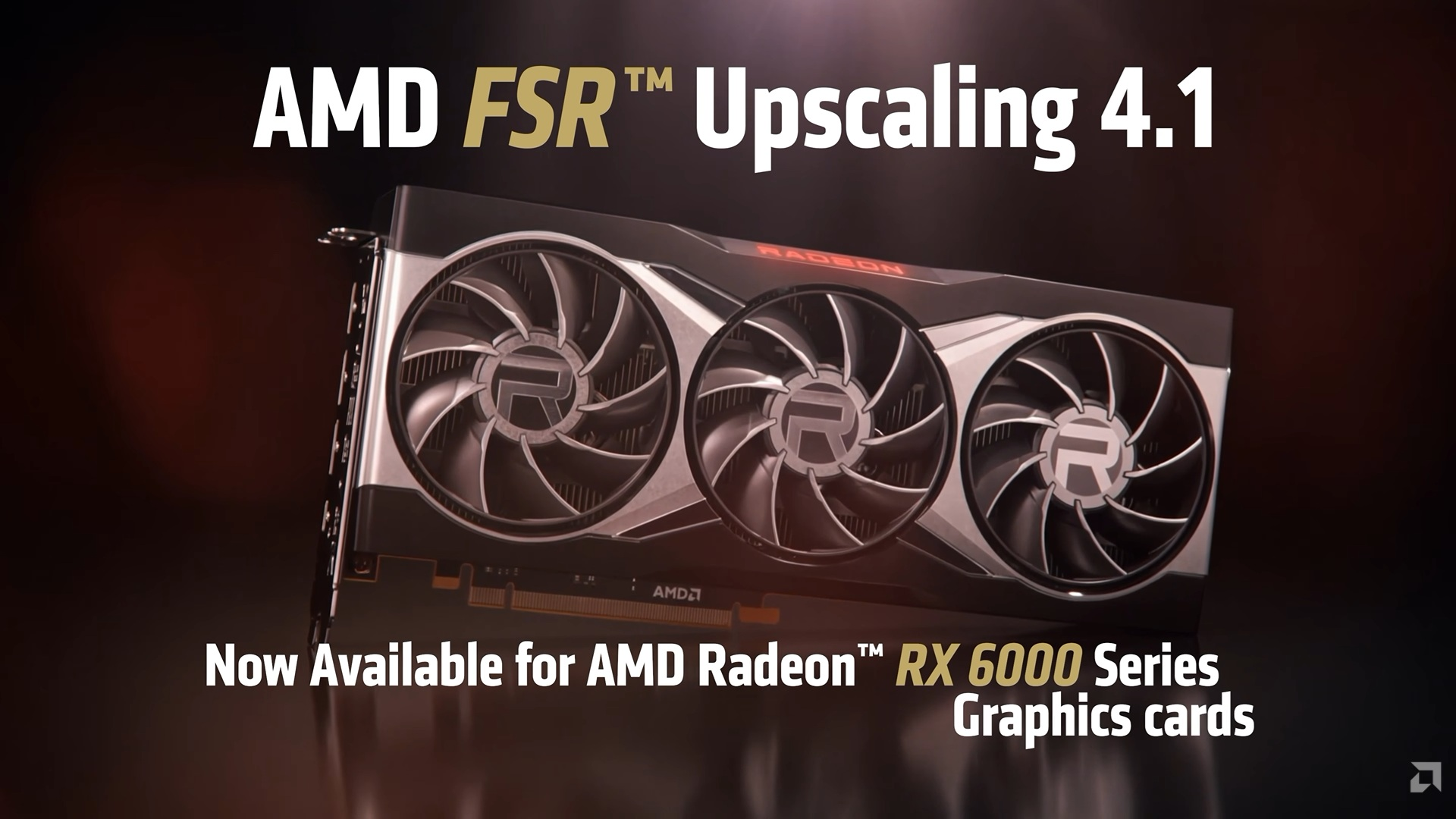
The announcement, detailed by AMD Senior Vice President Jack Huynh in an official presentation, confirms that FSR 4.1 support is now available for Radeon RX 6000 GPUs through AMD Software Adrenalin Edition 26.10.1. AMD has optimized its machine learning model and execution pipeline for RDNA 2 hardware, covering graphics cards ranging from the Radeon RX 6900 series to the entry level RX 6400. The company demonstrated FSR 4.1 running on a Radeon RX 6800 XT at 4K resolution, showcasing improved image reconstruction and visual clarity compared with previous FSR implementations.
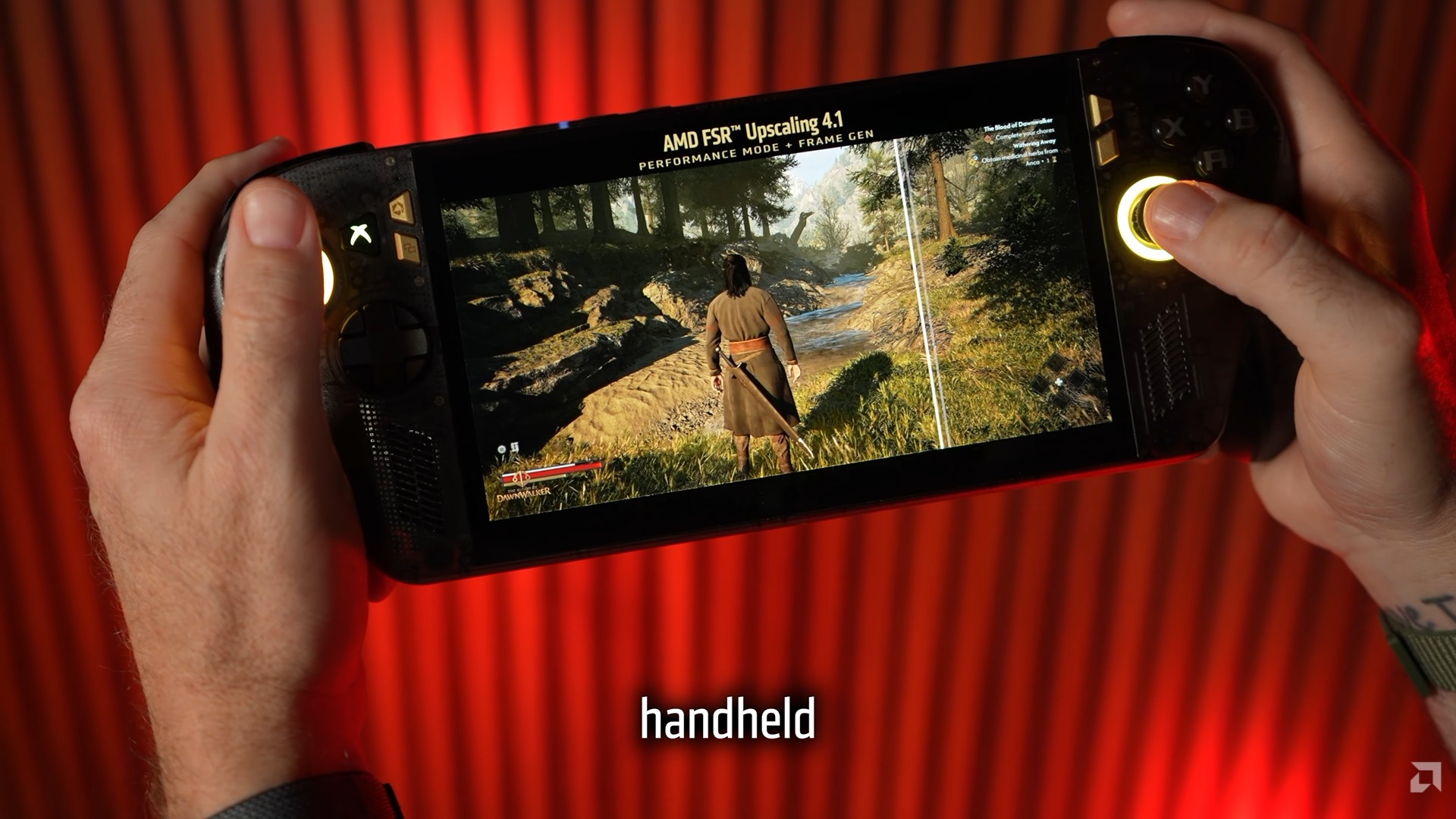
Support also extends to integrated Radeon graphics, including Ryzen AI Max 300 and 400 processors and Ryzen AI 9 300 and 400 series laptops. For gaming handhelds powered by Ryzen Z2 Extreme, Ryzen AI Z2 Extreme and Ryzen Z2 A processors, AMD developed a more efficient neural network model requiring less than half the resources of its previous implementation. According to AMD's demonstrations, the optimized model can deliver superior image quality compared with FSR 3.1 at higher quality presets while maintaining performance above 60 FPS in selected scenarios.
AMD FSR 4.1 Platform Compatibility
| Platform | Hardware | Availability |
|---|---|---|
| Desktop GPUs | Radeon RX 9000 / RX 7000 | Available |
| Desktop GPUs | Radeon RX 6000 | Available with driver 26.10.1 |
| Ryzen APUs | Ryzen AI Max 300 / 400 | Available |
| Ryzen Laptops | Ryzen AI 9 300 / 400 | Available |
| Gaming Handhelds | Ryzen Z2 Extreme / Z2 A families | Manufacturer updates |
| Xbox Consoles | Xbox Series X / Series S | Coming soon |
| Graphics API | Vulkan | Upcoming SDK support |
Handheld compatibility depends on manufacturer supplied drivers. Xbox availability dates have not been confirmed.
One of the most important developments is Microsoft's confirmation that FSR 4.1 is coming to Xbox Series X and Series S. Xbox Chief Technology Officer Scott Van Vliet explained that Microsoft and AMD have worked closely to optimize the technology, providing developers with additional tools to balance visual quality and performance across existing consoles and ASUS ROG Xbox handhelds.
The announcement follows Sony's introduction of Quick Spectral Super Resolution, a lighter version of PSSR designed for the standard PlayStation 5. Developed through Sony and AMD's Project Amethyst collaboration, QSSR uses a streamlined neural network to improve image detail and temporal stability without requiring the dedicated machine learning hardware available in PS5 Pro.
While FSR 4.1, PSSR and QSSR share technological foundations through AMD's research partnerships, their implementations are optimized for different hardware configurations. Xbox Series S could particularly benefit from improved reconstruction techniques, allowing developers to pursue higher output resolutions without relying exclusively on more demanding native rendering. However, direct comparisons between Xbox and PlayStation will depend on individual game implementations, rendering resolutions and performance overhead.
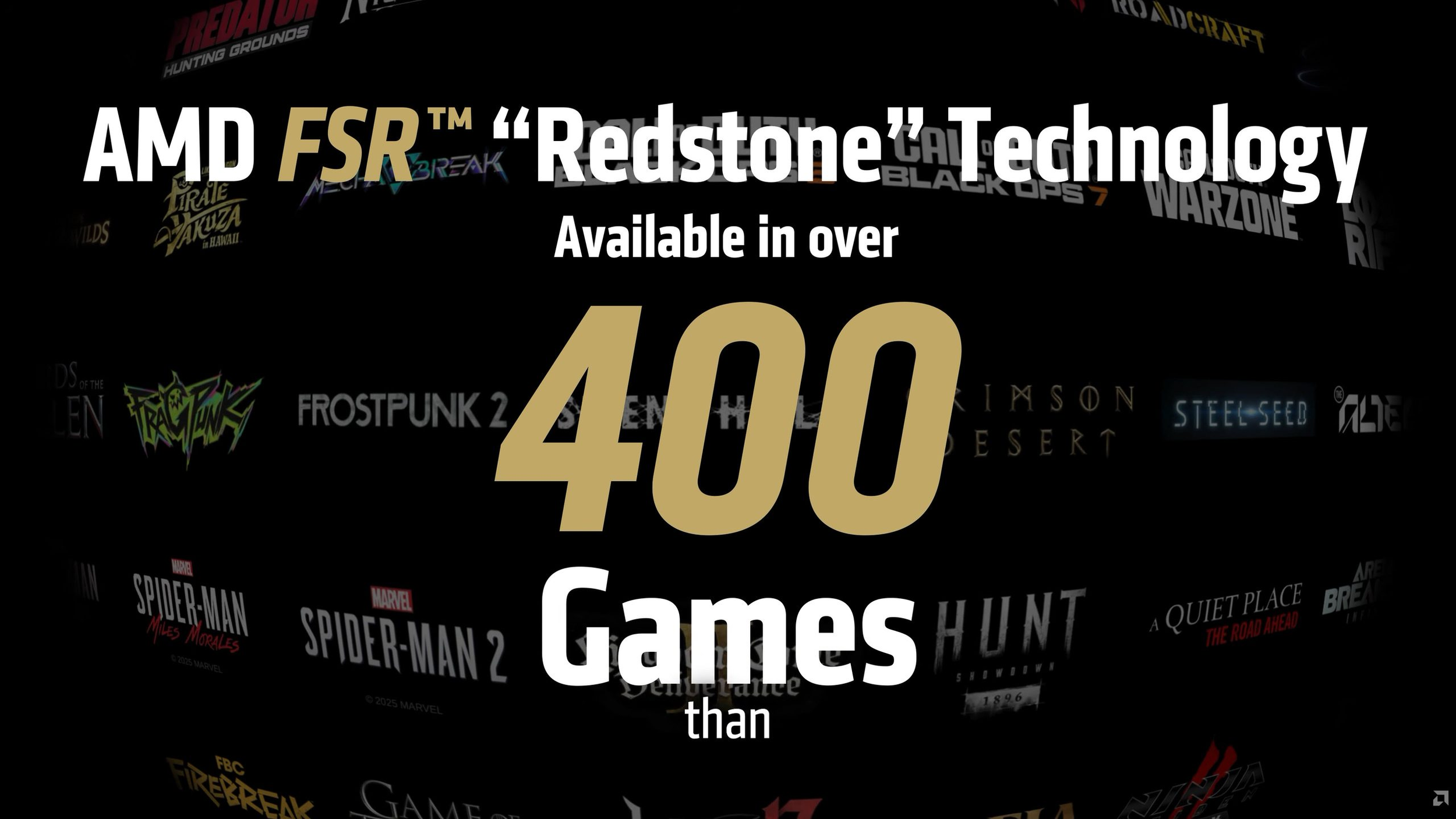
AMD also confirmed that its next generation FSR Diamond technology will play a role in Microsoft's upcoming Project Helix console, extending the partnership beyond current Xbox hardware. Meanwhile, FSR Redstone now supports more than 400 games on Radeon RX 9000 graphics cards, with additional improvements planned for frame generation pacing and Ray Regeneration.
Another significant addition is upcoming Vulkan support through AMD's FSR SDK 2.4. This expansion could make advanced FSR upscaling more accessible to Vulkan based games and Linux gaming environments, where technologies such as Intel XeSS acceleration through Valve Proton are also receiving development attention. Although the Steam Deck has not been officially included in AMD's compatibility announcement, the combination of RDNA 2 optimizations and Vulkan support could create additional opportunities for portable Linux gaming devices.
AMD's decision to bring FSR 4.1 to older Radeon GPUs and current generation consoles demonstrates how software optimization can extend hardware relevance without requiring expensive upgrades. The Radeon RX 6000 series stands to gain substantially, especially as modern games become increasingly dependent on advanced reconstruction techniques to maintain acceptable image quality and performance.
For Xbox, FSR 4.1 represents an important technological upgrade, particularly for Series S, where limited GPU resources make efficient upscaling essential. However, the real challenge will be developer adoption and whether Microsoft's implementation can compete with Sony's specialized PSSR and QSSR solutions. With Vulkan compatibility approaching and FSR Diamond already planned for Project Helix, AMD is positioning its graphics technology as a foundation spanning PC, console and handheld gaming.
Do you think FSR 4.1 can close the image quality gap between Xbox and PlayStation, or will Sony's PSSR and QSSR technologies maintain their advantage? And if you own a Radeon RX 6000 GPU, are you planning to test the update?
