
Microsoft is introducing significant memory optimizations for Windows 11, claiming that computers equipped with just 8GB of RAM can now deliver up to 40% faster multitasking and 20% better responsiveness. The announcement arrives alongside a reported AI PC roadmap covering systems with 8GB to more than 128GB of memory, while an independent developer has demonstrated Windows 11 running on an extraordinary 128MB of RAM. Together, these developments highlight 2 competing priorities in modern computing: reducing the resources required by everyday software while preparing increasingly powerful PCs for demanding local AI workloads.
In a November 3 announcement on the Windows Experience Blog, Microsoft Executive Vice President Pavan Davuluri detailed improvements to memory compression, application responsiveness, and background resource management. The company claims Windows 11 can now keep up to 2GB more active application data in physical memory rather than transferring it to slower storage, reducing delays when returning to previously opened applications and browser tabs.
Microsoft's internal testing recorded up to 40% faster completion times during a multitasking scenario involving 20 Microsoft Edge tabs, 4K video playback, large Office documents, Outlook, and File Explorer. The test used the same 8GB HP OmniBook 3 equipped with a Snapdragon X Plus processor across different Windows builds. The improvement is therefore specific to that workload and should not be interpreted as a 40% performance increase across every application or PC.
Additional optimizations include reducing committed memory growth by up to 900MB during Microsoft's productivity tests, loading Widgets only when opened on systems with 8GB or less, and putting inactive Edge tabs to sleep after 15 minutes instead of 2 hours. Windows also temporarily prioritizes user interactions over background activities such as search indexing, improving responsiveness when launching applications or navigating the interface.
These changes build upon Microsoft's previously announced Windows 11 memory optimization initiative, which identified 8GB systems as an important development priority amid increasing memory costs. The latest improvements are available through Windows 11 version 26H2, build 26300.9818 or later, although some application improvements also require updated Microsoft software.
However, Microsoft's efforts to make Windows more efficient are arriving alongside an increasingly ambitious artificial intelligence strategy. A reported Windows AI PC roadmap shared by hardware leaker HXL outlines 4 hardware categories, beginning with conventional 8GB computers and extending to personal supercomputers equipped with at least 128GB of memory. The presentation aligns with Microsoft's official hybrid intelligence strategy, which combines local AI processing with cloud resources depending on workload requirements. However, Microsoft has not independently published or confirmed every specification shown in the circulated roadmap.
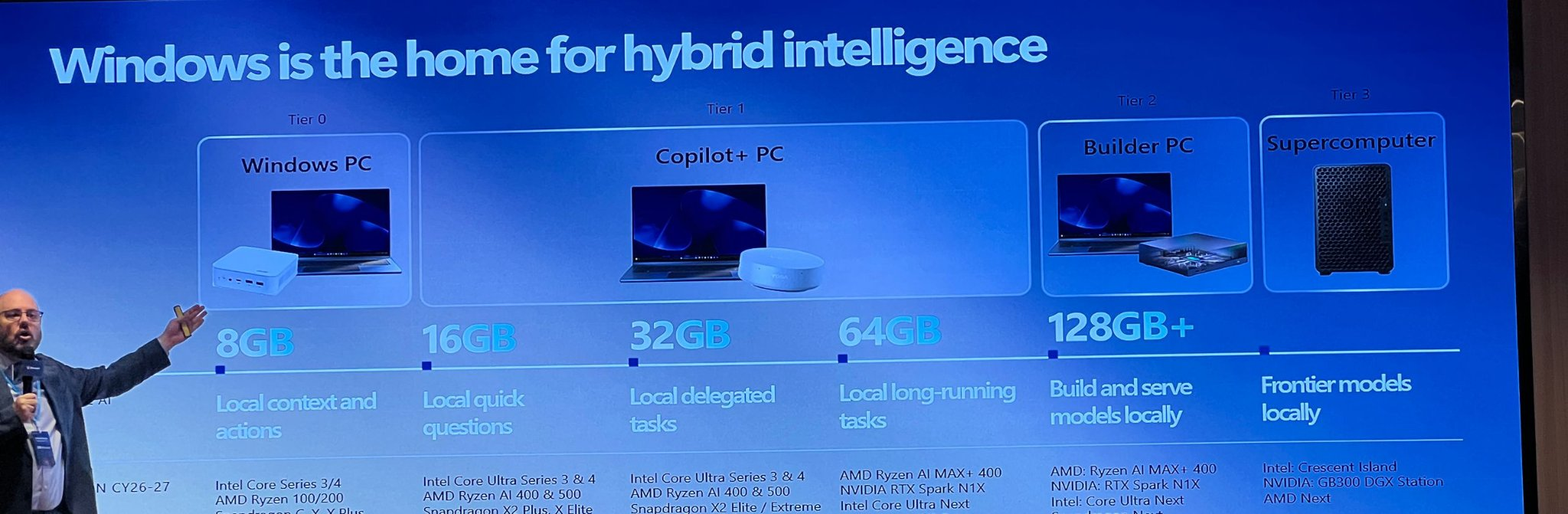
Windows 11 and AI PC Memory Categories
| Category | Memory | Intended Use |
|---|---|---|
| Windows 11 Minimum | 4GB | Official minimum installation requirement |
| Tier 0 Windows PC | 8GB | Everyday computing and basic AI assistance |
| Tier 1 Copilot+ PC | 16GB to 64GB | Advanced AI features and supported local AI workloads |
| Tier 2 Builder PC | Varies by configuration | Local AI development, model execution, and professional workloads |
| Tier 3 Personal Supercomputer | 128GB+ | Large AI models, advanced inference, and research |
The 4GB Windows minimum and Copilot+ requirements are official Microsoft specifications. The Tier 0 through Tier 3 classifications come from a circulated roadmap slide and should be treated as provisional.
The reported roadmap includes future processors such as Intel's Core Ultra Series 4 Nova Lake and AMD's Ryzen AI 500 Medusa Point, alongside powerful systems using NVIDIA RTX Spark, AMD Ryzen AI MAX, and Intel Crescent Island technology. Importantly, Microsoft's official Copilot+ PC specifications still require at least 16GB of RAM, 256GB of storage, and a compatible neural processing unit delivering 40 TOPS or more. An 8GB Windows computer may support cloud assisted AI or lightweight local workloads, but it does not automatically qualify as a Copilot+ PC.
The contrast becomes even more interesting following an experiment by NTDEV, the developer behind Tiny11. In a recent demonstration on YouTube, NTDEV managed to boot a heavily modified version of Windows 11 26H2 using only 128MB of RAM, approximately 32 times less than Microsoft's official 4GB minimum requirement. The experimental installation successfully accessed the desktop, Start menu, File Explorer, and classic Notepad application, although performance was extremely slow.
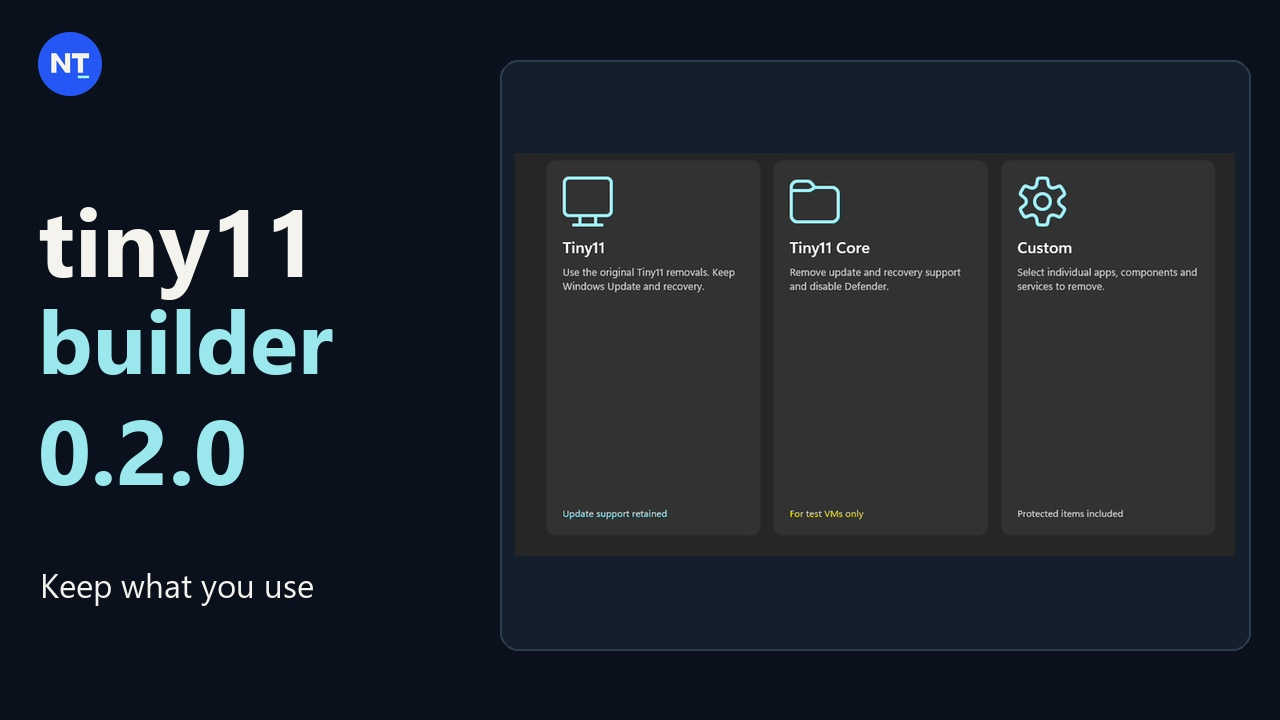
The demonstration does not establish that Windows 11 can realistically operate on 128MB of RAM for everyday computing. Achieving this configuration required extensive modifications and removal of operating system components, making it unsuitable for normal workloads. Nevertheless, the experiment demonstrates how dramatically the operating system's resource footprint can change when background functionality and nonessential components are removed. NTDEV's Tiny11 Builder project provides a more practical framework for creating customized Windows installations, although aggressive modifications can compromise compatibility, updates, and security.
These developments illustrate an important distinction between minimum operating system requirements and practical hardware recommendations. Windows 11 may technically require only 4GB of RAM, and Microsoft may have improved its experience on 8GB systems, but modern gaming, content creation, and local AI applications can still benefit substantially from 16GB, 32GB, or more memory depending on their workloads.
Microsoft's renewed focus on memory efficiency is a positive development, especially as the global DRAM shortage continues affecting PC builders, gamers, and consumers. Operating systems should become more efficient with each generation rather than continuously requiring additional hardware simply to maintain the same everyday experience.
However, better optimization should not be confused with making 8GB the ideal memory capacity for modern PCs. An 8GB laptop can be perfectly reasonable for browsing, office applications, and basic productivity, but it remains restrictive for demanding multitasking, modern games, and local AI models.
The reported AI roadmap also reinforces the importance of memory ownership. Microsoft recognizes that serious local AI processing requires substantial hardware resources, with high end systems reaching 128GB and beyond. This is particularly relevant as major AI companies continue competing for DRAM production capacity, contributing to pressure on consumer memory prices.
NTDEV's experiment adds another perspective. Running Windows 11 on 128MB is not practical, but it raises an important question about how much system memory is consumed by essential operating system functionality compared with optional services and background features.
A faster PC should not always require buying more RAM, and owning powerful hardware should not require surrendering control over how it is used.
Do you think 8GB of RAM is still acceptable for Windows 11 in 2026, or should 16GB become the standard minimum as gaming and local AI workloads continue growing?
