
Kojima Says OD Will Push Horror Beyond Its Limits as Todd Howard Updates TES VI and Praises Marvel’s Blade
Xbox has offered new updates on 3 of its most mysterious upcoming games, with Hideo Kojima discussing the extreme horror ambitions behind OD, Todd Howard confirming that The Elder Scrolls VI has become Bethesda Game Studios’ largest active project, and Arkane Lyon receiving fresh praise for its work on Marvel’s Blade.
The comments arrived through an extensive Entertainment Weekly feature celebrating 25 years of Xbox, which also explored Microsoft’s growing interest in film, television, new hardware, and different ways of bringing its franchises to larger audiences. While none of the 3 games received a release date, the interviews provide a clearer picture of where Xbox’s most ambitious projects currently stand.
The Elder Scrolls VI remains the largest name among them. Bethesda first announced the game in 2018 with a short teaser, but the studio spent the following years completing Starfield and supporting Fallout 76 before shifting most of its development resources toward the next chapter in the Elder Scrolls series.
"TES VI is our biggest project right now."
— Todd Howard.
Howard confirmed that the majority of Bethesda Game Studios is now focused on the game and acknowledged the enormous pressure surrounding it. The Elder Scrolls V: Skyrim launched in 2011 and became one of the most influential role playing games ever released, meaning the next entry must satisfy players who have been waiting for well over a decade while also modernizing the freedom and exploration that define the series.
Matt Booty said the game looked impressive but explained that Bethesda and Xbox wanted to wait until the correct moment before providing a proper public reveal. Howard’s latest comments reinforce that development has moved well beyond the early concept stage, even if the studio is not ready to show the world, setting, gameplay systems, or final platforms.
The greatest challenge for Bethesda will be delivering a game that feels like a genuine generational advancement rather than another familiar open world supported mainly by a larger map. Players expect deeper characters, more reactive cities, stronger exploration, improved combat, better artificial intelligence, and a world capable of responding more naturally to their decisions. Howard’s statement that Bethesda must get the game right shows that the studio understands the weight attached to the project, but it also suggests the company will not rush into another early marketing cycle simply to reassure impatient fans.
Howard also provided a small but meaningful update on Marvel’s Blade. The game is being developed by Arkane Lyon in collaboration with Bethesda Softworks and Marvel Games as a mature single player third person adventure set in Paris. Arkane has revealed little since the original announcement and early concept artwork, leaving fans to wonder how the studio’s immersive design philosophy will translate into a superhero action game.
"They are doing a really, really great job."
— Todd Howard.
Howard said he had seen new material from the project on May 21 but was not allowed to reveal when the public would see more. His enthusiasm does not provide new gameplay details, but it offers reassurance that Arkane Lyon continues making progress on one of the most important projects in Bethesda’s wider portfolio.
Marvel’s Blade could be an ideal match for Arkane. The studio is known for creating dense environments that encourage experimentation, stealth, environmental observation, and multiple solutions to problems. Blade’s combination of human and vampire abilities could support several approaches to combat and traversal, while Paris gives Arkane a familiar cultural and architectural foundation for another carefully designed urban world.
The update also arrives during serious uncertainty across Xbox and ZeniMax, with Arkane Lyon also appearing in wider speculation surrounding Microsoft’s restructuring. Howard’s praise is encouraging, but it should not be treated as confirmation that the studio is protected from every possible corporate decision. Until Microsoft provides a formal update, Blade’s development progress and Arkane’s long term position remain separate questions.
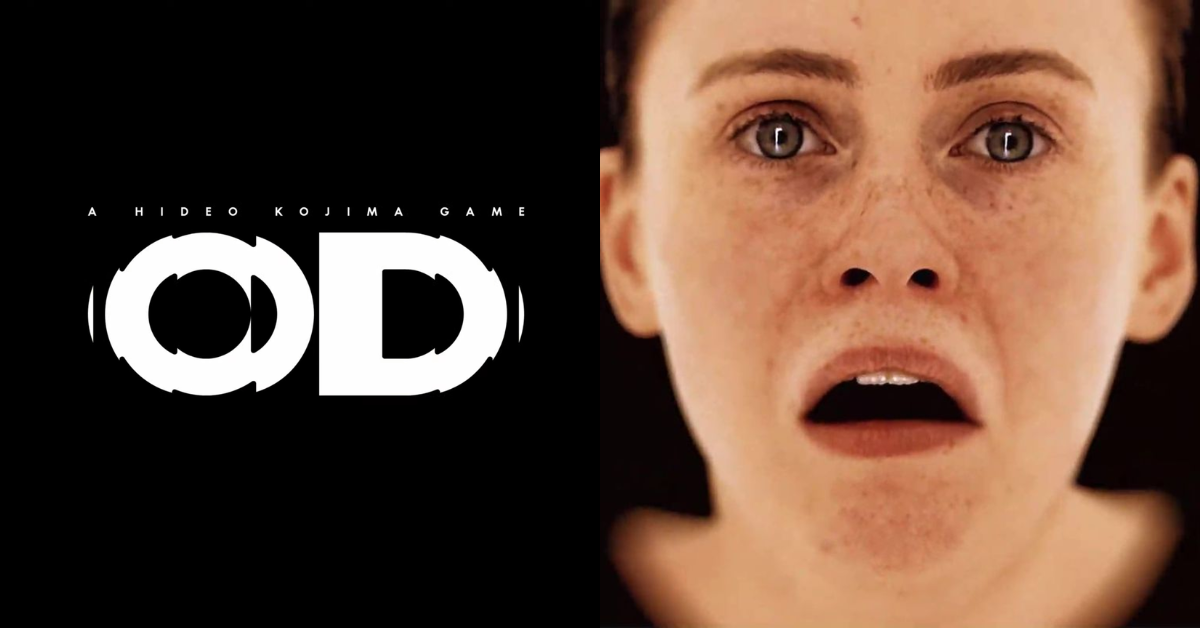
OD appears to be the strangest and most experimental of the 3 projects. Kojima Productions is developing the game with Xbox Game Studios, while filmmaker Jordan Peele is involved alongside Kojima and other unnamed creative partners. Sophia Lillis, Hunter Schafer, and Udo Kier were announced as its leading performers, with the project designed to blur the boundaries between games and film while testing how much fear a player can tolerate.
Kojima revealed that the original concept existed while he was still developing the first Death Stranding. He worked on the idea independently and later presented it to established companies and newer technology businesses, but most of them reportedly struggled to understand how the proposed system could work. Former Xbox leader Phil Spencer was one of the few executives willing to support the concept.
"I wanted to go beyond the limit of scariness."
— Hideo Kojima.
The title OD refers to the idea of overdosing on fear. Kojima wants the single player experience to become more frightening than conventional horror games, but he is also aware that pushing players too far could cause them to stop playing entirely. To address that problem, he has created a system intended to help frightened players continue without simply removing the horror.
Kojima refused to explain the system because revealing its operation would expose too much of the central concept. It could involve another person, an unusual interaction method, dynamic difficulty, emotional monitoring, or a completely different mechanic, but every possible explanation remains speculation until Kojima Productions shows it directly.
That mystery may be OD’s greatest strength. The project is not being described as another survival horror game with familiar combat, limited resources, and scripted scares. Kojima is instead presenting it as a new kind of interactive system built around fear itself, which suggests the player’s reactions may be as important as the events happening on screen.
Official information remains deliberately limited. Kojima Productions has described OD as an experience that tests the player’s fear threshold, while the later OD Knock teaser focused on a woman lighting candles as increasingly disturbing sounds and images appeared around her. Filming has now begun with the actors, although Udo Kier died in November 2025 after his digital scan was completed and before the planned performance shoot could take place. Kojima Productions has not explained how his character will be handled in the final game.
We also covered Kojima’s wider approach to technology in his comments about artificial intelligence and creative control. Kojima has repeatedly shown interest in using new systems to deepen interaction rather than replace human creativity, and OD may become one of the clearest examples of that philosophy if its hidden mechanic genuinely changes how players experience fear.
The 3 updates highlight very different parts of Xbox’s future. The Elder Scrolls VI represents a massive established franchise carrying expectations built across 15 years. Marvel’s Blade represents a respected studio applying its design identity to a globally recognized character. OD represents the riskier side of Xbox publishing, where the platform supports an idea that other companies considered too strange or difficult to understand.
For us at Duck IT, OD is the most intriguing because its promise depends on a mechanic Kojima cannot explain without ruining it. The Elder Scrolls VI carries the greatest commercial and cultural pressure, while Marvel’s Blade may become one of the most important tests of Arkane Lyon’s future. All 3 projects could help define Xbox’s next era, but none can rely on reputation alone.
Xbox needs The Elder Scrolls VI to prove Bethesda can still define the open world role playing genre, Blade to prove its studios can successfully expand major licensed properties, and OD to prove that experimental projects still have a place inside a company increasingly focused on financial discipline and major franchises.
None of the games currently has a confirmed release date. That means fans should resist assigning unofficial windows based only on rumors or general development estimates. The new comments show progress and creative confidence, but they do not confirm that any of the 3 projects is approaching launch.
Which Xbox project interests you most right now: Kojima’s OD, The Elder Scrolls VI, or Arkane Lyon’s Marvel’s Blade?
