
Jensen Huang’s Fried Chicken Diplomacy Highlights How NVIDIA Is Locking Down HBM4 and SOCAMM Supply
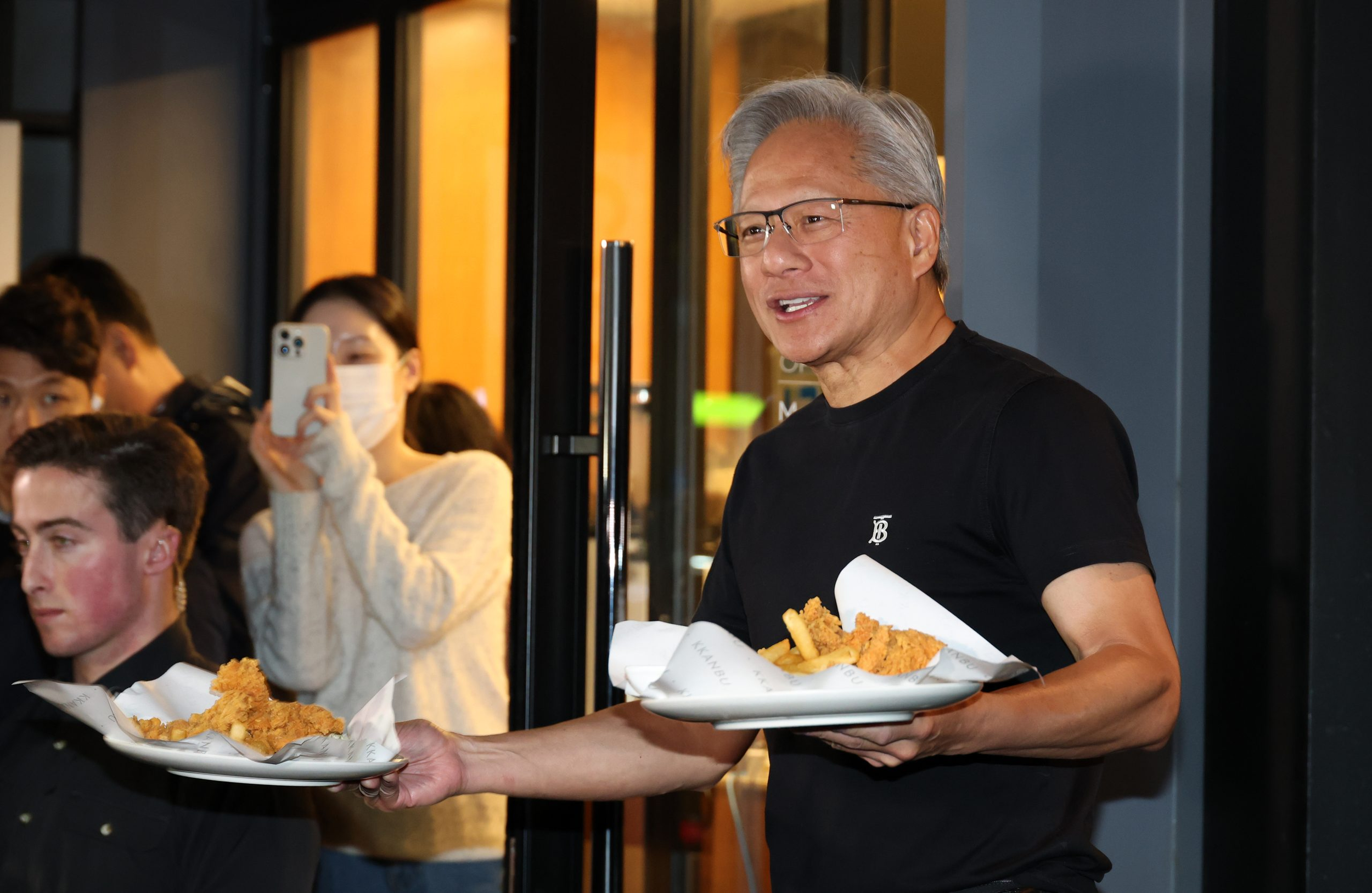
NVIDIA’s memory strategy is becoming just as important as its GPU roadmap, and CEO Jensen Huang is leaning into relationship driven supply chain execution to stay ahead of the AI infrastructure stampede. In a market where HBM, LPDDR, and broader DRAM allocation can define who ships product on time, NVIDIA’s edge is increasingly tied to early long term agreements and direct executive level engagement with the Korean memory giants that dominate high bandwidth and low power server memory production.
A new report from Hankyung claims SK Group chairman Chey Tae won met with Jensen Huang recently in the United States, with the two having a dinner at 99 Chicken in Santa Clara. According to the report, the discussion centered on next wave NVIDIA server memory priorities, including SOCAMM and HBM4. The optics matter, but the substance matters more: as AI accelerators grow more dependent on high bandwidth stacks and specialized memory modules, executive alignment becomes a practical mechanism for securing allocation, accelerating qualification, and negotiating the shape of future supply.
The focus on SOCAMM is especially telling because NVIDIA has been pushing the format as part of its Rubin era platform direction. NVIDIA itself has described SOCAMM as a low power memory module approach designed to improve serviceability and fault isolation while delivering high bandwidth at lower power, positioning it as a key building block for AI factory uptime expectations.
Meanwhile, HBM4 is the real battleground. Industry reporting has repeatedly pointed to SK hynix capturing a very large share of NVIDIA’s initial HBM4 supply, with some coverage suggesting the allocation could exceed earlier expectations that were already above 50%. This matters because HBM4 volumes will be gated by advanced packaging capacity, yields, and qualification timelines, and whoever controls early supply effectively controls early platform scale.
The dinner headline also echoes a broader pattern. NVIDIA has been visibly active with Samsung leadership as well, using high profile partner engagement to reinforce that NVIDIA is not just a customer, but the anchor tenant for next generation memory roadmaps. In a cycle where memory suppliers are prioritizing profitability and carefully choosing which customers get first access to scarce products, relationship capital can translate into execution speed.
The competitive implication is straightforward. If NVIDIA can secure earlier and deeper HBM4 and SOCAMM supply than peers, it can ship more accelerators, ramp more systems, and protect its delivery commitments to hyperscalers and enterprise buyers even while the wider industry struggles with memory constraints. It also forces competitors to pay more, wait longer, or redesign around whatever memory they can actually obtain.
For gamers watching from the sidelines, this is also part of why consumer segments keep feeling neglected. When HBM and server class memory modules become the priority for supplier capacity and NVIDIA’s primary revenue engine is AI infrastructure, the center of gravity moves away from mainstream GPU availability and pricing stability. The result is a market where AI customers get first access to premium memory and gamers inherit the downstream effects.
Do you think Jensen Huang’s direct partner diplomacy is simply smart supply chain leadership, or does it signal that memory access will remain the defining bottleneck for everyone else through 2026 and beyond?
