
Is Ubisoft Copying Crimson Desert? Black Flag Resynced Skips a Fixed Roadmap for Community Feedback
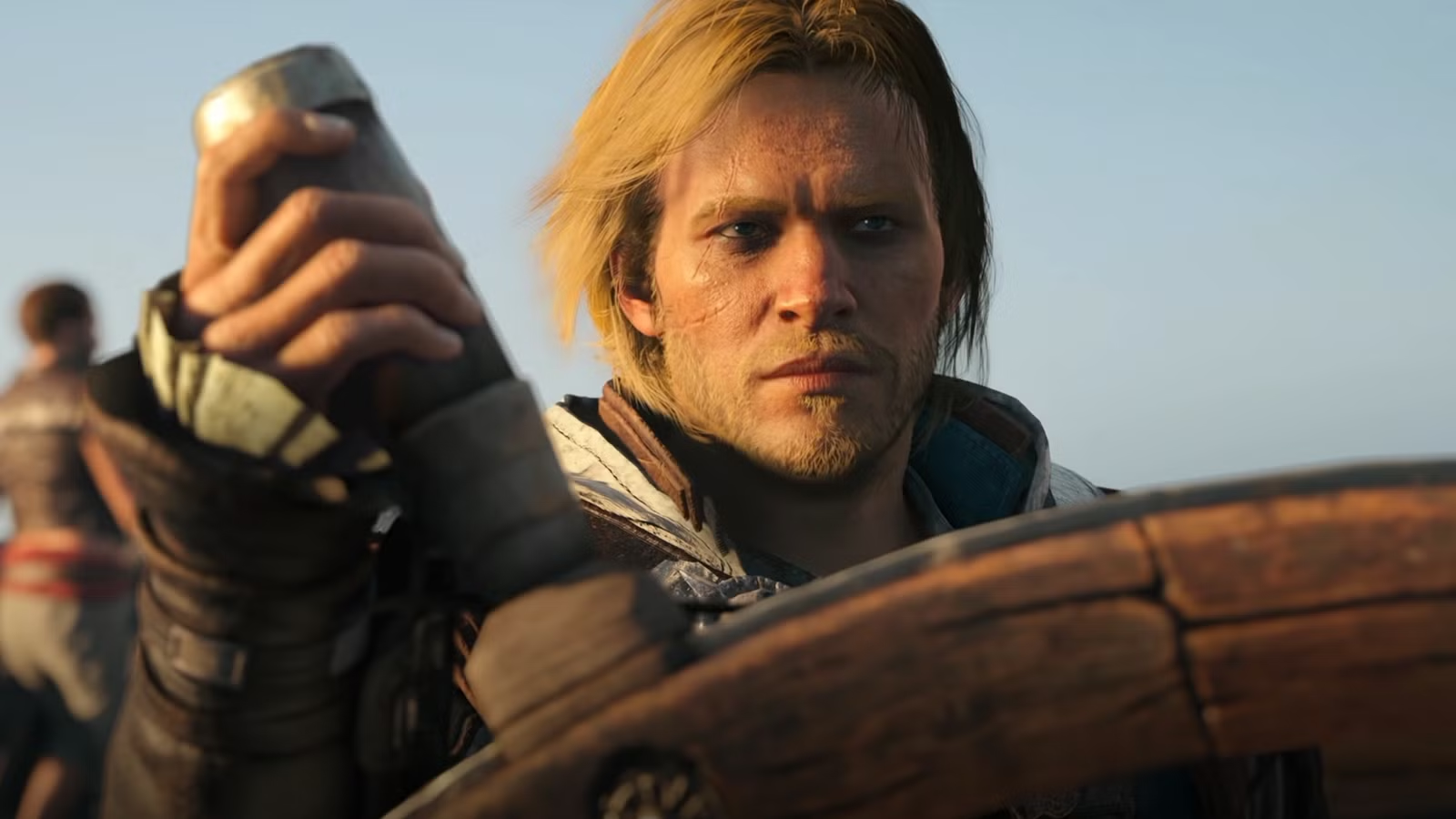
Assassin’s Creed Black Flag Resynced has already become a major commercial success for Ubisoft, selling 2 million copies during its first day of availability and reaching 99,451 concurrent Steam players within 24 hours. However, the remake’s future may be even more interesting than its launch, as Ubisoft appears to be adopting a flexible community driven support model similar to the strategy Pearl Abyss used to transform Crimson Desert after release. The comparison is difficult to ignore, although Ubisoft has not said it is directly copying the South Korean developer. According to Ubisoft, Black Flag Resynced became the largest Assassin’s Creed launch on Steam after releasing on July 9, 2026.
The success arrived under difficult circumstances for part of the development team. Ubisoft Barcelona, which contributed to the underwater environments and water technology, is facing 51 proposed job cuts despite the game’s performance, raising questions about whether Ubisoft can maintain ambitious support plans while reducing the teams responsible for some of the remake’s most praised technology.
Speaking with JorRaptor, Game Director Richard Knight confirmed that New Game Plus is already in development. Ubisoft can build upon systems created for Assassin’s Creed Shadows, reducing some of the technical risk, although the different progression structures of both games mean the feature cannot simply be transferred without modification.
"We’re working on that right now. It’s one of the first things, and partly because Assassin’s Creed Shadows has already built their version. It’s considered a low risk feature for us. It’s just such a natural thing."
— Richard Knight
The development team is also working on an option that will allow players to hide Edward Kenway’s blowpipe. Knight said one of the project’s most senior programmers was already implementing the feature and suggested it could arrive relatively soon. Neither New Game Plus nor the blowpipe visibility option was included in Title Update 1.0.4, which launched on July 16, 2026 with weather balancing, technical corrections, quality improvements, and clearer guidance during the El Tiburón battle.
More importantly, Knight indicated that Ubisoft does not currently have a rigid content roadmap for Black Flag Resynced. The team is instead operating under a loose schedule and evaluating additions according to player demand. Features receiving enough community attention could move higher in the development queue, although production cost, animation requirements, staffing, and technical complexity will continue determining what is realistically possible.
One potential addition is the restoration of Hidden Blade combat from the original Assassin’s Creed IV Black Flag. Knight explained that the mechanic was considered a lower priority during development because Ubisoft needed to establish the remake’s primary combat system first. Rebuilding the feature would require new character interactions, animations, rigs, visual effects, and cloth simulation rather than simply restoring the original code.
"We’re listening to the community. We’re interested in what people want the most. During development, we prioritized core combat because we needed to nail that. Given the cost to reinvent the feature and rebuild it from the ground up with today’s characters, rigs, animation, and cloth simulation, there’s just a lot more that goes into it. It was lower priority for us, but we’re definitely listening."
— Richard Knight
This approach resembles the strategy Pearl Abyss used following the release of Crimson Desert. Rather than committing every major update to a fixed roadmap before learning how players interacted with the game, Pearl Abyss reacted to community criticism, unexpected player behavior, popular glitches, control complaints, inventory limitations, and requests for additional endgame activities. The studio rapidly converted several community discoveries into permanent features while continuously adjusting its priorities.
"If you bake in a roadmap, you’re presuming. We are not baking in presumptions around what the players want."
— Will Powers
However, Ubisoft may find this model harder to reproduce. Pearl Abyss has more than 10 years of experience operating Black Desert as a continuously evolving MMO, giving the company established systems for analyzing feedback, approving changes, deploying frequent updates, and maintaining direct communication with players. That operational culture became the foundation for Crimson Desert’s unusually responsive support strategy.
Ubisoft has extensive live service experience, but its major franchises traditionally operate through larger multinational teams, longer approval structures, scheduled content programs, and carefully controlled commercial plans. Community feedback can influence development, but converting that feedback into regular features requires stable staffing, available funding, rapid internal approval, and developers who remain assigned to the project.
Black Flag Resynced also has a more focused gameplay structure than Crimson Desert. Pearl Abyss created an enormous sandbox containing numerous interconnected systems, giving the studio greater freedom to expand activities, interactions, characters, traversal mechanics, and emergent features. Ubisoft’s remake is a more defined narrative experience built around naval exploration, stealth, assassination, and Edward Kenway’s established story. It is therefore unlikely to receive the same volume of experimental additions.
Ubisoft is not necessarily copying Crimson Desert, but Pearl Abyss may have demonstrated that a premium single player game can benefit from the responsiveness normally associated with MMOs and live service titles. The strategy works because players feel that their feedback can materially improve a game after launch rather than disappearing into a corporate reporting system.
The question is whether Ubisoft is prepared to support that philosophy beyond a few quality improvements. New Game Plus and a blowpipe visibility option are valuable additions, but they remain relatively controlled features. Restoring Hidden Blade combat or rebuilding other missing systems would require a much larger investment.
Pearl Abyss succeeded because its community strategy is connected to years of Black Desert experience and a development culture designed around continuous iteration. Ubisoft can follow the same principles, but it cannot replicate the results without protecting development teams, maintaining resources, and giving creators enough authority to respond quickly. The proposed Ubisoft Barcelona cuts make that commitment considerably harder to believe.
Can Ubisoft recreate Crimson Desert’s community driven success, or will corporate restructuring prevent Black Flag Resynced from receiving the support it deserves?
